Table of contents

No published study scores dumpster rental ad creative by format on its own, so the honest version of this page separates what is actually measured from what is assumed. Organic TikTok cleanout content and paid Meta/Google creative are different jobs with different data behind them, and this page keeps them labeled apart.
Key Takeaways
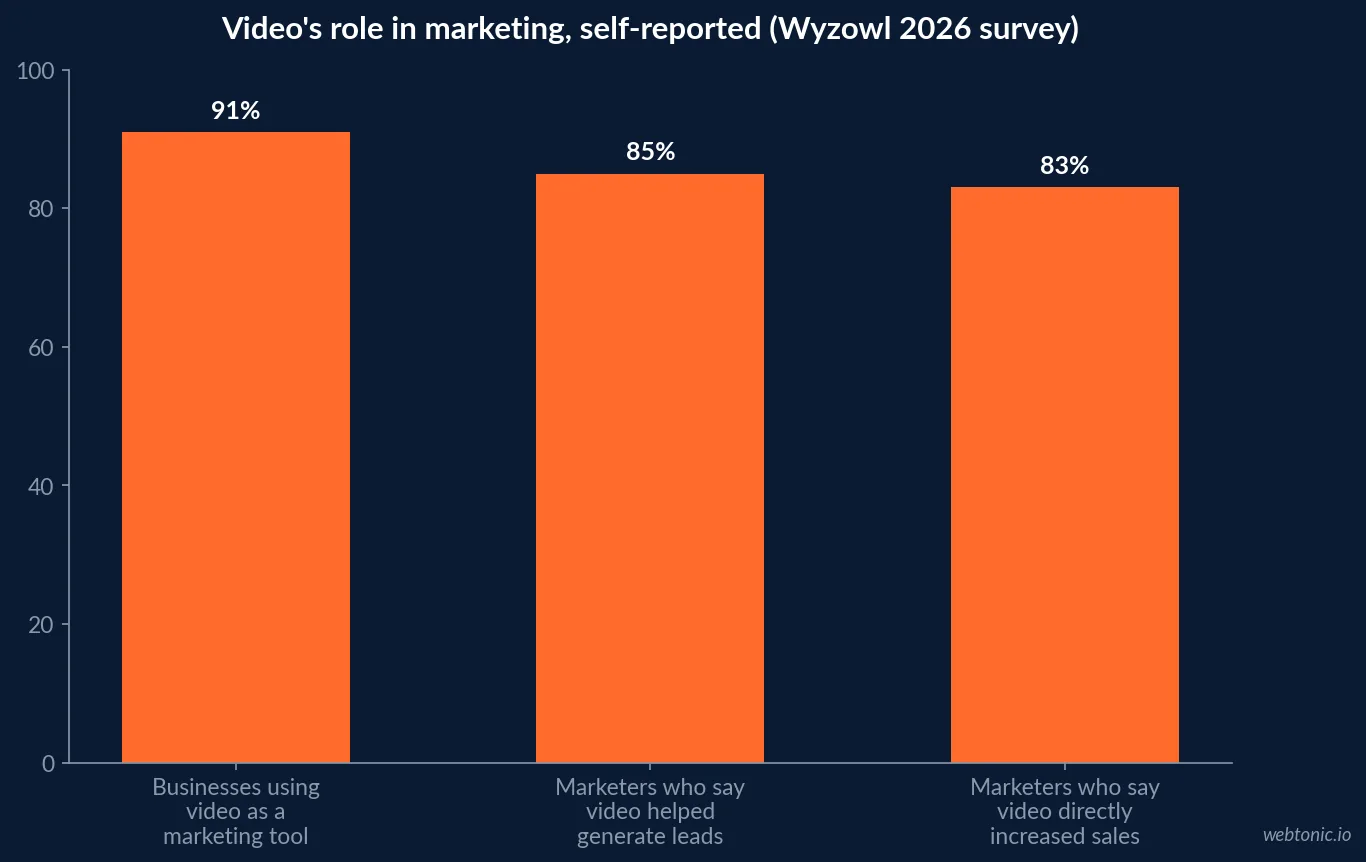
- 91% of businesses now use video as a marketing tool, per Wyzowl's 2026 survey.
- 85% of marketers say video helped generate leads and 83% say it directly increased sales.
- 92% plan to spend the same or more on video in the coming year.
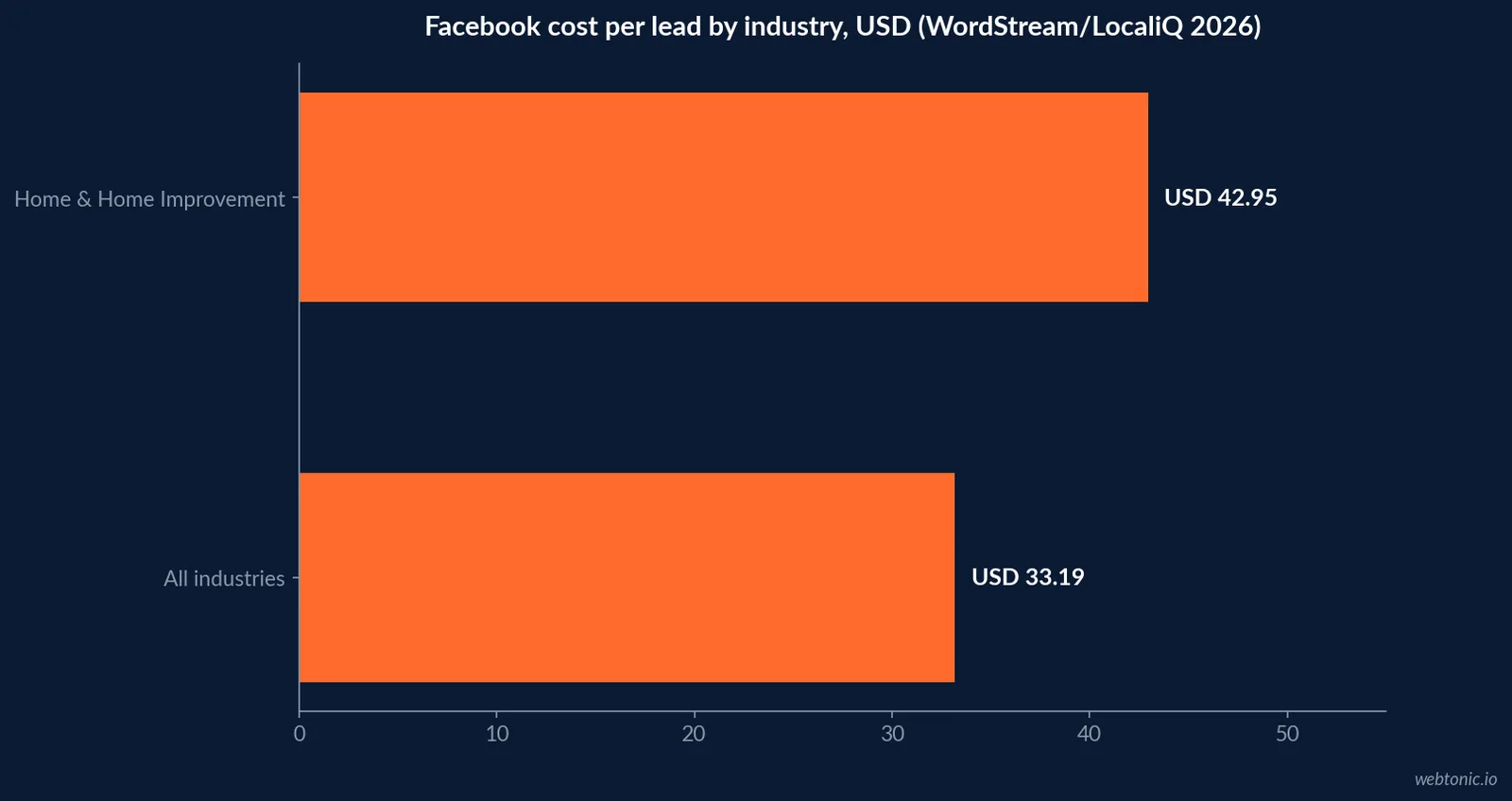
- Home & Home Improvement Facebook lead campaigns cost USD 42.95 per lead, third-highest of tracked industries.
- The same category's Facebook CPC runs USD 0.99, near the top of the cost range too.
- No public benchmark isolates junk-removal or dumpster-rental TikTok ad spend - the viral cleanout content is mostly organic.
- Typical junk removal jobs cost USD 133 to 372, the range a creative's price claim should match.
- Only 42% of consumers trust reviews as much as a personal recommendation, down from 79% in 2020.
- The FTC's fake-review rule has applied since October 21, 2024, with real penalty exposure for staged testimonials.
- 83% of consumers read reviews on Google specifically before booking a local service.
Why the queue's claim needs two answers, not one
"What ad creatives actually convert" implies a scoreboard that does not exist for this category. What does exist: an industry-wide video-adoption survey from Wyzowl, paid-media cost benchmarks broken out by the Home & Home Improvement category from WordStream/LocaliQ, and a large volume of organic before/after cleanout content on TikTok that no ad-spend report tracks at all. This page treats those as three separate evidence sets instead of blending them into a single invented number.
What the paid side actually costs in this category
WordStream/LocaliQ's 2026 Facebook Ads benchmarks (built from roughly 1,800 campaigns across industries) place Home and Home Improvement lead campaigns at a $42.95 cost per lead, the third-highest of the tracked categories, behind only Dentists and Dental Services and Beauty and Personal Care. That category's cost per click also runs $0.99, near the top of the range. Whatever the creative shows, it is competing for clicks in a category that already costs more than most to convert.
| Facebook Ads benchmark, 2026 (WordStream/LocaliQ) | Home & Home Improvement | All-industry average |
|---|---|---|
| Cost per click | USD 0.99 | USD 0.70 |
| Cost per lead | USD 42.95 | USD 27.39 |
| Traffic-campaign CTR | 1.26% | 1.71% |
| Lead-campaign CTR | 1.94% | n/a category-specific |
Organic cleanout content: real reach, no ad-spend data
The viral side of this category - a crew clearing a hoarder home or a garage in a 60-second transformation clip - runs almost entirely as organic content on TikTok and Instagram Reels, not as paid creative. No public ad-benchmark report (TikTok's own or a third party's) publishes a junk-removal or dumpster-rental line item, which means any number claiming a "TikTok CPC for junk removal" is fabricated. What can be said honestly: organic transformation content builds the trust a paid creative then has to convert, and the two should be planned as separate budgets, not one blended line.
| Content type | Where it lives | What it is measured by | What it is not |
|---|---|---|---|
| Before/after cleanout transformation clips | TikTok, Instagram Reels (organic) | Views, saves, comments - platform-native, no cost data | Not a paid-media benchmark of any kind |
| Static offer graphics ($X off, book now) | Facebook/Instagram paid feed | WordStream/LocaliQ CPC & CPL by industry | Not video, and not separately broken out from other formats |
| Filmed job-site walkthroughs | Meta and YouTube, paid and organic | Wyzowl's category-wide video-adoption survey | Not a junk-removal-specific dataset |
| Review/testimonial overlays | Any paid or organic creative | FTC compliance rule, BrightLocal trust survey | Not exempt from the 2024 fake-review rule |
Pricing the creative's promise against the real job cost
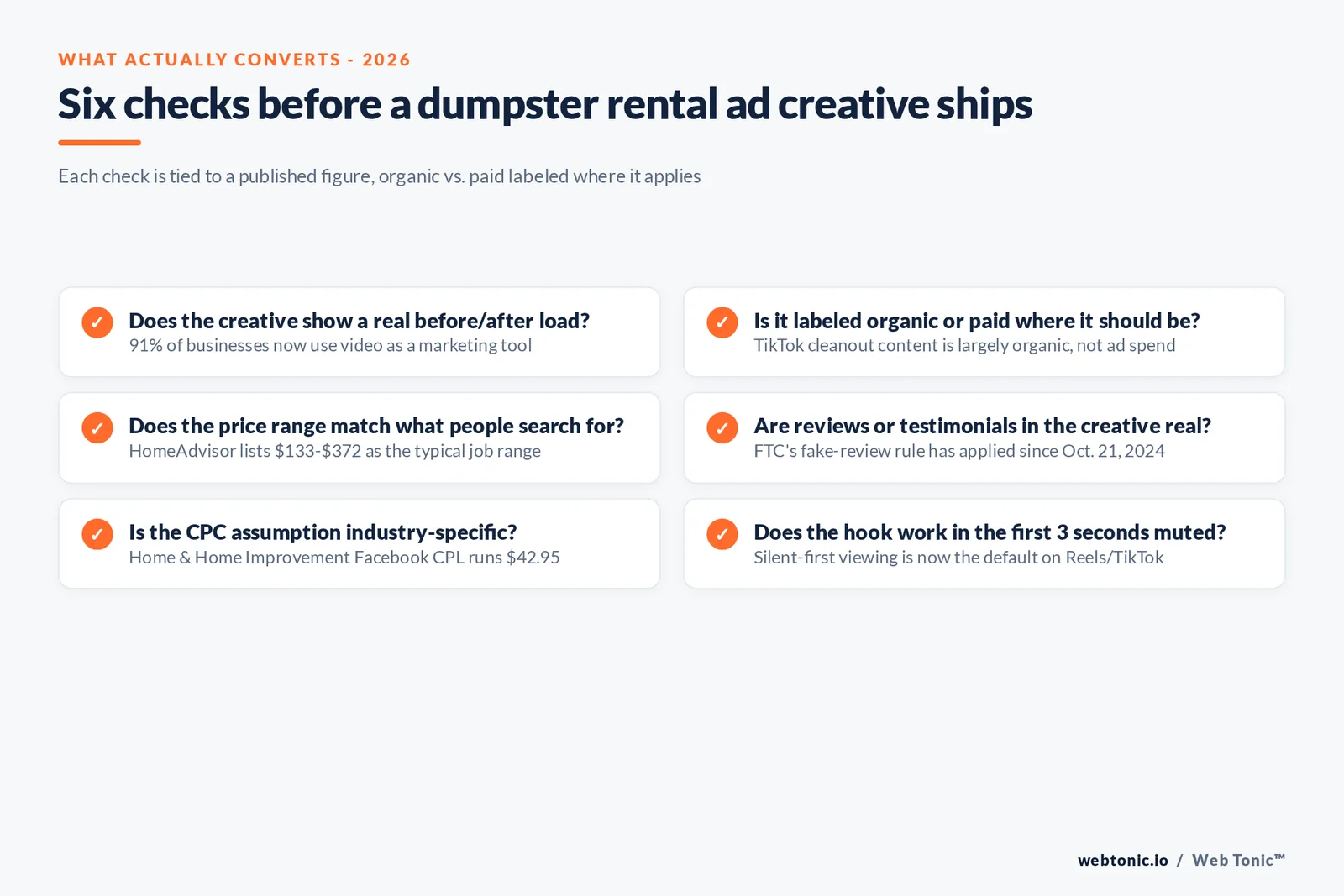
HomeAdvisor's own cost data puts typical junk removal spend at $133 to $372 per job. A creative that leads with a flat, unrealistically low number to win the click will bring in leads that do not close at that price, which is the most common way a $42.95 cost-per-lead category turns into a much higher cost-per-booked-job. The safer creative pattern, supported by nothing more exotic than the cost range itself, is to anchor to a realistic band and let the before/after footage do the persuasion.
The compliance layer every creative with a review now carries
Since October 21, 2024 the FTC's rule banning fake reviews and testimonials has applied to any ad using a customer quote or star rating, with civil penalty exposure for reviews that are fabricated or that hide a material incentive. BrightLocal's 2025 survey found consumer trust in reviews already fell from 79% in 2020 to 42% today, and separately that 83% still read them on Google before booking. That combination - lower trust, but still the default research step - means a testimonial in a dumpster rental ad has to be real and verifiably sourced, not just persuasive.
| Compliance check for review-based creative | Requirement | Source |
|---|---|---|
| Is the reviewer a real customer? | Fabricated reviews are prohibited outright | FTC final rule, 16 CFR Part 465 |
| Was any incentive disclosed? | Undisclosed material connections are a violation | FTC Consumer Reviews and Testimonials Q&A |
| Would the quote hold up if traced to the platform? | Reviews should be traceable to their original post | FTC final rule guidance |
| Is the star rating current? | Stale or cherry-picked ratings undercut the 42% trust baseline | BrightLocal 2025 Local Consumer Review Survey |
A defensible creative brief for this category
- Lead with real footage, not stock imagery - video adoption and lead-gen belief are both above 83% among marketers surveyed by Wyzowl.
- Separate organic and paid budgets: TikTok transformation content builds trust with no cost-per-lead attached to it; Meta and Google are where the $42.95-$90.92 range is actually spent.
- Anchor price claims to the $133-$372 real range, not a promotional low that mismatches the close rate.
- Only use reviews that pass the FTC's 2024 rule - real, undisguised, traceable.
- Budget for a higher cost per lead than most verticals: Home & Home Improvement already runs above the all-industry Facebook average.
What Google's own guidance says about before/after photos
Since a dumpster rental or junk removal listing lives on a Google Business Profile as much as it does on a paid platform, it is worth noting Google's own guidance on Business Profile photos and videos recommends exterior shots so customers "recognize your business when they visit," alongside product and service images - which for this category means the truck, the loaded dumpster and the cleared space, not a stock photo of a generic bin. That guidance sits outside the paid-creative benchmarks above but competes for the same customer attention before a click ever happens.
| Where the creative lives | Governing guidance/benchmark | What it should show |
|---|---|---|
| Google Business Profile | Google's own photo/video guidance | Real trucks, real loads, real crew - not stock imagery |
| Paid Meta feed/Reels | WordStream/LocaliQ 2026 cost benchmarks | Video, ideally with a visible price anchor |
| Organic TikTok/Reels | No official ad-cost benchmark exists for this niche | Before/after transformation, clearly unpaid content |
| Landing page hero | Wyzowl 2026 video-adoption data | The same footage used in the ad, not a mismatched stock photo |
Where this fits inside a broader creative program
A single winning creative rarely carries a dumpster rental account on its own; it needs a testing cadence behind it. Web Tonic's performance creative work applies that same before/after logic across paid formats, and the account's cost assumptions should be checked against Web Tonic's own Facebook Ads cost breakdown and list of Facebook Ads agencies before assuming a single case study's return rate will repeat at scale.
Where to actually look for organic format inspiration
Rather than guessing at what is trending, TikTok's own Creative Center publishes the platform's currently trending organic and paid formats by region and category, live rather than as a fixed annual figure. For a junk removal or dumpster rental account, that tool is the more honest source of "what's working right now" than a third-party benchmark claiming a fixed CPC for a niche no public report actually tracks.
Why creative quality matters more when the click is already expensive
Home & Home Improvement is not a cheap category to advertise in on any platform. WordStream/LocaliQ's 2026 Google Ads Benchmarks put the same broad category at $8.33 per click on Search, the second-highest of the 20-plus industries it tracks, and its Facebook data shows a $42.95 cost per lead. In a category paying that much per click and per lead before a single dollar reaches the creative itself, a generic static offer graphic is a more expensive mistake than in a category where clicks cost a fraction as much - which is the real argument for prioritizing video and real footage over a templated banner.
| Category cost context (2026) | Figure | Source |
|---|---|---|
| Home & Home Improvement Google Search CPC | USD 8.33 | WordStream/LocaliQ 2026 Google Ads Benchmarks |
| Home & Home Improvement Facebook CPL | USD 42.95 | WordStream/LocaliQ 2025 Facebook Ads Benchmarks |
| All-industry average Google Search CPC | USD 5.42 | WordStream/LocaliQ 2026 Google Ads Benchmarks |
Frequently Asked Questions
What dumpster rental ad creatives actually convert?
No public study benchmarks dumpster rental creative by format directly, so the honest answer combines two data points. Wyzowl's 2026 survey finds 91% of businesses now use video as a marketing tool and 85% of marketers say video helped generate leads, which favors a filmed before/after load over a static offer graphic. On the paid side, WordStream/LocaliQ's 2026 benchmarks put Home & Home Improvement Facebook lead campaigns at a $42.95 cost per lead, third-highest of the industries it tracks, meaning the creative has to work harder than in a cheaper vertical to hit that number.
Is dumpster and junk-cleanout content on TikTok mostly organic or paid?
Mostly organic. The viral hoarder-cleanout and before/after transformation clips that circulate on TikTok are largely unpaid creator and small-business content, not TikTok ad spend; no public TikTok ad-benchmark report breaks out a junk-removal or dumpster-rental line item at all. Treat organic TikTok as a top-of-funnel trust builder and budget the actual lead generation through Google Search, Local Services Ads or Meta lead campaigns, where the cost data exists.
Can a real customer testimonial go straight into an ad?
Only if it is real and disclosed correctly. The FTC's Trade Regulation Rule on the Use of Consumer Reviews and Testimonials has been enforceable since October 21, 2024, and it prohibits fabricated or incentivized-but-undisclosed reviews in ad creative. BrightLocal's 2025 survey found only 42% of consumers now trust reviews as much as a personal recommendation, down from 79% in 2020, so a testimonial-led creative already starts with more skepticism than it would have five years ago.
Does showing a price in the creative help or hurt?
The published cost data suggests showing a realistic range helps qualify the click. HomeAdvisor's own data puts typical junk removal spend at $133 to $372 per job; a creative promising a flat $99 haul-away invites the mismatched leads a $90.92 average cost-per-lead in this category can least afford. Anchoring the creative to a real range performs the same qualifying job a landing page price table would.
What creative format has the best public cost data behind it?
Video, on the volume of evidence available. Wyzowl's 2026 survey (self-reported, but the largest running series on this question) finds 83% of video marketers say video directly increased sales and 92% plan to spend the same or more on video in the next year. No comparable adoption study exists for static-image or carousel formats specifically in home services, which is itself informative about where the category is moving.
Sources
Wyzowl, Video Marketing Statistics 2026
Google Business Profile Help, editing photos and videos
TikTok Creative Center, live trending formats
WordStream/LocaliQ, 2025 Facebook Ads Benchmarks
HomeAdvisor, junk removal cost data
BrightLocal, 2025 Local Consumer Review Survey
Federal Trade Commission, final rule on consumer reviews and testimonials
Federal Trade Commission, Consumer Reviews and Testimonials Rule Q&A