Table of contents
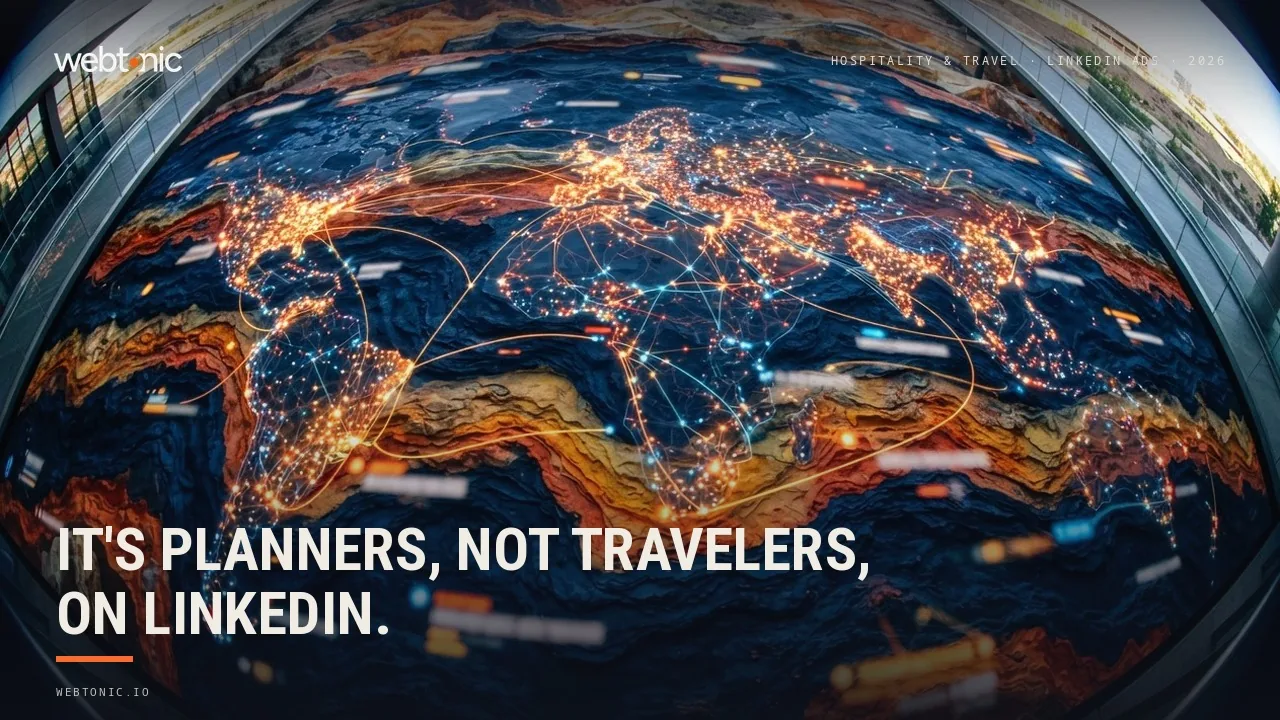
LinkedIn Ads for hospitality and travel do not reach leisure bookers - they reach the corporate travel manager, the meeting planner and the recruiter buying on the industry's behalf. This report keeps that distinction explicit throughout: real B2B travel-spend data is travel-specific, and the strong LinkedIn ROI figures are general B2B benchmarks labeled as such, never blended together.
Key Takeaways
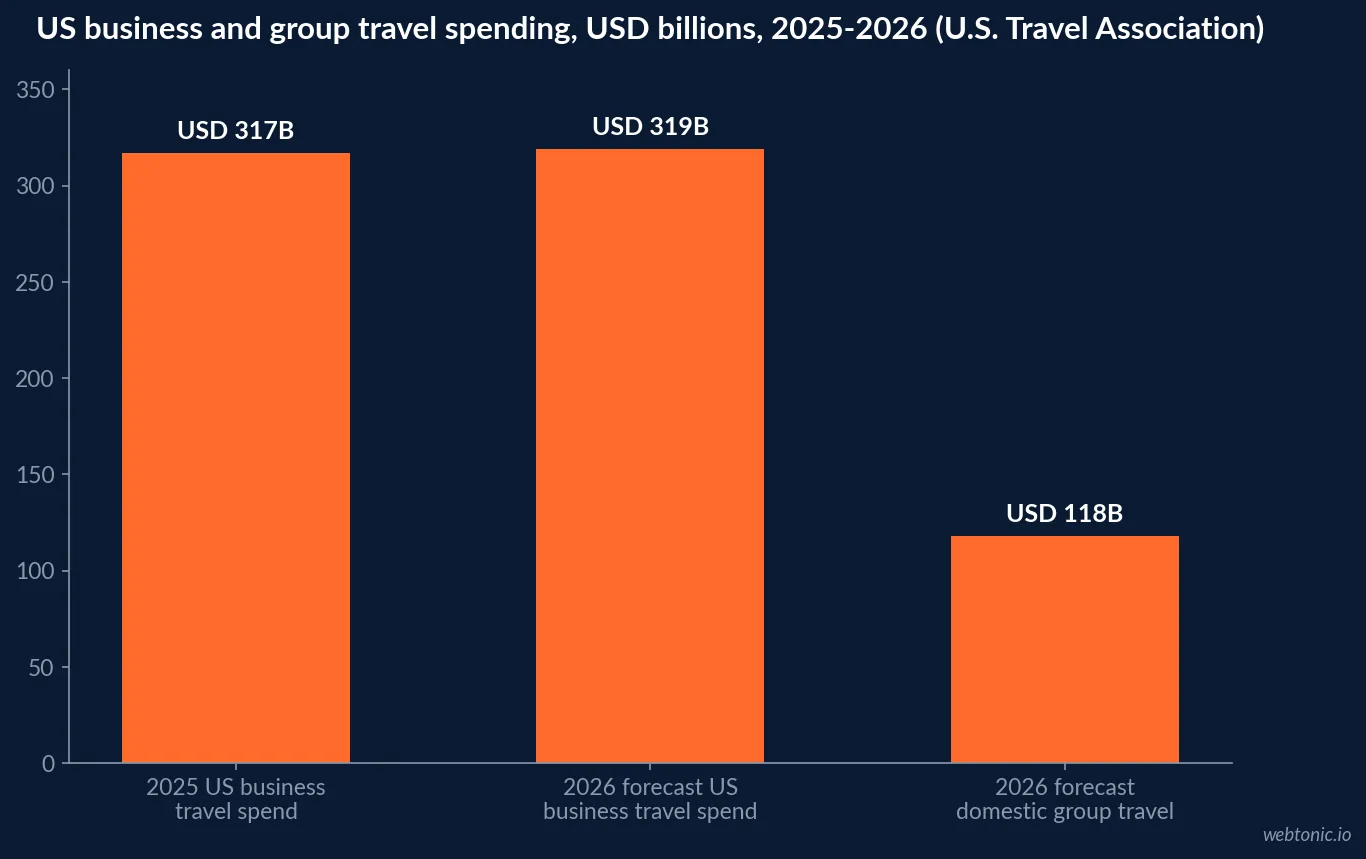
- US business travel spending reached $317 billion in 2025, forecast to grow to $319 billion in 2026 (U.S. Travel Association) - travel-specific.
- Domestic group travel, the segment closest to MICE, is forecast to grow 1.4% to $118 billion in 2026 - travel-specific.
- More than two-thirds of meeting planners held a positive outlook as of the August 2026 Northstar/Cvent PULSE survey - travel-specific.
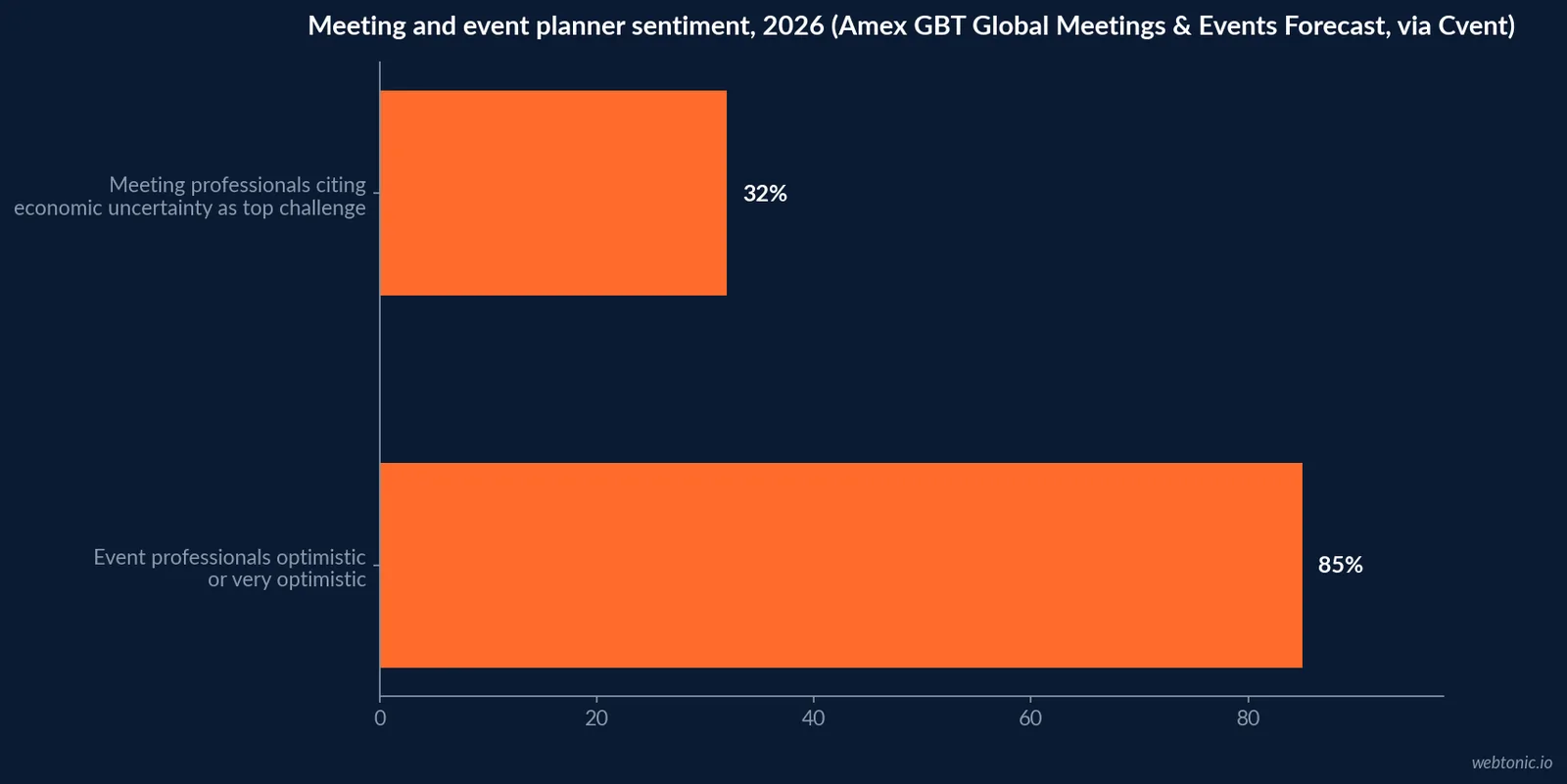
- 85% of event professionals are optimistic or very optimistic per Amex GBT's 2026 Global Meetings & Events Forecast - travel-specific.
- 32% of meeting professionals cite economic uncertainty as a top 2026 challenge - travel-specific.
- The hospitality workforce is projected to grow by more than 30,000 jobs in 2026, to roughly 2.2 million direct hotel jobs (AHLA) - travel-specific, relevant to recruiting-focused LinkedIn use.
- Nearly $131 billion in wages and benefits is projected industry-wide for 2026 - travel-specific.
- LinkedIn Ads delivered a 113% ROAS in Dreamdata's aggregated B2B sample, against 78% for Google Search and 29% for Meta - general B2B, not travel-specific.
- LinkedIn's company-level cost ran 25% lower than Google Search and 70% lower than Meta in the same sample - general B2B.
- LinkedIn's share of B2B ad budgets grew from 31% to 39% within 2024 - general B2B.
- The average B2B buying journey runs 211 days, longer still for larger companies - general B2B.
Who is actually on the other end of a hospitality LinkedIn ad
No credible research shows leisure travelers making booking decisions on LinkedIn, and this report will not manufacture one. What LinkedIn does carry, at real scale, is the professional audience that buys travel and hospitality services for someone else: corporate travel managers negotiating rate programs, meeting and event planners sourcing venues, procurement teams evaluating travel-management companies, and hospitality leaders hiring for roles the sector badly needs filled. The U.S. Travel Association's Spring 2026 forecast puts a real number behind that first audience: $317 billion in US business travel spending in 2025, forecast to inch up 0.7% to $319 billion in 2026, with domestic group travel - the category nearest to MICE and incentive programs - forecast to outgrow it at 1.4% to $118 billion.
| B2B travel-buyer segment addressable via LinkedIn | 2026 figure | Source |
|---|---|---|
| US business travel spending | $319B (forecast, +0.7% YoY) | U.S. Travel Association, Spring 2026 |
| Domestic group travel spending (MICE-adjacent) | $118B (forecast, +1.4% YoY) | U.S. Travel Association |
| 2025 US business travel spending (actual) | $317B | U.S. Travel Association |
| Hospitality direct employment (2026 projection) | ~2.2 million jobs | AHLA 2026 State of the Industry |
| Projected 2026 wages and benefits, hospitality | ~$131 billion | AHLA 2026 State of the Industry |
How that buyer is feeling right now
The Cvent 2026 event statistics roundup, citing Amex GBT's 2026 Global Meetings & Events Forecast, puts planner optimism at a five-year high - 85% of event professionals optimistic or very optimistic - even as 32% name economic uncertainty a top challenge. The Northstar/Cvent Meetings Industry PULSE Survey, run in partnership with Phocuswright and current through its August 2026 wave, found more than two-thirds of planners maintaining a positive outlook, alongside rising concern over costs and budget constraints. That combination - optimistic but cost-anxious - is a specific message a LinkedIn campaign can speak to directly: value and predictability claims will land better with this buyer in 2026 than pure inspiration content.
| Meeting/event planner sentiment (2026) | Figure | Source |
|---|---|---|
| Event professionals optimistic or very optimistic | 85% | Amex GBT 2026 Global Meetings & Events Forecast, via Cvent |
| Meeting professionals citing economic uncertainty as a top challenge | 32% | Amex GBT 2026, via Cvent |
| Planners with a positive outlook (Aug. 2026 PULSE wave) | >2/3 | Northstar/Cvent PULSE Survey, with Phocuswright |
| Planners citing rising costs and budget constraints as growing concerns | Directionally rising | Northstar/Cvent PULSE Survey |
The strong LinkedIn ROI numbers are real - and they are not travel numbers
It would be easy to borrow LinkedIn's best-known B2B performance data and imply it describes travel advertisers specifically. It does not, and this report keeps the two separate. Dreamdata's LinkedIn Ads Benchmarks Report, built from aggregated deal data across hundreds of B2B customers, found LinkedIn Ads generating the highest ROAS among major networks in its sample at 113%, against 78% for Google Search and 29% for Meta, with a 25% lower cost per company influenced than Google Search and 70% lower than Meta, despite carrying higher costs per click and per impression individually. LinkedIn's own share of B2B ad budgets grew from 31% in H1 2024 to 39% by year-end. None of that sample is broken out for hospitality or travel buyers, and no published study does that cut - so use it as the general B2B ceiling a hospitality-sector recruiting or MICE-sales campaign might reasonably measure itself against, not as a travel-specific promise.
| General B2B LinkedIn Ads benchmark (not travel-specific) | Figure | Source |
|---|---|---|
| LinkedIn Ads ROAS | 113% | Dreamdata, aggregated B2B customer data |
| Google Search Ads ROAS (comparison) | 78% | Dreamdata |
| Meta Ads ROAS (comparison) | 29% | Dreamdata |
| LinkedIn cost per company influenced vs. Google Search | 25% lower | Dreamdata |
| LinkedIn cost per company influenced vs. Meta | 70% lower | Dreamdata |
| LinkedIn share of B2B ad budgets, 2024 | 31% (H1) to 39% (year-end) | Dreamdata |
| Average B2B buying journey length | 211 days | Dreamdata |
What the same buyer looks like on the general B2B-benchmark side
The Dreamdata figures above describe B2B advertising broadly, and it is worth naming the platform context that makes LinkedIn's targeting precision possible in the first place. LocaliQ/WordStream's 2026 benchmark work, drawn from over 13,000 Google Ads campaigns, found Travel among the industries with the steepest year-over-year cost-per-lead decline of any of the 23 tracked industries - a signal that consumer-facing paid channels are getting more efficient at the same time B2B channels like LinkedIn are absorbing a growing share of marketing budget generally. A hospitality group weighing where the next incremental B2B marketing dollar goes is choosing between two genuinely different efficiency stories, not one channel that has clearly won.
| Comparison point for budget allocation (2026, mixed sources) | Figure | Source |
|---|---|---|
| Travel's Google Ads cost-per-lead YoY change (consumer-facing) | -39.35% | LocaliQ/WordStream 2026 |
| LinkedIn's share of B2B ad budgets (general B2B) | 39% by year-end 2024 | Dreamdata |
| Average B2B buying journey length (general B2B) | 211 days | Dreamdata |
The recruiting angle most hospitality marketers miss
Hospitality's labor math makes LinkedIn's other native use case - recruiting - arguably more relevant than any ad campaign aimed at guests. AHLA's 2026 State of the Industry report projects the sector adding more than 30,000 jobs in 2026, bringing direct hotel employment to roughly 2.2 million, backed by nearly $131 billion in projected wages and benefits. Combined with a 211-day average B2B buying cycle for the services side (staffing platforms, revenue-management software, travel-management companies selling into the sector), a always-on LinkedIn presence for both talent and supplier audiences is a more defensible budget line than a leisure-facing ad campaign the platform was never built to support.
Our growth marketing team scopes recruiting and B2B supplier campaigns separately from consumer acquisition work for exactly this reason. See our related coverage of what paid search costs for the consumer-facing channel comparison, or talk to us about scoping a B2B hospitality campaign.
How to plan a LinkedIn budget for a hospitality or travel brand
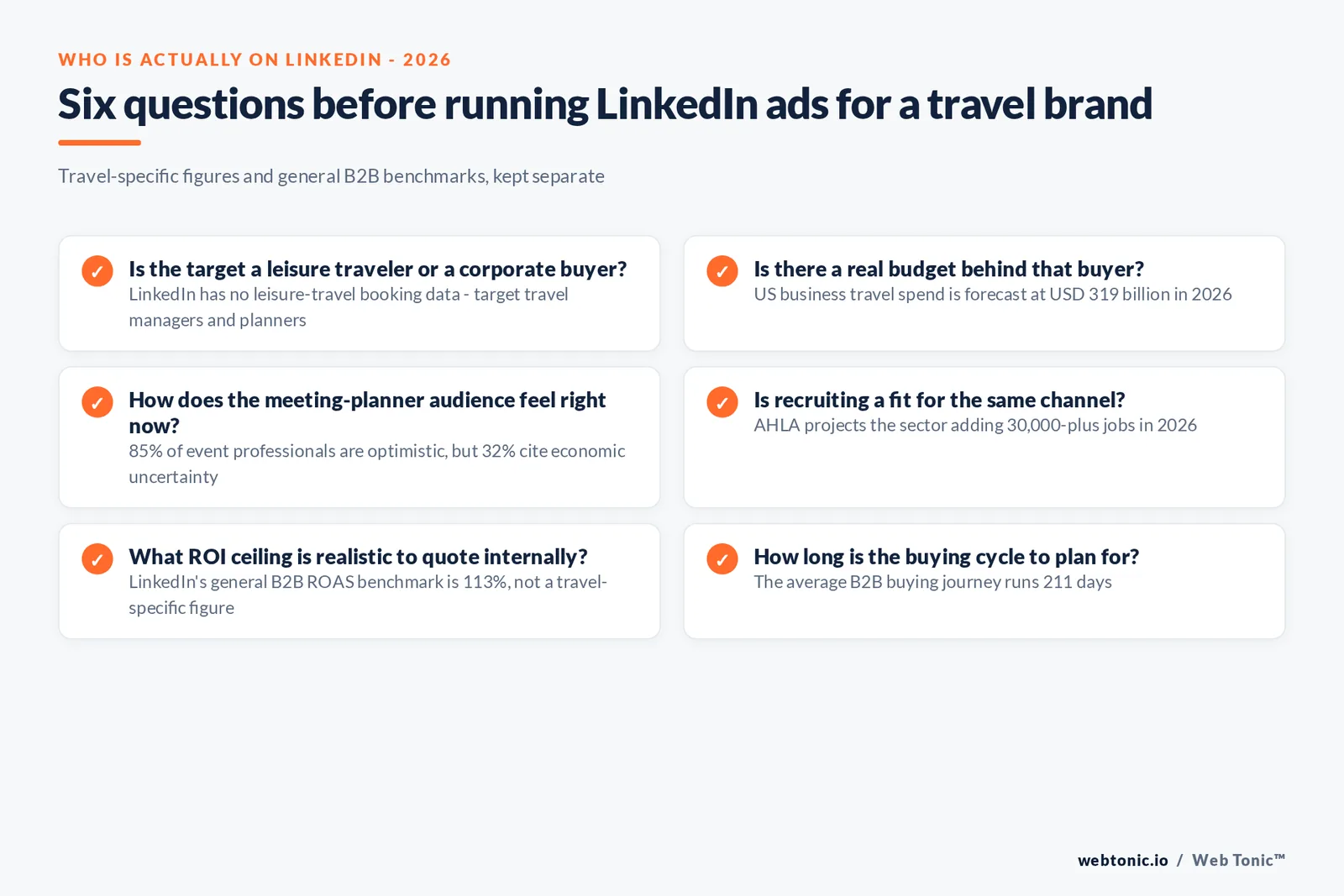
- Target the buyer LinkedIn actually reaches. Corporate travel managers, meeting planners, procurement and recruiting audiences - not leisure consumers.
- Size the campaign against a $319 billion spend pool. That is the forecast 2026 US business travel spend, plus $118 billion in domestic group travel - not total leisure travel spend.
- Message to the sentiment split of 85% optimistic against 32% cost-anxious. Lead with predictability and value, not just inspiration.
- Cite the 113% LinkedIn ROAS figure as a ceiling, not a floor. It is a general B2B benchmark, not sector-verified for travel.
- Budget separately for a workforce adding 30,000-plus jobs a year. Recruiting deserves its own LinkedIn line item, distinct from any commercial campaign.
Frequently Asked Questions
Should a hotel or airline run LinkedIn ads to reach leisure travelers?
No - and no data source supports it. LinkedIn is a professional-context network; every travel-specific figure in this report describes B2B buyers, not leisure consumers deciding on a vacation. The honest use case is reaching the people who buy travel and hospitality on behalf of an organization: corporate travel managers, meeting and event planners, procurement teams evaluating a travel-management company, and candidates for hospitality leadership roles.
Is there a real budget behind the corporate travel audience LinkedIn can reach?
Yes, and it is sizeable. The U.S. Travel Association's Spring 2026 forecast puts business travel spending at $317 billion in 2025, forecast to grow 0.7% to $319 billion in 2026, with domestic group travel - the segment closest to MICE and incentive travel - forecast to grow faster, 1.4% to $118 billion. That is the addressable market behind a LinkedIn campaign targeting travel managers and event planners, not a number this page invents to flatter the channel.
What does the meeting-planner audience actually look like right now?
Cautiously active. The Northstar/Cvent Meetings Industry PULSE Survey, run in partnership with Phocuswright, found more than two-thirds of planners maintaining a positive outlook as of its August 2026 wave, even as rising costs and budget constraints are a growing concern. Amex GBT's 2026 Global Meetings & Events Forecast, cited via Cvent's own research roundup, found planner optimism at a five-year high with 85% of event professionals optimistic or very optimistic, alongside 32% citing economic uncertainty as a top challenge.
Are the strong LinkedIn Ads ROI numbers travel-specific or general B2B?
General B2B, and this page labels them that way rather than implying otherwise. Dreamdata's benchmark report, built from aggregated data across hundreds of B2B customers, found LinkedIn Ads delivering the highest ROAS of major ad networks in its sample at 113%, against 78% for Google Search and 29% for Meta, with a company-level cost 25% lower than Google Search and 70% lower than Meta despite higher per-click and per-impression prices. No published study isolates that ROAS figure for travel or hospitality buyers specifically, so treat it as the general B2B ceiling a hospitality B2B campaign might reasonably aim toward, not a travel-sector-verified result.
What is LinkedIn actually useful for in hospitality marketing, beyond ad campaigns for guests?
Recruiting and supplier-side sales, primarily. Hospitality is a labor-constrained industry - AHLA's 2026 State of the Industry report projects the sector adding more than 30,000 jobs in 2026 to reach roughly 2.2 million direct hotel jobs, alongside nearly $131 billion in projected wages and benefits. That hiring volume, combined with the long, considered B2B buying journey Dreamdata measures at 211 days on average, makes LinkedIn a fit for hospitality leadership recruiting and for MICE/travel-management-company sales, not for driving room-night bookings.
Sources
U.S. Travel Association - U.S. Travel Forecast, Spring 2026
AHLA - 2026 State of the Hotel Industry Report
Cvent - Event statistics 2026, citing Amex GBT Global Meetings & Events Forecast
Dreamdata - 2025 LinkedIn Ads Benchmarks Report highlights
LocaliQ/WordStream - 2026 Google Ads industry benchmarks