



Table of contents
Franchise Link Building Statistics: Backlink Benchmarks for Multi-Location SEO in 2026
Subdirectory franchise sites consolidate domain authority 2–3× more effectively than subdomain structures (AuthoritySpecialist, 2026). Here are the link building benchmarks that define franchise SEO in 2026.
Key Takeaways
- Fewer than 30% of franchise location pages rank top-3 in local pack results for their primary service term, with link signals accounting for 11% of local pack ranking weight (AuthoritySpecialist, 2026).
- Citation signals contribute 7% of local pack ranking weight — NAP consistency across directories directly impacts local authority for franchise brands (BizIQ, 2026).
- Subdirectory URL structures consolidate domain authority 2–3x more effectively than subdomain structures for most franchise categories (AuthoritySpecialist, 2026).
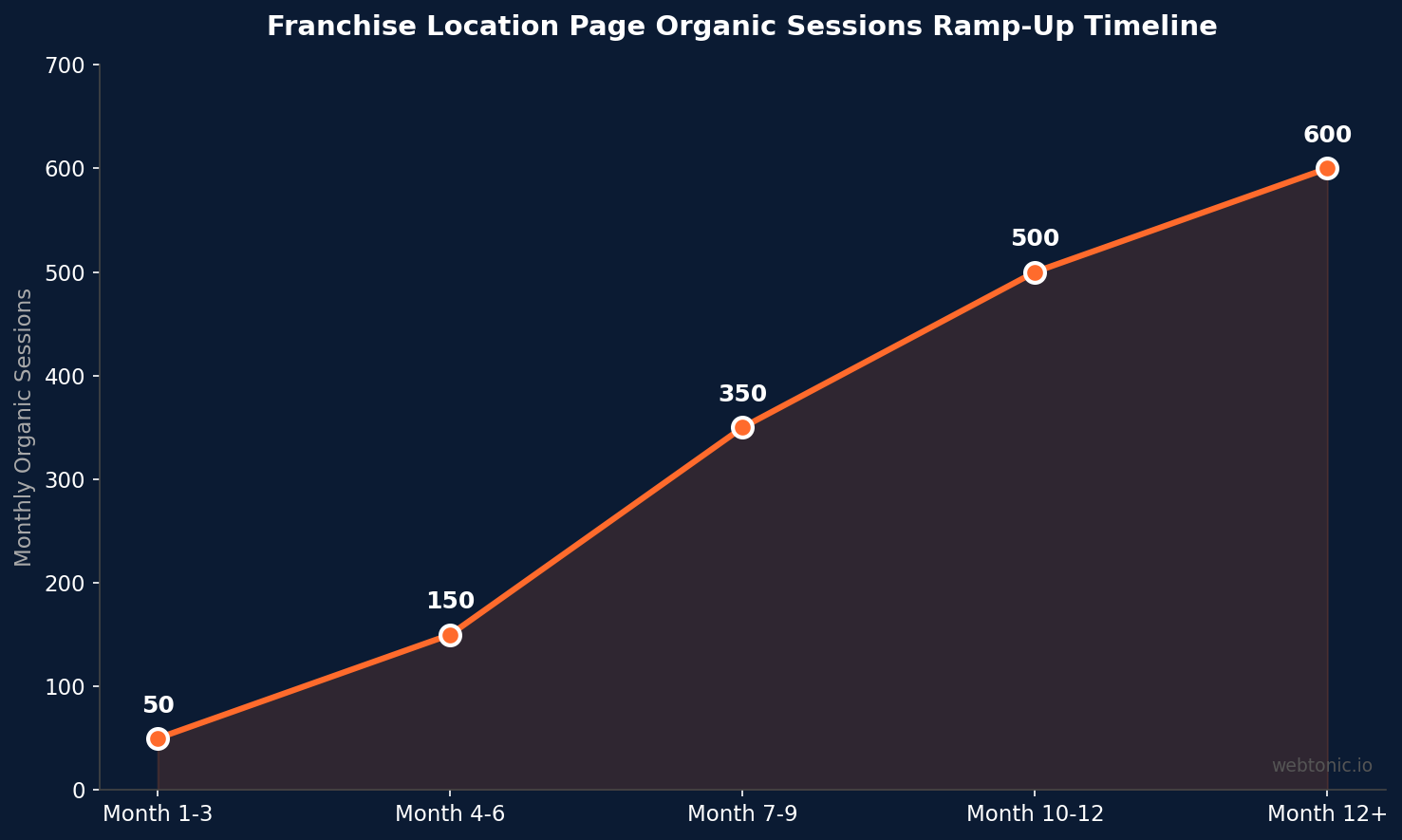
- Well-optimized franchise location pages reach 200–600 monthly organic sessions within 6–12 months of active link building and optimization (AuthoritySpecialist, 2026).
- Review signals account for 16% of local pack ranking weight — the third-largest factor, making review acquisition a core link building function for franchise systems (ClapCreative, 2026).
- 72% of franchise systems allocate 40%+ of marketing budget to local SEO, including link building and citation management (MarketingLTB, 2026).
Local Pack Ranking Factors and Link Signal Weight
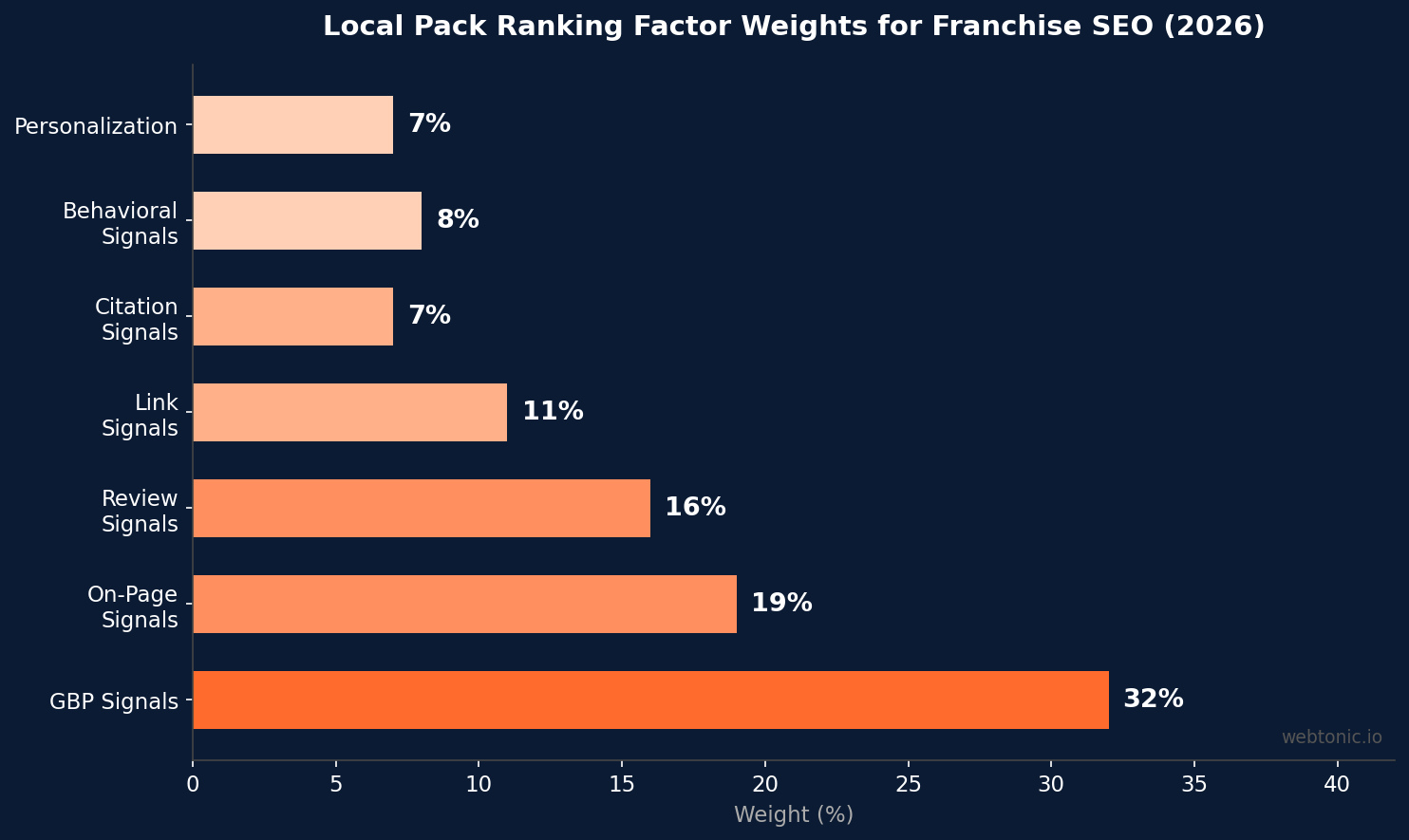
Table 1 — Local pack ranking factor weights relevant to franchise link building (2026)
| Ranking Factor | Weight | Link Building Relevance |
|---|---|---|
| Google Business Profile signals | 32% | GBP optimization and category selection |
| On-page signals | 19% | NAP consistency, local content, schema |
| Review signals | 16% | Review quantity, velocity, and diversity |
| Link signals | 11% | Domain authority, backlink quality and quantity |
| Behavioral signals | 8% | CTR, dwell time, bounce rate |
| Citation signals | 7% | NAP consistency across directories |
| Personalization | 7% | Searcher proximity and behavior |
For franchise brands, the combined weight of link signals (11%) and citation signals (7%) means that 18% of local pack ranking is directly influenced by link building and citation management. When you add review signals (16%), which function as a form of social link equity, the link-adjacent factor weight rises to 34% — making link building the second most important category of franchise local SEO investment after GBP optimization.
Domain Architecture and Link Equity Distribution
AuthoritySpecialist's 2026 analysis of 41 multi-location franchise brands provides the clearest data on how domain architecture affects link building outcomes:
- Subdirectory structures (brand.com/locations/city-name/) consolidate domain authority 2–3x more effectively than subdomain structures (cityname.brand.com/) — every backlink earned to any location page benefits the entire domain.
- New franchise locations launch with faster organic ramp-up when added to an established subdirectory domain, because they inherit existing domain authority from day one.
- Content and link building programs produce cumulative results after month 12 — the multi-location compounding effect becomes visible as each new location page benefits from the authority built by all previous pages.
- Location pages in moderate-competition markets reach 200–600 monthly organic sessions within 6–12 months of active optimization and link building.
This architectural advantage means that franchise brands using subdirectory structures need fewer total backlinks per location to achieve the same ranking position compared to brands using subdomains or separate microsites. For multi-location growth strategies, this is a critical structural decision that impacts link building ROI for years.
Franchise Citation Building and NAP Consistency
Citations remain a foundational link building activity for franchise SEO. According to BizIQ's 2026 multi-location SEO statistics, citation signals account for 7% of local pack ranking weight, with NAP (Name, Address, Phone) consistency being the primary quality signal within that category.
Key franchise citation benchmarks:
- Multi-location brands with consistent NAP data across directories see measurably stronger local authority than those with citation inconsistencies (AuthoritySpecialist, 2026).
- NAP consistency drops below 80% for franchise systems with 100+ locations — data entry errors, franchisee-initiated changes, and directory lag create inconsistencies that directly suppress local rankings.
- Franchise brands should maintain active listings on 40–60 high-authority directories per location, including Google Business Profile, Apple Maps, Yelp, and industry-specific platforms.
- Automated citation monitoring tools reduce NAP inconsistency rates by 60–70% compared to manual auditing, which is why leading franchise systems invest in centralized citation management platforms.
For franchise brands managing hundreds of locations, citation management complements paid search strategies by ensuring that organic local visibility supports the same geographic targeting used in Google Ads campaigns.
Multi-Location Link Building Challenges and Solutions
Franchise link building faces unique challenges that single-location businesses do not encounter. Link Building Journal's 2026 multi-location guide and BizIQ's franchise SEO challenges report identify the primary obstacles:
- Content duplication across location pages — when franchise brands use identical content templates for 50+ locations, search engines treat them as thin content and suppress backlink equity transfer. Location-specific content (minimum 300 unique words per page) is the baseline for link-worthy pages.
- Local link acquisition at scale — earning location-specific backlinks from local newspapers, chambers of commerce, community organizations, and event sponsorships requires a decentralized link building strategy that most franchise marketing teams are not structured to execute.
- Brand vs location authority balance — franchise systems must build both brand-level domain authority (through national PR, guest posts, and industry content) and location-level local authority (through community links, local citations, and review profiles).
- Franchisee link building quality control — when individual franchisees pursue their own link building, quality varies dramatically. Centralized link building programs with brand-approved tactics maintain consistency.
Franchise Link Building Strategy by Maturity Stage
AuthoritySpecialist's data reveals a clear franchise SEO maturity progression that dictates link building priorities at each stage:
Table 2 — Franchise link building priorities by maturity stage
| Stage | Timeline | Link Building Priority | Expected Outcome |
|---|---|---|---|
| Foundation | Months 1–3 | Citation cleanup, NAP consistency, GBP optimization, directory submissions | ~50 organic sessions/month |
| Growth | Months 4–6 | Local outreach, community partnerships, local news, chamber of commerce | ~150 organic sessions/month |
| Acceleration | Months 7–9 | Content marketing, guest posting, digital PR, industry publications | ~350 organic sessions/month |
| Optimization | Months 10–12 | Competitor backlink analysis, broken link building, resource page outreach | ~500 organic sessions/month |
| Scale | Months 12+ | Multi-location compounding, new location launch leveraging existing DA | 600+ organic sessions/month |
Generative Engine Optimization and Franchise Link Building
A significant emerging trend in franchise link building is the shift toward generative engine optimization (GEO). According to Elite Franchise Magazine, franchise marketing must adapt link building strategies to win visibility inside AI-generated answers, not just traditional search results.
- Citation share inside AI answers is becoming the new market share for franchise brands — when AI platforms like Google's SGE or ChatGPT cite franchise brands, the traffic and credibility impact is significant.
- Franchise brands with strong backlink profiles and high domain authority are cited more frequently by generative AI platforms, creating a compounding advantage for early link building investments.
- Structured data and schema markup on franchise location pages increase the likelihood of AI citation by making location-specific data machine-readable and verifiable.
This shift means that franchise digital marketing strategies must account for both traditional search engine rankings and emerging AI visibility when prioritizing link building investments.
Franchise Backlink Profile Benchmarks by Industry
Backlink requirements vary significantly across franchise verticals. The data shows clear patterns in what constitutes a competitive backlink profile for different types of franchise businesses:
- QSR and fast-casual franchise locations typically need 30–50 quality backlinks per location to compete in moderate markets — largely from local directories, food review sites, community event pages, and local news coverage.
- Home services franchises (HVAC, plumbing, cleaning) need 50–80 backlinks per location due to higher local search competition. Supplier links, trade association memberships, and local sponsorship links carry significant weight in these verticals.
- Professional services franchises (accounting, consulting, staffing) benefit disproportionately from authority content links — a single guest post on a high-authority industry publication can provide more ranking lift than 20 directory citations.
- Fitness and personal services franchises see the fastest link building ROI because review platforms (Google, Yelp, ClassPass) simultaneously build citation authority and link equity.
Franchise brands that coordinate link building with paid social campaigns report stronger brand signals across both channels, as increased brand mentions from PR efforts support higher click-through rates on paid ads.
Review Signals as Link Building for Franchise Systems
With review signals accounting for 16% of local pack ranking weight, review acquisition functions as a form of link building for franchise SEO. ClapCreative's franchise SEO analysis identifies review management as a core SEO function, not a customer service afterthought.
Key review-as-link-building benchmarks for franchise brands:
- Review velocity (new reviews per month per location) correlates strongly with local pack position — franchise locations adding 5+ new Google reviews per month maintain ranking stability more effectively than those with sporadic review patterns.
- Review diversity across platforms (Google, Yelp, Facebook, industry-specific sites) strengthens citation breadth in the same way that backlink diversity from multiple referring domains improves traditional link profiles.
- Responding to reviews generates additional indexed content on third-party platforms, creating natural co-citation signals that search engines interpret as local authority indicators.
- Negative review management protects link equity — franchise locations with unaddressed negative reviews see measurable drops in local pack position, effectively losing the ranking value of their entire backlink profile.
For franchise systems managing hundreds of location-level review profiles, centralized review management platforms combined with location-level response training deliver the strongest SEO outcomes. The review signal is unique to local SEO and represents one of the few areas where franchise brands can build link-equivalent authority without traditional outreach.
Link Building Cost and ROI for Franchise Systems
Franchise link building economics differ from single-business link building because of the scale efficiencies and architectural advantages available to multi-location systems:
- Cost per quality backlink for franchise brands ranges from $150–$500 depending on the acquisition method. Digital PR campaigns targeting national publications cost more per link but distribute authority across all location pages on subdirectory-structured domains.
- Local link building (chamber of commerce, sponsorships, local media) costs $50–$150 per link but only benefits the specific location targeted. Franchise systems need both national and local link building programs running simultaneously.
- Citation management tools cost $20–$50 per location per month and maintain NAP consistency automatically — a high-ROI investment when NAP inconsistency drops below 80% at scale.
- Organic traffic generated by franchise link building averages $2–$5 per visit in equivalent PPC value, making long-term link building one of the most cost-effective customer acquisition channels for franchise brands.
The compounding ROI of franchise link building is the key economic argument — unlike paid advertising, which stops delivering traffic when budgets are paused, backlinks continue generating organic visibility for years. For franchise systems using subdirectory structures, every backlink earned to any location page compounds authority across the entire domain.
Related reading
- Link Building in the Painting Industry: 2026 Statistics Roundup
- How Link Building Performs in Personal Injury Law: 2026 Data & Benchmarks
- Pest Control Link Building Statistics: Authority & Citation Benchmarks (2026)
- Link Building Services services at Web Tonic
Frequently Asked Questions
How important is link building for franchise local SEO?
Link signals directly account for 11% of local pack ranking weight, with citation signals adding another 7%. Combined with review signals (16%), link-related factors influence roughly 34% of local pack rankings. For franchise brands competing across multiple locations, consistent link building is one of the most impactful long-term SEO investments available.
Should franchise websites use subdomains or subdirectories for SEO?
Subdirectory structures (brand.com/locations/city-name/) consolidate domain authority 2–3x more effectively than subdomain structures for most franchise categories. Every backlink earned to any location page benefits the entire domain, and new locations launch with faster organic ramp-up because they inherit existing domain authority from day one.
How long does franchise link building take to show results?
Well-optimized franchise location pages typically reach 200–600 monthly organic sessions within 6–12 months of active optimization and link building. The first 1–3 months focus on foundational citation work, months 4–6 on local outreach, and the compounding effect of multi-location link building becomes visible after month 12 as each new location page benefits from accumulated domain authority.
What is the biggest franchise link building challenge?
Content duplication across location pages is the #1 technical challenge. When 50+ location pages share identical service descriptions, search engines treat them as thin content and suppress link equity transfer. Each location page needs a minimum of 300 words of unique, location-specific content to be considered link-worthy by both search engines and potential linking partners.
How does GEO affect franchise link building strategy?
Generative engine optimization is creating new importance for franchise link building. Franchise brands with strong backlink profiles and high domain authority are cited more frequently by AI platforms like Google SGE and ChatGPT. This means traditional link building investments now deliver returns across both search engine rankings and emerging AI visibility channels.
Sources
authorityspecialist.com — Franchise SEO Benchmarks 2026
biziq.com — Multi-Location SEO Statistics 2026
biziq.com — Local SEO Challenges for Franchises
linkbuildingjournal.co.uk — Multi-Location Link Building
elitefranchisemagazine.com — Citation Share and AI Answers
clapcreative.com — Franchise SEO Strategy
marketingltb.com — Franchise Marketing Statistics 2026
georanktracker.com — Franchise Location SEO Support


