



Table of contents

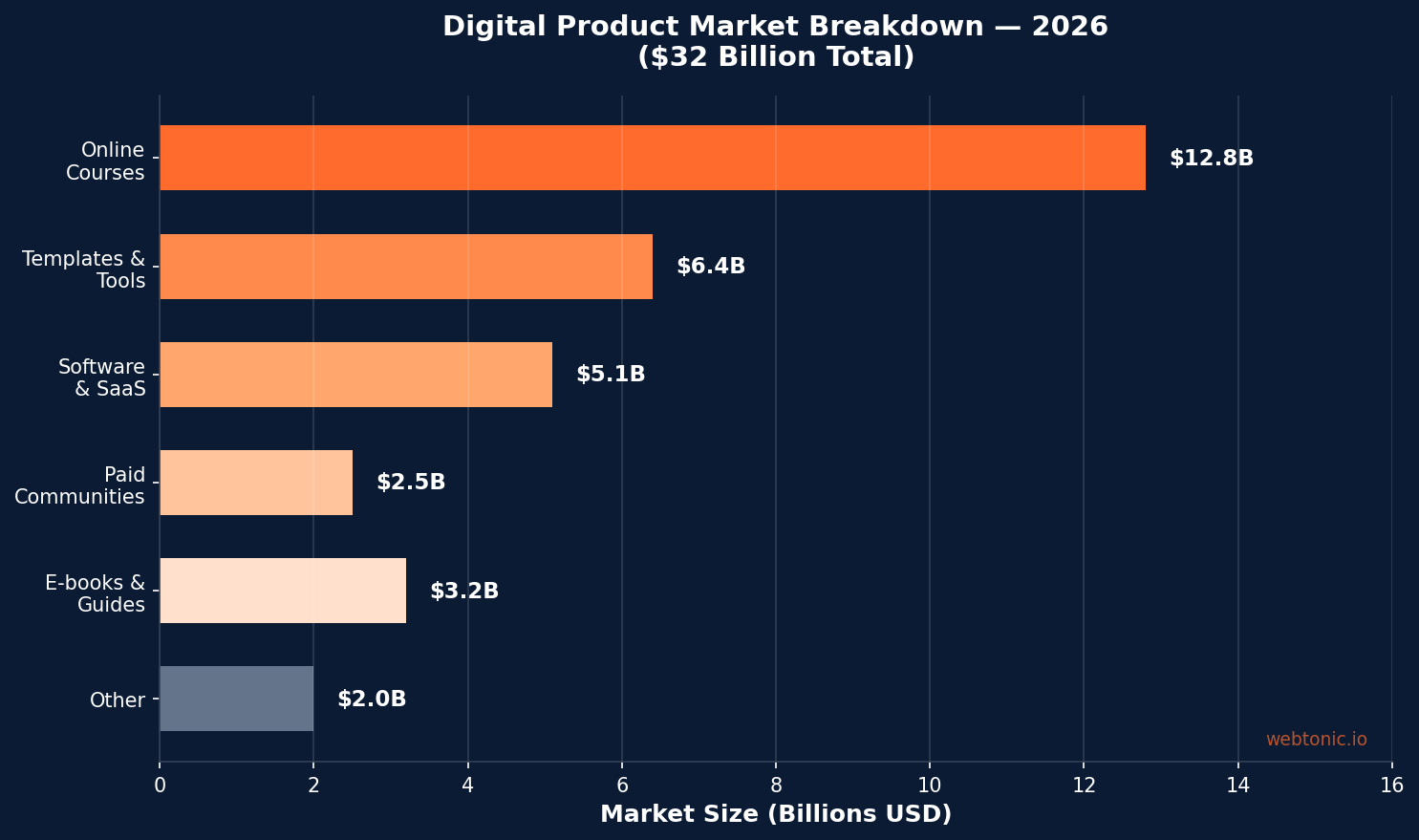
Financial advisory firms are increasingly turning to Shopify and e-commerce platforms to monetize digital products — from online courses and planning templates to subscription-based financial education memberships. With Shopify clearing over $100 billion in quarterly GMV and the digital product market reaching $32 billion in 2026, advisory practices have a growing opportunity to build recurring revenue streams beyond traditional AUM fees.
Key Takeaways
- Shopify achieved $100+ billion in Q1 2026 GMV with 34% year-over-year revenue growth, expanding its financial services infrastructure with money transmitter licences in 18 U.S. states (Shopify, 2026).
- The global digital product market reached $32 billion in 2026, growing at 22–28% year over year — roughly double the 12–15% growth rate of the broader creator economy (InsightRaider, 2026).
- 85.6% of AdvicePay invoices were for subscriptions in 2025, reinforcing recurring planning relationships as the default revenue structure for fee-for-service advisors (AdvicePay, 2026).
- Online courses represent $12.8 billion (40%) of the digital product market, with the average course price climbing to $89 in 2026, up from $67 in 2023.
- Paid communities and memberships account for $2.5 billion (8%) of the digital product market, making subscription models a viable secondary revenue channel for advisory firms.
- Shopify has secured money transmitter licences in 18 states and Puerto Rico, positioning the platform for direct financial services capabilities beyond traditional e-commerce.
Shopify and E-Commerce Platform Statistics for Financial Services
| Metric | 2026 Data | Year-over-Year Change |
|---|---|---|
| Shopify Q1 GMV | $100+ billion | +34% revenue growth |
| Digital product market size | $32 billion | +22–28% YoY |
| Online course market share | $12.8B (40% of digital) | Avg. price up to $89 |
| Paid communities/memberships | $2.5B (8% of digital) | Growing segment |
| Creator economy total | $290+ billion | +12–15% YoY |
| AdvicePay subscription share | 85.6% of invoices | Default structure |
| Shopify money transmitter licences | 18 states + Puerto Rico | New in 2025–2026 |
The Digital Product Opportunity for Financial Advisors
The intersection of financial advisory services and e-commerce is no longer theoretical. The digital product segment is growing at 22–28% year over year, roughly double the 12–15% growth rate of the broader creator economy (InsightRaider, 2026). For advisory firms, this growth creates opportunities in three primary categories:
- Online courses — financial literacy, retirement planning, investment fundamentals. The market reached $12.8 billion in 2026, representing 40% of all digital products. The average course price climbed to $89, up from $67 in 2023, driven by creators adding video, community access, and live sessions.
- Planning templates and tools — budgeting spreadsheets, tax planning worksheets, estate planning checklists. Low production cost, high perceived value for DIY-oriented consumers who are not yet ready for full advisory relationships.
- Paid memberships — ongoing access to financial planning content, quarterly market updates, community Q&A. The paid community segment accounts for $2.5 billion (8%) of the digital product market, and subscription models align naturally with the advisory industry's shift toward recurring revenue.
According to AdvicePay's 2026 Fee-for-Service Trend Report, subscriptions dominate at 85.6% of all invoices in 2025, reinforcing recurring planning relationships as the default structure for fee-for-service advisors. This behavioral shift among advisory clients mirrors the broader digital product trend toward subscription-first commerce.
Shopify Platform Capabilities for Financial Advisory
Shopify's evolution from pure e-commerce to a financial services infrastructure provider makes it increasingly relevant for advisory practices. Key platform developments include:
- Money transmitter licences in 18 U.S. states and Puerto Rico — Shopify has applied for and secured approvals to operate as a money transmitter, enabling direct payment processing capabilities (The Paypers, 2026).
- Intent to become a "provider of prepaid access" — this designation would enable wallet-style functionality comparable to services like Venmo, potentially reducing the fees Shopify pays to third-party processors.
- Shopify Payments integration with Stripe — while Shopify currently relies on Stripe for payment processing infrastructure, its licensing efforts signal a move toward greater financial services autonomy.
- 34% revenue growth in Q1 2026 with 15% free cash flow margins — demonstrating platform stability and continued investment in merchant tools (Shopify Q1 2026).
For financial advisory firms evaluating e-commerce platforms, Shopify's growth trajectory and financial services capabilities make it a natural fit for practices looking to sell digital products alongside traditional advisory services. The platform's subscription management, digital download delivery, and payment processing handle the operational complexity that historically prevented advisory firms from monetizing their expertise at scale.
Website Platform Comparison for Financial Advisory Firms
| Platform | Best For | E-Commerce Strength | Financial Compliance |
|---|---|---|---|
| Shopify | Digital products, courses, memberships | Native — subscription + digital delivery | SOC 2, PCI DSS Level 1 |
| WordPress + WooCommerce | Content-heavy advisory sites | Plugin-based — requires configuration | Depends on hosting + plugins |
| Custom Build | Enterprise RIAs with complex needs | Fully customizable | Full control, higher cost |
| Webflow | Design-forward advisory branding | Limited — basic e-commerce | Standard web hosting security |
| Squarespace | Solo advisors, simple presence | Basic — courses via integrations | Standard security |
A $2,000 template site that costs $500/month in maintenance can ultimately cost more than a $8,000 custom site with $50/month hosting over a 3–5 year horizon. For advisory firms, the platform decision should be based on long-term total cost of ownership rather than initial setup price, factoring in compliance requirements, digital product capabilities, and integration needs with existing advisory technology stacks.
Revenue Models: Traditional AUM vs. Digital Product Revenue
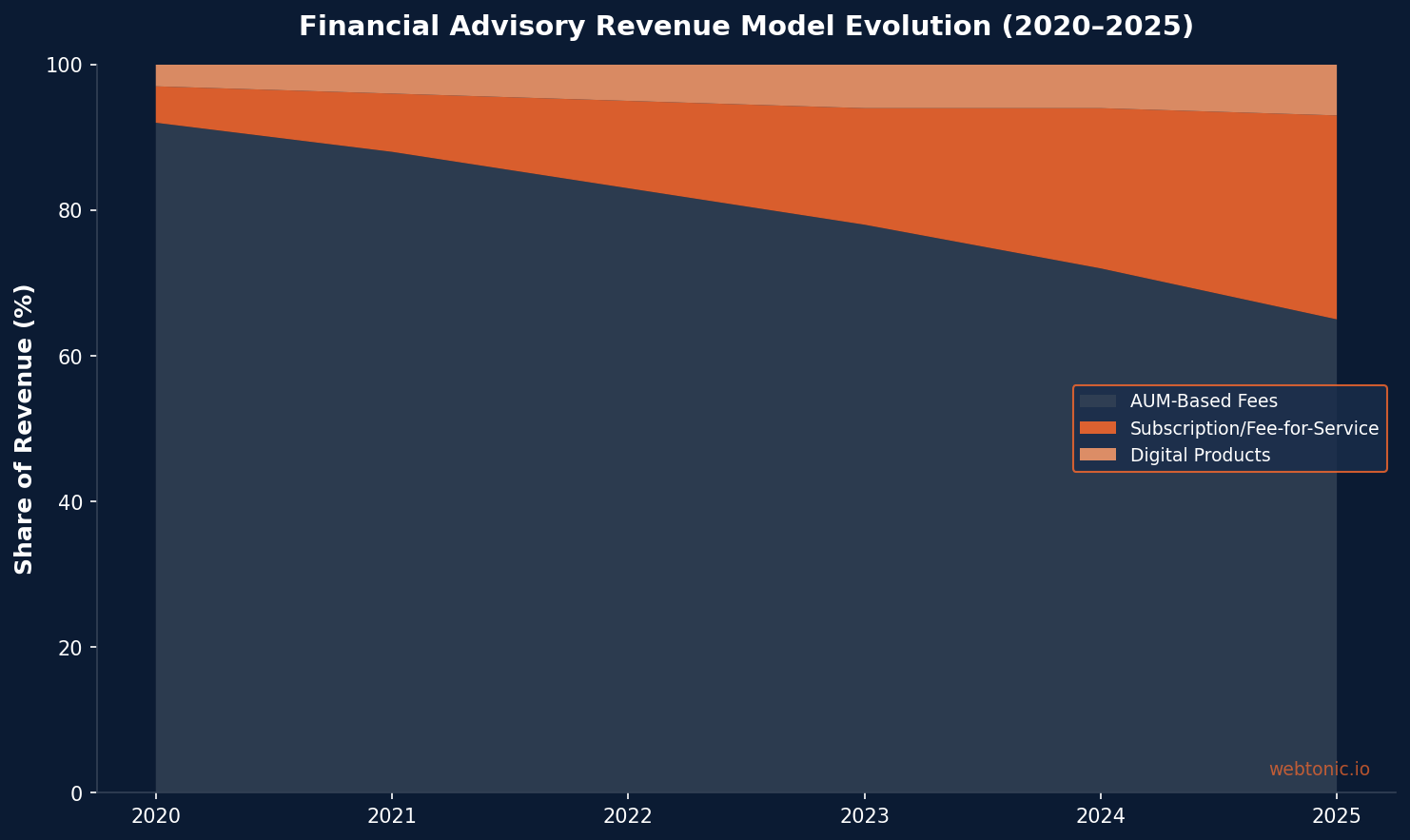
The advisory industry's revenue model is diversifying. While AUM-based fees remain the primary revenue source for most RIA firms, fee-for-service and subscription-based planning models are growing rapidly. AdvicePay's data shows the trend is accelerating:
- 85.6% of AdvicePay invoices were for subscriptions in 2025, up from previous years
- Planning fees continue to rise, with advisors charging recurring monthly or quarterly fees for ongoing financial planning relationships
- Only 5–15% of a creator's income typically comes from digital product sales alone (Ruzuku, 2026), suggesting digital products work best as a complement to — not replacement for — traditional advisory revenue
For advisory firms, digital products on platforms like Shopify serve a dual purpose: generating incremental revenue from consumers who are not ready for full advisory relationships, and building brand authority that converts into traditional AUM clients over time. Firms that publish educational digital products report higher trust signals and shorter prospect-to-client conversion timelines than those relying solely on consultation-based lead generation.
Shopify vs. Traditional Advisory Platforms: Key Differences
Financial advisory firms evaluating Shopify often compare it against specialized advisory platforms like Advisor Websites, Twenty Over Ten, and FMG Suite. While these niche platforms offer compliance-friendly templates and advisor-specific integrations, they lack the robust e-commerce infrastructure that Shopify provides for digital product monetization.
Shopify processes over $100 billion in quarterly GMV across millions of merchants, providing enterprise-grade reliability and payment security that specialized advisory platforms cannot match. The platform's PCI DSS Level 1 compliance and SOC 2 certification satisfy the security requirements that regulated financial firms must meet. Additionally, Shopify's app ecosystem includes over 8,000 integrations covering email marketing, CRM connectivity, analytics, and membership management — far exceeding the integration options available on advisor-specific platforms (SaaS Stats Hub, 2026).
The trade-off is clear: advisory-specific platforms excel at compliance and traditional website functionality, while Shopify excels at commerce. Many advisory firms now operate a hybrid model — maintaining their primary advisory website on a compliance-friendly platform while running their digital product storefront on Shopify. This approach captures the best of both worlds without forcing a single-platform compromise that limits either advisory branding or e-commerce capability.
Best Practices for Financial Advisors Using Shopify
- Start with a single digital product — a financial planning course, retirement readiness assessment, or tax optimization guide. Test market demand before investing in a full product catalog.
- Leverage subscription billing — with 85.6% of advisory invoices already subscription-based, monthly membership models align with existing client expectations and create predictable recurring revenue.
- Ensure SEC/FINRA compliance — digital products containing financial advice must comply with regulatory requirements. Work with compliance counsel to define what constitutes "education" versus "advice" in your product offerings.
- Integrate with advisory technology — connect Shopify with your CRM, email marketing, and analytics infrastructure to track the full customer journey from digital product purchase to advisory client conversion.
- Price based on value, not cost — with average course prices at $89 in 2026, financial advisory courses can command premium pricing ($197–$997) due to the high perceived value of financial expertise and the direct monetary impact on buyers.
- Use digital products as lead magnets — low-cost or free resources drive email list growth and nurture prospects into full advisory relationships over 6–12 months.
- Monitor platform evolution — Shopify's push into financial services (money transmitter licences, payment processing) may create new opportunities for advisory-commerce integrations in 2027 and beyond.
- Track digital product conversion funnel metrics — measure the full journey from course purchaser to advisory prospect to AUM client. The most successful advisory firms attribute 8–15% of their new AUM clients to initial digital product interactions, making e-commerce analytics an essential component of the advisory marketing stack.
Frequently Asked Questions
Can financial advisors sell digital products on Shopify?
Yes, financial advisors can sell digital products on Shopify, including online courses, planning templates, budgeting tools, and membership subscriptions. However, products containing specific financial advice must comply with SEC and FINRA regulations. Educational content that does not constitute personalized investment advice typically falls outside regulatory restrictions.
How much revenue can financial advisors generate from digital products?
Revenue varies widely based on product type, pricing, and audience size. The average online course price reached $89 in 2026, but financial advisory courses command premium pricing of $197–$997 due to the high perceived value of financial expertise. Most creators generate 5–15% of their total income from digital products, with advisory firms using them primarily as lead generation tools rather than primary revenue sources.
Is Shopify better than WordPress for financial advisory websites?
It depends on your primary goal. Shopify excels at digital product sales, subscription management, and payment processing with built-in PCI DSS Level 1 compliance. WordPress with WooCommerce offers more flexibility for content-heavy advisory sites but requires additional plugins and configuration for e-commerce functionality. Many advisory firms use both — WordPress for their main website and Shopify for their digital product storefront.
What types of digital products work best for financial advisors?
The highest-performing digital products for financial advisors include retirement planning courses, tax optimization guides, budgeting templates, estate planning checklists, and monthly membership communities offering market updates and Q&A sessions. Products that address specific financial pain points and provide actionable frameworks tend to convert better than generic financial literacy content.
How does Shopify's expansion into financial services affect advisory firms?
Shopify has secured money transmitter licences in 18 U.S. states and is pursuing "provider of prepaid access" designation. For advisory firms, this means the platform may eventually offer more integrated payment and financial management tools, potentially reducing third-party processing fees and enabling new advisory-commerce integrations. However, these capabilities are still emerging and not yet widely available to merchants.
Sources
shopify.com/news/shopify-q1-2026-financial-results
insightraider.com/en/blog/digital-product-market-size
blog.advicepay.com/press/advicepay-2026-fee-for-service-trend-report
thepaypers.com/fintech/news/shopify-pursues-us-money-transmitter-licences-across-states
ruzuku.com/learn/articles/online-course-statistics
saasstatshub.com/ecommerce/shopify-statistics-2026


