Table of contents

Artificial intelligence (AI) is still a hot topic among businesses looking to improve their everyday efficiency without breaking the bank.
For in-house SEO teams in particular, AI can be an incredibly useful sidekick to have. It was once something that created mixed opinions and left many people hesitant to try it out for themselves, but nowadays, 88% of digital marketers are using AI in their day-to-day roles.
This shift is also resulting in better results. Since 65% of businesses have seen an improvement in their SEO performance thanks to AI marketing tools, it’s only going to become more popular.
Although a lot of businesses are now using AI to some extent, there is still so much potential that has not been tapped into. Many people don’t realise quite how much it is capable of.
Every business has its own goals when it comes to introducing AI tools into its everyday SEO operations, meaning there is no one-size-fits-all approach.
The trick is to know exactly what repetitive processes are taking up the most time and figure out which SEO tasks can be automated with AI. This way, in-house SEO teams can establish the best course of action for their own way of working and introduce the solutions that are going to transform their everyday workflows.
6 Common Ways to Automate Repetitive SEO Tasks
AI is becoming increasingly popular in in-house SEO teams across all industries, opening up new possibilities that seemed out of reach previously.
There are various ways to automate repetitive tasks with the help of AI tools, so let’s name some of the different options available to SEO teams of all shapes and sizes.
1. Schedule technical SEO audits
Technical audits are a time-consuming job, especially if working on a large website. Instead of having to manually check hundreds, if not thousands, of pages, using an AI automation tool such as Seology to continually monitor and fix a website will help keep on top of it.
By automating repetitive checks, Seology detects problems as soon as they arise, making it easy to fix negative SEO before it affects your rankings. From broken links to outdated content, AI-powered tools highlight issues your busy team may miss in a general checkup.
Another particularly useful tool to invest in is SureThing. It can also run automated website health checks, monitor site traffic and engagement, and flag issues that need attention. This is useful for alerting the team to any real-time problems that could impact their SEO efforts.
For in-house SEO teams working on larger websites, tools like Seology and SureThing not only make website health checks much less time-consuming, but the data collected can be automatically analyzed to produce a list of actions that need to be taken, even prioritizing them based on urgency, so the team can focus their efforts on the more technical aspects instead of admin.
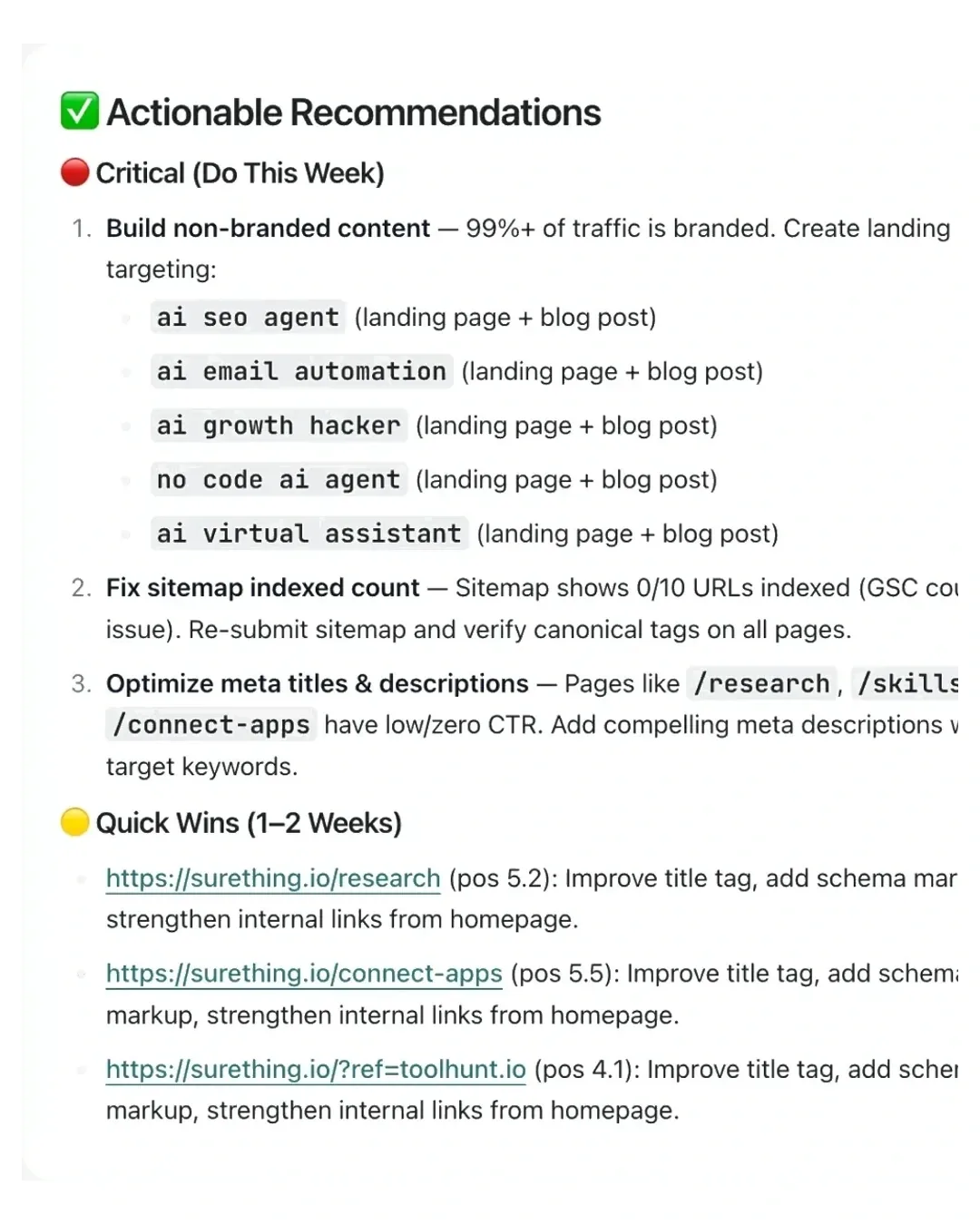
(Image source: SureThing)
2. Draft marketing content
All SEO teams know just how important it is to maintain a strong online presence and regularly publish new content, but content creation can be one of the first tasks to be put on the back burner when things get busy.
Instead of sitting down to write new content from scratch, you can use AI to draft the initial version.
Some tools already automate repetitive tasks and content writing as standard. Let’s take Slate as an example. It is an AI tool designed specifically for marketing content, using a business’s style guide as a starting point to create custom marketing material which can be scheduled for publishing.
Hostinger Agent takes this one step further by offering specialized AI agents and guided skills for a number of content tasks, including drafting, copywriting and even initial content-gap research.
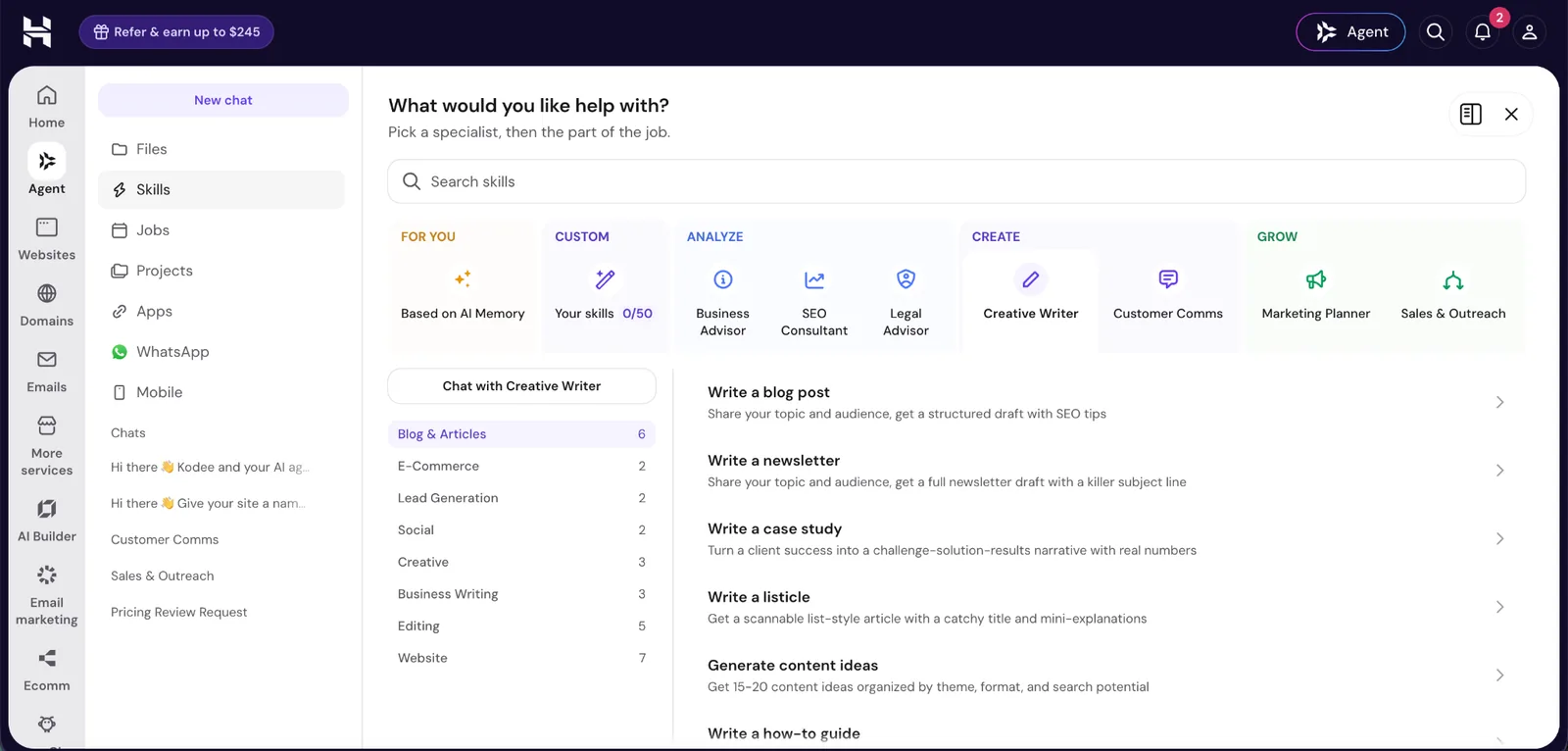
Users simply select the Marketing Planner, Creative Writer or SEO Consultant to support different stages of content creation, from identifying relevant keywords and analysing competitors to developing blog ideas and promotional copy.
3. Generate reports
For in-house SEO teams that are manually pulling data for reports every week or month, the process of compiling information from various sources and having to analyze the data can be incredibly time-consuming.
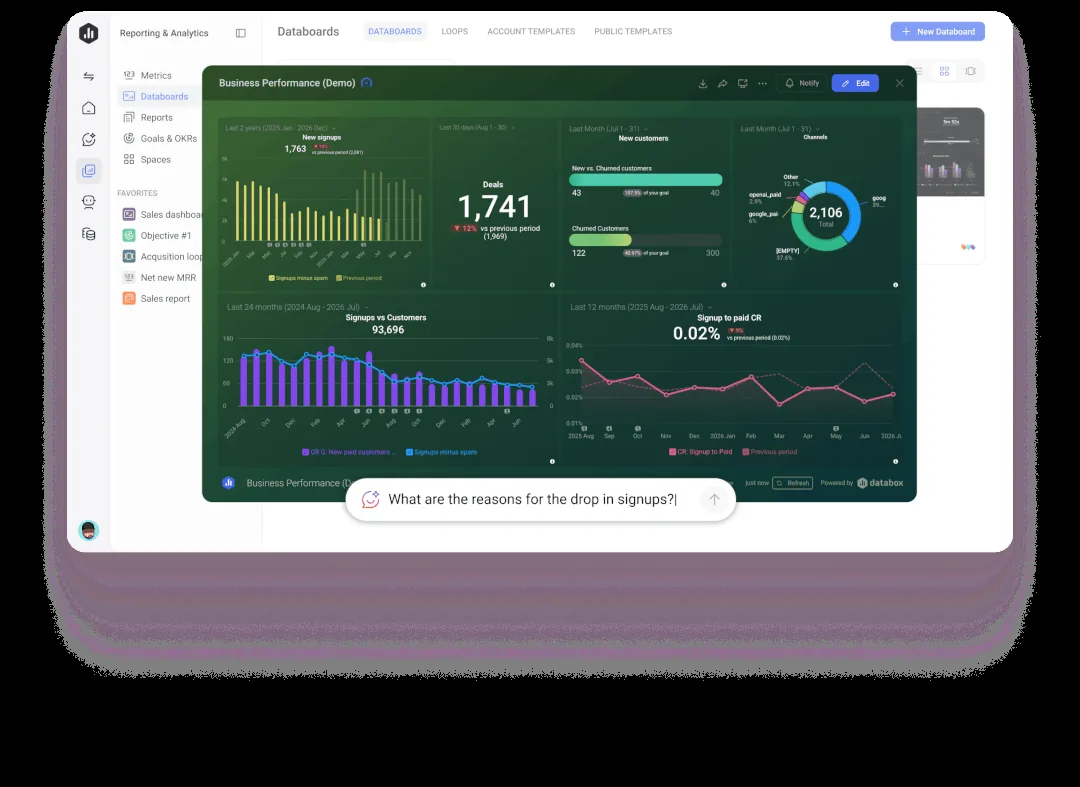
Having an AI-powered tool for reporting, such as Databox, makes the process much easier since it automates the data compilation process and brings everything together in one place. It then goes as far as analyzing the information to turn the numbers into contextual information.
4. Monitor keyword positions
Regularly checking keyword positions is a never-ending task that can eat into an SEO team’s day, especially if they are tracking a large number of them. This is where an AI automation tool can be used to keep an eye on SEO performance.
Looping back to one of our previous tool mentions SureThing. This tool also has a built-in AI agent with a specific SEO analyst feature.
With the ability to pull data from Google Search Console, SureThing tracks keyword data daily, and suggests improvements that can be made every week.
5. Scale copy across brands and markets
For larger SEO teams, scaling content for multiple brands, products, or markets can quickly overwhelm copywriters, especially if each version requires a different tone, locale or key focus.
This is where enterprise level AI tools like Ahrefs’ Agent A come in handy.
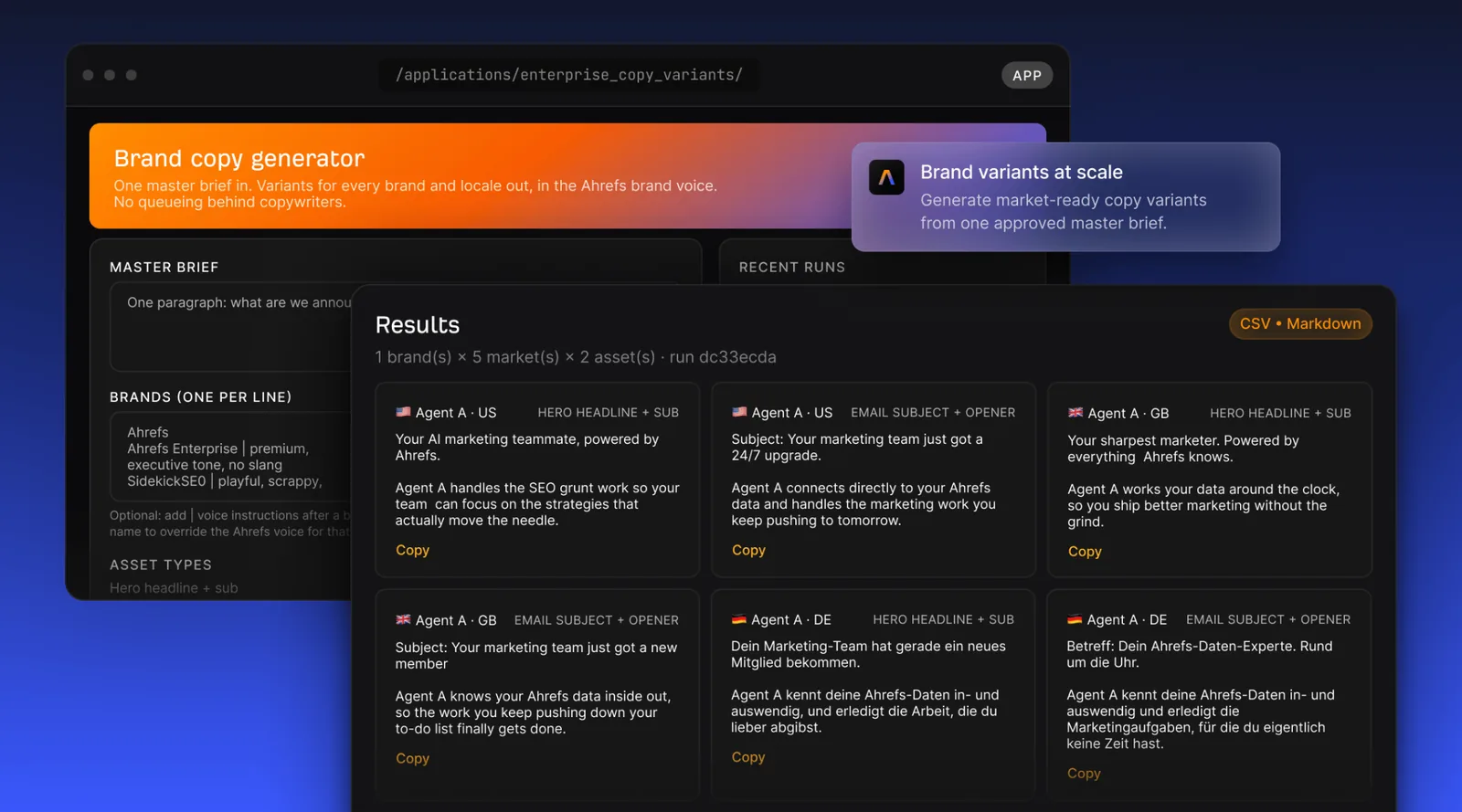
Agent A makes it easy to automate repetitive SEO content tasks by generating copy variations from a single master brief. For example, teams can draft their core content once and use AI to adapt it for different brands and markets, reducing the need to rewrite similar content manually.
If an SEO team can automate copy adaptations, they instantly speed up content publishing across markets. The core is human-written, the adaptations are sped up with AI. This is the key to freeing up copy teams to focus on strategy and creative direction instead.
6. Manage workload within the SEO team
Beyond SEO, automating repetitive tasks with AI can also significantly improve how efficiently the SEO team works day to day.
AI automation tools can help teams manage tasks and split duties across the team.
Visibility.so is a good example of this. As project management software designed specifically for SEO teams, it helps organize campaigns, assign tasks, and automate repetitive workflows with AI, reducing time spent on manual administration and letting team members focus on more strategic SEO work.
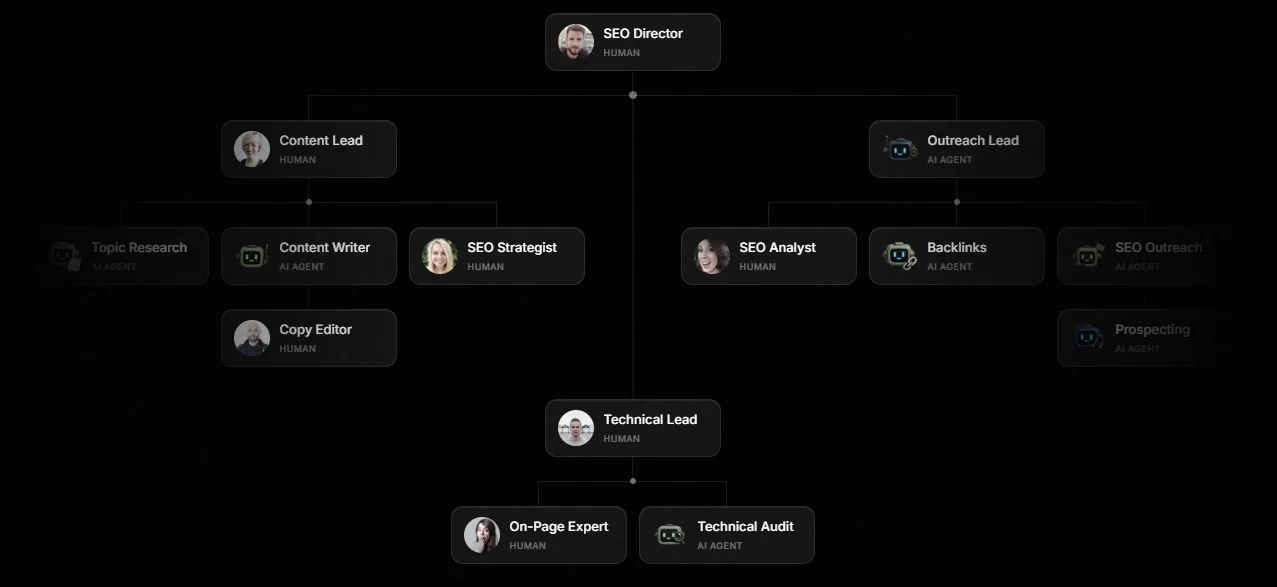
By streamlining everyday processes and keeping tasks organised, teams can boost productivity while ensuring deadlines are met.
Better still, growing SEO departments can split tasks between team members and AI agents, keeping the workload on track without overloading staff.
How to Automate Repetitive Tasks With Your Own AI Tools
Countless AI tools are available on the market today, but they may not meet a business's exact SEO requirements.
Because pre-made tools are designed to suit generic business needs and workflows, they may not offer the solution an in-house SEO team needs. In these cases, custom AI solutions are a popular option that allow for more flexibility.
While many business owners fear this solution is beyond their skill set, AI-powered platforms like Hostinger, BuildShip and n8n now let people with no prior development experience build their own tools.
The option to build your own AI tools by typing a description of what you need and letting AI do the rest has opened up countless opportunities for businesses.
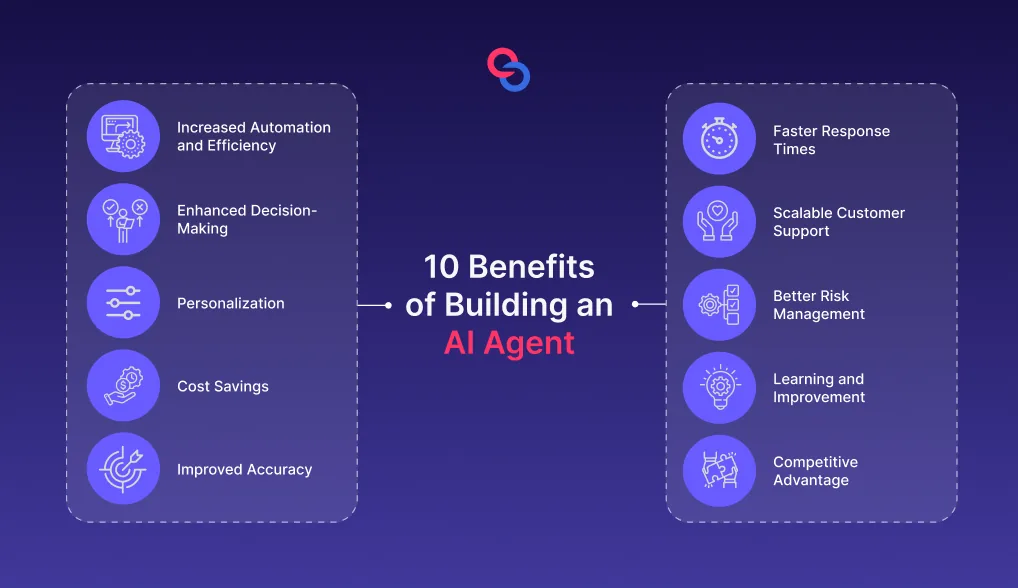
(Image Source: Kroolo)
Using one of these platforms typically starts by choosing from a range of pre-made templates, each designed to suit a particular workflow, and then using AI prompts to customize it by adding the necessary features.
This is the key to saving budget spent on numerous AI tools, and creating a tool that is personalized to your exact business workflow.
A custom AI tool that automates repetitive SEO tasks offers ongoing benefits by saving time over time. This frees up hours that can be used to focus on the parts of the SEO strategy that require a more specialist touch.
While creating this kind of custom tool was once an incredibly costly process requiring the help of experienced development teams, AI tools have opened up a much more level playing field and made it easier for in-house SEO teams to create solutions that suit their existing workflows.
The Next Steps to Automate Repetitive Tasks in Your SEO Workflow
For in-house SEO teams, there are often a lot of different tasks to stay on top of. Today, automating repetitive tasks such as monitoring keyword positions, running technical audits, and compiling reports has transformed how teams work.
AI automation can free up time in many ways, so the key is deciding which workflows to start with. The first step is to identify the most inefficient processes within the SEO team and determine how AI tools could help, and the rest will naturally follow.
Whether an SEO team within a business chooses to find an existing tool on the market that is designed to help with their exact pain point or build a custom AI tool using a no-code platform, these small changes can have a big impact on overall efficiency.