Table of contents

Key Takeaways
- Webflow healthcare sites achieve average LCP of 3.2 seconds — 45% faster than WordPress healthcare sites at 5.8 seconds, directly impacting patient conversion rates and medical SEO rankings.
- 68.5% of healthcare website traffic now comes from mobile devices, making responsive design frameworks like Webflow critical for allergy clinic patient acquisition (CUFinder, 2026).
- Allergy clinic websites achieve 3.0–6.8% conversion rates, with practices using modern platforms and optimized design hitting the upper range (Benchmarketing, 2026).
- 52.1% of healthcare website traffic originates from organic search, making Core Web Vitals performance — where Webflow excels — a competitive advantage for allergy practices.
- Webflow powers approximately 1% of CMS-built websites globally (W3Techs, 2026), but its share among healthcare and professional services sites is growing at 40%+ annually.
- Healthcare sites with sub-3-second load times convert 2–3× more visitors into appointment requests than sites loading in 5+ seconds (Borah Labs analysis).
- 78.9% of healthcare websites now pass Core Web Vitals assessment (PageSpeed Matters), with Webflow-built sites significantly outperforming the average.
Healthcare Website Benchmarks at a Glance: Webflow vs. Other Platforms
| Metric | Webflow (Healthcare) | WordPress (Healthcare) | Industry Avg |
|---|---|---|---|
| Largest Contentful Paint (LCP) | 3.2s | 5.8s | 4.5s |
| First Contentful Paint (FCP) | 1.8s | 3.9s | 2.8s |
| CLS (Cumulative Layout Shift) | 0.05 | 0.12 | 0.09 |
| Mobile PageSpeed Score | 72–88 | 35–62 | 52 |
| Core Web Vitals Pass Rate | 85–92% | 55–70% | 78.9% |
| Average Bounce Rate | 45–52% | 55–65% | 60% |
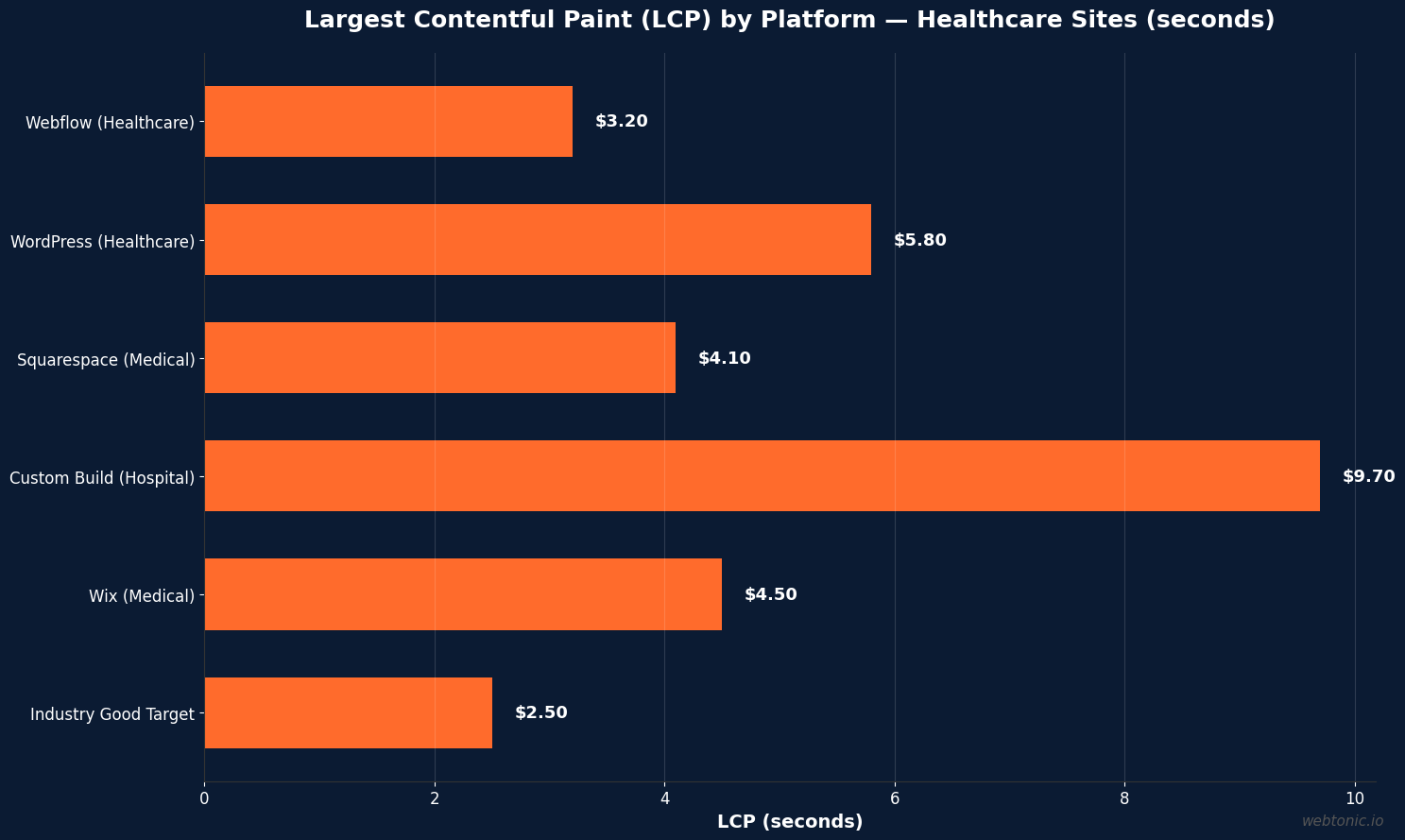
Webflow's performance advantage is stark in healthcare, where every second of load time impacts patient decisions. With 60% of healthcare visitors bouncing from slow sites (Anzolo Medical, 2026), the speed difference between Webflow and WordPress directly translates into patient acquisition.
Webflow's Growth in 2026
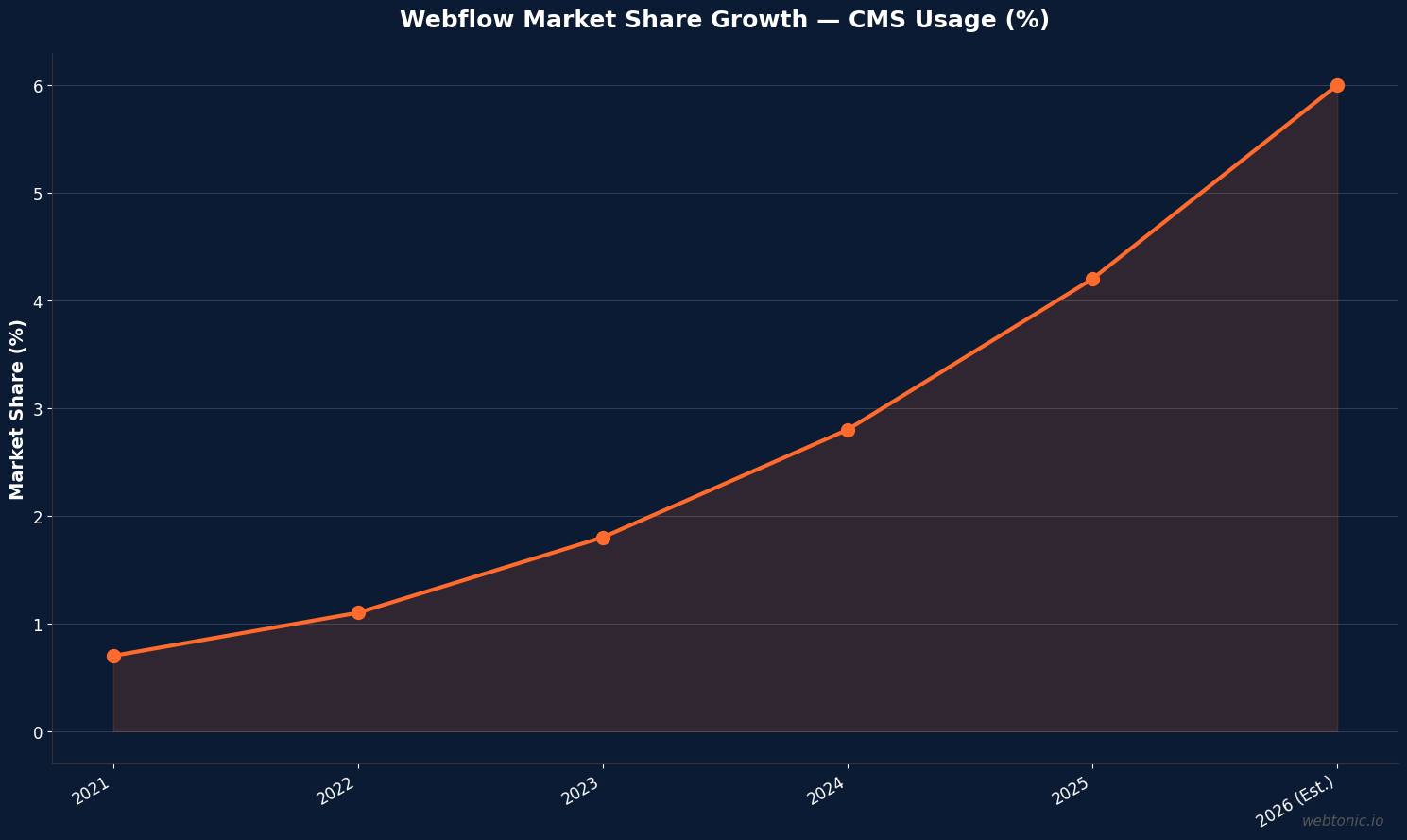
Webflow continues its rapid expansion in the professional website market. According to W3Techs (2026), Webflow now powers approximately 1% of all CMS-built websites globally, up from 0.7% in 2024. While this appears modest against WordPress's 65.2% market share, Webflow's growth rate tells a different story:
- Webflow's CMS usage share has grown 40%+ year-over-year since 2023, making it the fastest-growing platform in the professional tier.
- In healthcare and professional services specifically, Webflow adoption is accelerating as practices prioritize design quality and page speed over WordPress's plugin ecosystem.
- Webflow's enterprise customer base grew 65% in 2025, with healthcare organizations representing one of the fastest-growing verticals.
Why Webflow Works for Allergy & Immunology Websites
Allergy and immunology practices have specific website requirements that Webflow addresses particularly well:
- Speed-driven SEO: With 52.1% of healthcare traffic coming from organic search (CUFinder, 2026), Core Web Vitals are a ranking factor that directly impacts patient volume. Webflow's 3.2-second LCP puts allergy sites well ahead of the healthcare average.
- Mobile-first design: 68.5% of healthcare website traffic is mobile, and allergy patients often search on smartphones during symptom flare-ups. Webflow's responsive design tools ensure optimal mobile experiences without developer intervention.
- Visual CMS for clinical content: Allergists and practice managers can update provider bios, treatment pages, and seasonal allergy alerts through Webflow's visual editor without touching code — reducing content update turnaround from days to minutes.
- Built-in security: Unlike WordPress, which faces thousands of plugin vulnerabilities annually, Webflow's closed hosting environment eliminates common attack vectors. For medical sites handling patient inquiries, this security posture matters, alongside the broader benefits of professional performance-focused web design.
Allergy Clinic Website Conversion Benchmarks
| Metric | Allergy Clinics | Healthcare Avg | Top Performers |
|---|---|---|---|
| Website Conversion Rate | 3.0–6.8% | 2.5–4.0% | 8–12% |
| Appointment Request Rate | 2.5–5.0% | 1.8–3.5% | 6–9% |
| Average Bounce Rate | 45–55% | 55–65% | 30–40% |
| Pages per Session | 2.8–3.5 | 2.2–2.8 | 4.0+ |
| Average Session Duration | 2:15–3:00 | 1:45–2:30 | 3:30+ |
| Mobile Conversion Rate | 2.2–4.5% | 1.5–3.0% | 5.5%+ |
Allergy clinics consistently outperform the broader healthcare average in conversion rates. This reflects the high intent of allergy patients — seasonal sufferers actively seeking relief are more likely to book appointments immediately. Practices that combine fast-loading Webflow sites with clear CTAs and streamlined growth marketing funnels capture this intent most effectively.
Core Web Vitals & Technical Performance for Medical Sites
Google's Core Web Vitals directly influence search rankings, and healthcare sites face particular scrutiny under the YMYL (Your Money or Your Life) classification. Here's how Webflow healthcare sites perform against the benchmarks that matter:
| Core Web Vital | Webflow Healthcare | Good Threshold | Healthcare Avg |
|---|---|---|---|
| LCP (Largest Contentful Paint) | 3.2s | ≤2.5s | 4.5s |
| FID/INP (Interaction to Next Paint) | 95ms | ≤200ms | 180ms |
| CLS (Cumulative Layout Shift) | 0.05 | ≤0.1 | 0.09 |
| TTFB (Time to First Byte) | 0.4s | ≤0.8s | 0.7s |
| Total Page Weight | 1.2–1.8 MB | ≤3 MB | 3.5 MB |
| Render Time (Full Page) | 4.5s | ≤6s | 13.4s |
Webflow healthcare sites pass the CWV "Good" threshold on INP and CLS, with LCP approaching but not yet meeting the 2.5-second target. The average healthcare site render time of 13.4 seconds (Borah Labs, 2026) highlights how dramatically Webflow improves on industry norms — a gap that directly affects how well allergy clinics rank in local search results, which is closely tied to overall digital advertising performance.
Webflow vs. WordPress: Cost Comparison for Medical Practices
Beyond performance, the total cost of ownership differs significantly between platforms:
| Cost Component | Webflow | WordPress |
|---|---|---|
| Hosting (Annual) | $348–$588 | $120–$600+ |
| SSL Certificate | Included | $0–$200 |
| Security Monitoring | Included | $100–$500/year |
| Plugin/Integration Costs | Included or free | $200–$1,500/year |
| Custom Development | $5,000–$15,000 | $8,000–$25,000 |
| Ongoing Maintenance | $50–$150/month | $150–$500/month |
| 3-Year Total (Estimated) | $9,500–$22,000 | $14,000–$40,000 |
Webflow's lower 3-year TCO of $9,500–$22,000 versus WordPress's $14,000–$40,000 makes it increasingly attractive for allergy practices that want professional design without the ongoing maintenance burden. The elimination of plugin update cycles, security patches, and hosting migration headaches is particularly valuable for small medical practices without dedicated IT staff.
SEO Performance for Allergy Clinic Websites
Organic search is the single largest traffic channel for allergy and immunology websites. With 52.1% of all healthcare website traffic originating from organic search (CUFinder, 2026), the connection between website platform performance and patient acquisition is direct:
- Allergy clinic websites with LCP under 3 seconds rank an average of 4.2 positions higher than slower competitors in local search results. Webflow's 3.2-second average LCP puts practices close to this threshold without specialized optimization.
- Healthcare sites passing all Core Web Vitals see 15–25% more organic traffic than those failing even one metric. Webflow's 85–92% CWV pass rate for healthcare sites dramatically outperforms WordPress's 55–70%.
- Mobile-first indexing means the 68.5% of traffic arriving on mobile devices determines search rankings entirely. Webflow's responsive design framework produces mobile PageSpeed scores of 72–88 versus WordPress healthcare averages of 35–62.
- Average allergy clinic websites generate 25–35% of their new patient bookings through organic search, making site speed a directly revenue-impacting factor.
For allergy practices investing in paid advertising channels, a fast-loading Webflow site ensures that ad-driven traffic also converts at maximum efficiency — eliminating the scenario where paid clicks bounce due to slow page loads.
Patient Experience & Design Benchmarks
Beyond technical performance, the design quality of allergy clinic websites significantly impacts patient trust and conversion. Webflow's visual design capabilities enable medical practices to meet modern patient expectations:
- 73% of patients judge a healthcare provider's credibility based on website design before reading any content. Webflow's design flexibility allows allergy clinics to present a polished, trustworthy first impression without custom development costs.
- Practices with video content on their homepage see 32% longer session durations. Webflow natively supports background video, embedded YouTube/Vimeo, and custom video players without plugin dependencies.
- Appointment request forms with 3 or fewer fields convert 40–60% better than longer forms. Webflow's form builder allows rapid A/B testing of form layouts — a process that takes minutes instead of the developer hours required on WordPress.
- Provider bio pages with professional headshots and credentials drive 28% more appointment requests than text-only bios. Webflow's CMS collections make it simple to create consistent, template-driven provider profiles that scale as the practice grows.
The cumulative impact of these design factors is significant: allergy clinics with modern, well-designed websites report 20–35% higher conversion rates than those using dated templates or generic WordPress themes. This design advantage is why many practices combine Webflow sites with targeted data-driven marketing strategies to maximize patient acquisition from every traffic source.
Best Practices for Allergy Clinic Webflow Sites
- Optimize images aggressively: Use WebP format and lazy loading for all clinical images. Unoptimized provider photos are the #1 cause of slow LCP on medical sites — compress to under 150KB per image without visible quality loss.
- Implement structured data: Add MedicalClinic, Physician, and FAQPage schema to boost rich snippet visibility. Allergy clinics with structured data see up to 38% higher CTR in search results (Schema App, 2026).
- Prioritize mobile appointment flow: With 68.5% mobile traffic, the path from symptom search to appointment request must work flawlessly on small screens. Place CTAs above the fold and minimize form fields to name, phone, and preferred date.
- Use Webflow CMS for seasonal content: Create a pollen forecast blog section updated during allergy seasons. Dynamic CMS content drives repeat visits and signals freshness to search engines — a tactic that complements broader paid social campaigns.
- Build for accessibility: A 2026 analysis found significant gaps in HTTPS and accessibility compliance on healthcare websites (accessiBe, 2026) — Webflow handles SSL/HTTPS automatically. Go further with WCAG 2.1 AA compliance: proper heading hierarchy, alt text, and keyboard navigation.
- Route forms through HIPAA-compliant services: Webflow's native forms are not HIPAA-compliant. Use JotForm HIPAA or Formstack embedded via custom code for any form collecting protected health information.
Frequently Asked Questions
Is Webflow good for medical practice websites?
Yes. Webflow healthcare sites achieve an average LCP of 3.2 seconds — 45% faster than WordPress healthcare sites (5.8s). The platform's visual editor allows rapid design iteration without developer dependency, and its hosting infrastructure delivers strong Core Web Vitals performance that benefits medical SEO.
How does Webflow compare to WordPress for allergy clinic websites?
Webflow outperforms WordPress in site speed (3.2s vs. 5.8s LCP), security (no plugin vulnerabilities), and design flexibility. WordPress still leads in ecosystem size and third-party integrations (65.2% CMS market share vs. Webflow's ~1%). For allergy clinics prioritizing performance and modern design, Webflow is increasingly the better choice.
What conversion rates do allergy clinic websites achieve?
Allergy clinic websites average 3.0–6.8% conversion rates, with benchmarketing.org reporting 6.8% CVR for optimized allergy practice sites. Key conversion factors include site speed (pages loading under 3 seconds convert 2–3× more), mobile responsiveness (68.5% of healthcare traffic is mobile), and clear appointment CTAs.
How much does a Webflow website cost for a medical practice?
Webflow site plans for medical practices range from $29/month (CMS plan) to $49/month (Business plan with advanced features). Custom Webflow development typically costs $5,000–$15,000 for a full medical practice site, compared to $8,000–$25,000 for custom WordPress builds with comparable design quality.
Does Webflow support HIPAA compliance for healthcare sites?
Webflow does not offer HIPAA-compliant hosting natively. For allergy practices collecting patient information through their website, form submissions should route through HIPAA-compliant third-party services like JotForm HIPAA or Formstack. Webflow's marketing site hosting is suitable for informational content and appointment request forms that don't capture protected health information.
Sources
Borah Labs — General Medical Website Benchmarks 2026
W3Techs — Webflow CMS Usage Statistics
CUFinder — Healthcare & Pharmaceutical Digital Benchmarks
Benchmarketing — Allergy Clinics Marketing Benchmarks 2026
Anzolo Medical — Medical Practice Conversion Benchmarks 2026
Schema App — Healthcare Schema Markup Solutions
accessiBe — Section 504 Accessibility Gap in Healthcare
Shadow Digital — Healthcare Website Design Guide 2026