



Table of contents
Key Takeaways
- Snapchat reached 453–483 million daily active users in 2026, with Q1 ad revenue of $1.24 billion — a platform now large enough for serious healthcare media buys.
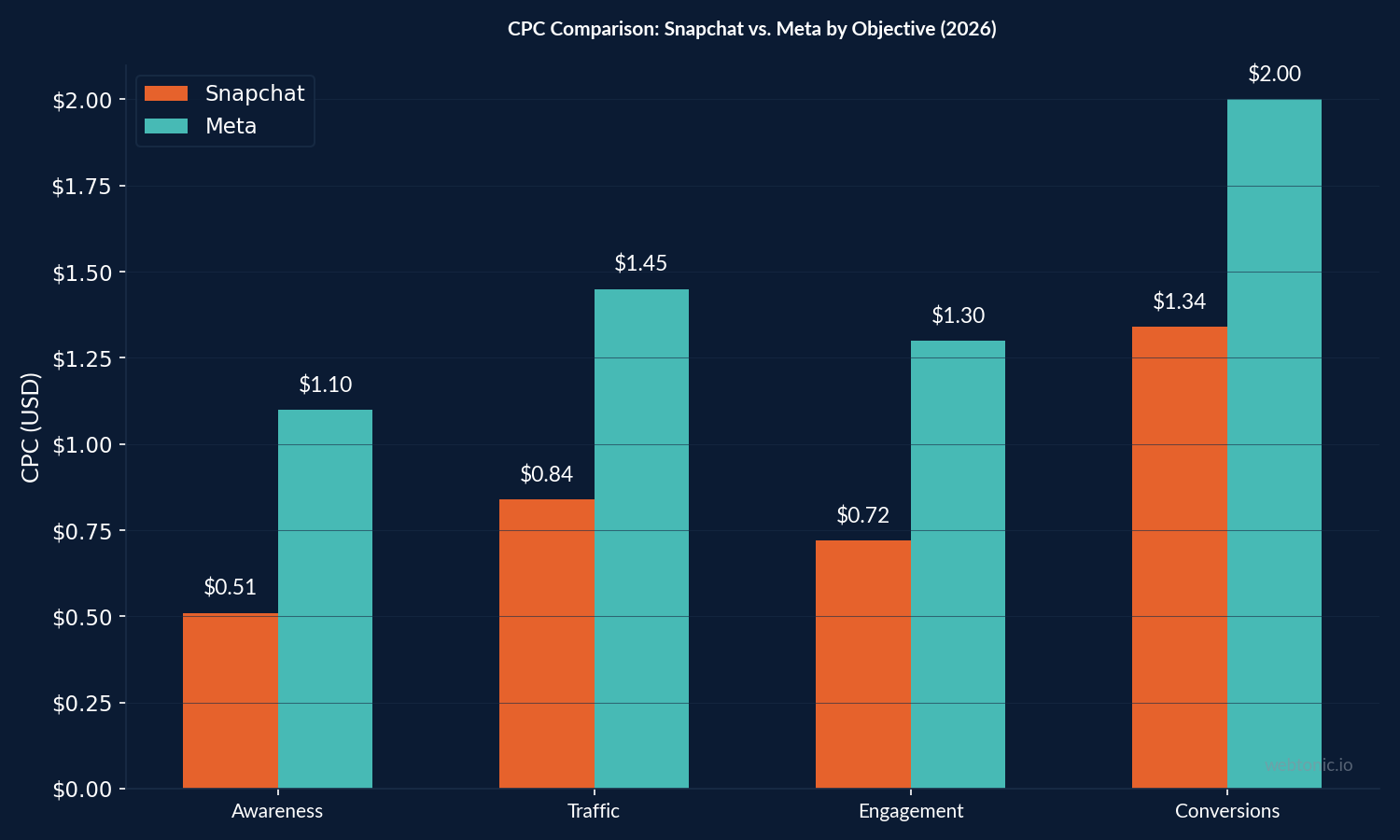
- Median Snapchat CPC sits at $0.84, with an interquartile range of $0.51–$1.34 — materially cheaper than Meta's comparable $1.10–$2.00 range (AdLiftr, 2026).
- Snapchatters are 1.5× more likely to discuss health ad content with a doctor or caregiver versus non-Snapchat social users (Snapchat/Ipsos, 2026).
- 49% of Snapchatters report feeling more aware of specific health products or treatments after encountering ads on the platform.
- 61% of Snapchat users use social platforms to evaluate treatment options, making it a research-intent channel for allergy and immunology services.
- AR Lens ads generate average playtime of 25–30 seconds, far exceeding standard video ad engagement in healthcare.
- Swipe-up rates on Snapchat range from 0.35–1.5% for e-commerce, with health awareness campaigns trending toward the higher end (Prooflytics, 2026).
Snapchat Ads Benchmarks at a Glance: Healthcare Advertising
| Metric | Snapchat (All Industries) | Healthcare / Health Context | vs. Meta Benchmark |
|---|---|---|---|
| CPC (Median) | $0.84 | $0.70–$1.20 | 25–55% cheaper |
| CPM | $5–$9 | $6–$11 | Comparable |
| Swipe-Up Rate | 0.35–1.5% | 0.5–1.2% | CTR-equivalent metric |
| Video Completion Rate | 65–80% | 70–85% | Higher in health |
| AR Lens Avg Playtime | 25–30s | 28–35s | No Meta equivalent |
| Share Rate (Lenses) | 15–25% | 20–42% | Organic amplification |
Snapchat's cost structure makes it a viable alternative to Meta for allergy and immunology practices targeting younger patient demographics. The platform's unique ad formats — particularly AR Lenses — create engagement levels that traditional display and feed ads cannot match.
Snapchat's Platform Scale and Growth Trajectory
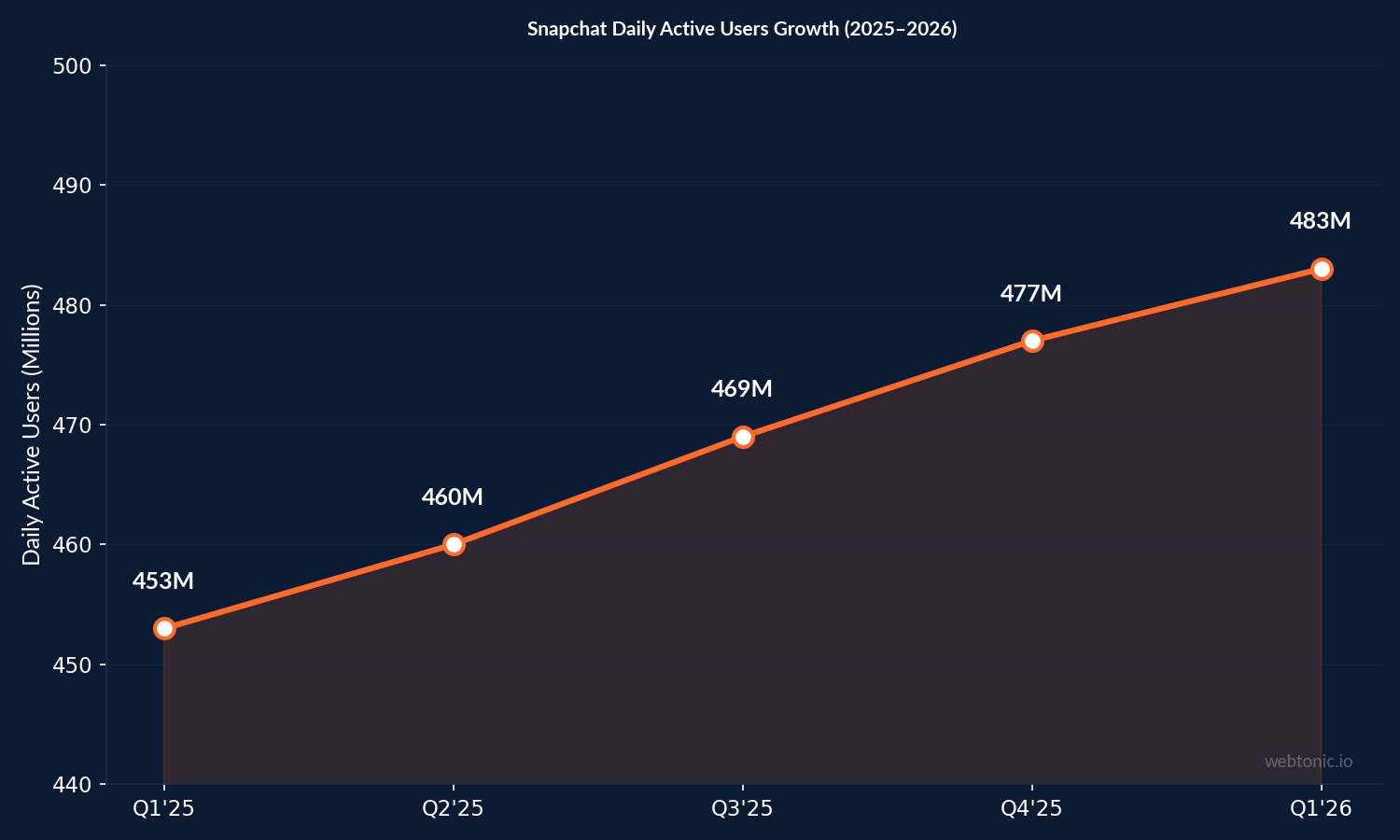
Snapchat's advertising ecosystem has matured significantly. In Q1 2026, Snap Inc. reported advertising revenue of $1.24 billion, with daily active users growing to 453 million globally — a 5% year-over-year increase (Snap Inc. Q1 2026 Earnings). By Q4 2025, DAU had already reached 483 million, indicating continued momentum.
For healthcare advertisers, Snapchat's monthly active user base now exceeds 950 million, providing substantial reach even in specialized verticals like allergy and immunology. The platform's strength in the 18–34 demographic is particularly relevant: this age group represents a growing segment of allergy patients who prefer digital-first healthcare discovery over traditional referral pathways.
Why Snapchat Works for Allergy & Immunology Advertising
Snapchat's health advertising effectiveness stems from how users interact with health content on the platform. According to a Snapchat/Ipsos study, Snapchatters engage with health-related content in uniquely actionable ways:
- 1.5× more likely to discuss health ad content with a doctor or caregiver (37% of Snapchatters vs. non-users)
- 1.2× more likely to look up the brand or product mentioned (60% take action after seeing health content)
- 1.2× more likely to screenshot or save health-related content (51% save for later reference)
- 49% report feeling more aware of specific health products or treatments after exposure
- 61% use social platforms to evaluate different brands or treatment options
These behavioral signals indicate that Snapchat drives real-world healthcare actions, not just impressions. For allergy practices, this translates to patients who see a Snapchat ad and then actively seek out the clinic — a fundamentally different conversion pathway than awareness-only platforms.
Snapchat Ad Formats for Healthcare Marketers
| Ad Format | Best Use Case | Key Metric | Healthcare Relevance |
|---|---|---|---|
| Single Image/Video | Awareness & traffic | Swipe-up rate 0.5–1.2% | Allergy symptom education |
| Story Ads | Sequential storytelling | 70–85% completion | Patient journey narratives |
| Collection Ads | Service showcases | 2–4 tiles per engagement | Treatment menu browsing |
| AR Lenses | Interactive engagement | 25–35s avg playtime | Symptom visualization tools |
| Commercials | Non-skippable reach | 70%+ view rate | Brand awareness campaigns |
| First Commercial | Premium placement | 23-pt ad awareness lift | New clinic launches |
AR Lenses represent Snapchat's most differentiated ad format for healthcare. Pharmaceutical brands like Dermavant and Botox Cosmetic have already used AR Lenses to teach consumers about FDA-approved treatments (Adweek). For allergy clinics, similar experiences could let users visualize pollen exposure risks or simulate symptom relief timelines — interactive content that drives engagement far beyond static ads.
Snapchat vs. Other Platforms: Healthcare Cost Efficiency
When comparing Snapchat against the broader growth marketing channel mix for healthcare, the cost advantages are clear but nuanced. Snapchat's median CPC of $0.84 undercuts Meta's $1.10–$2.00 range (AdLiftr, 2026), but the comparison requires context:
- Snapchat excels at awareness and consideration — the top and middle of the healthcare funnel — rather than direct-response lead generation.
- Lower CPC does not guarantee lower CPA: allergy practices should expect CPA of $25–$60 on Snapchat versus $30–$90 on Meta, reflecting the extra conversion steps from swipe-up to appointment.
- However, Snapchat's unique AR and video formats create brand impressions that compound over time, reducing overall blended CPA across channels when used as part of a multi-platform strategy. For an in-depth comparison, see our Google Ads strategy guide.
Key Snapchat Advertising Statistics for Allergy Clinics
| Statistic | Value | Source |
|---|---|---|
| Snapchat DAU (Q1 2026) | 453 million | Snap Inc. Earnings |
| Q1 2026 Ad Revenue | $1.24 billion | SEC Filing |
| Median CPC (All Industries) | $0.84 | AdLiftr |
| CPC Interquartile Range | $0.51–$1.34 | AdLiftr |
| Health Content → Doctor Discussion | 1.5× more likely | Snapchat/Ipsos |
| Brand Lookup After Health Ad | 60% take action | Snapchat/Ipsos |
| Treatment Awareness Lift | 49% more aware | Snapchat/Ipsos |
| AR Lens Share Rate (Health) | 20–42% | Snap Case Studies |
| Swipe-Up Rate (E-commerce) | 0.35–1.5% | Prooflytics |
| Specsavers AR Playtime | 28.78 seconds avg | Snap for Business |
Targeting Allergy Patients on Snapchat
Snapchat's targeting capabilities for healthcare have expanded significantly. Allergy and immunology practices can reach potential patients through several vectors:
- Interest-based targeting: Health & wellness, medical information, pharmacy, and allergy-related interest categories allow precise audience definition.
- Lifestyle segments: Snapchat's proprietary audience segments include health-conscious millennials and Gen Z users who proactively manage chronic conditions like seasonal allergies.
- Lookalike audiences: Upload hashed patient lists (de-identified) to create lookalike audiences that mirror existing allergy patients, extending reach without compromising privacy.
- Geo-targeting: Radius targeting around clinic locations ensures ads reach local patients within a reasonable drive distance — critical for allergy practices that depend on repeat visits for immunotherapy.
The platform's younger demographic means allergy practices on Snapchat are reaching patients earlier in their healthcare journey — often before they have established provider loyalty, making acquisition easier and lifetime value higher. For practices comparing ad costs across platforms, our Facebook Ads cost breakdown provides useful reference points.
Snapchat's Seasonal Opportunity for Allergy Advertisers
Allergy conditions follow predictable seasonal patterns, and Snapchat's younger audience is more likely to seek immediate digital solutions during symptom flare-ups. Data from healthcare marketing agencies shows that allergy-related search and social engagement spikes 40–60% during peak pollen seasons, creating concentrated windows for high-impact advertising.
For allergy and immunology practices, the recommended Snapchat campaign calendar includes:
- February–March: Pre-season awareness campaigns targeting users in high-pollen regions. Focus on allergy testing and immunotherapy enrollment with Story Ads.
- April–May: Peak spring allergy season. Increase budgets by 50–100% and run AR Lenses that visualize pollen impact or symptom relief timelines.
- July–August: Summer mold and grass allergy campaigns. Use geo-targeted ads around clinic locations with radius targeting of 15–25 miles.
- September–October: Fall ragweed season. Deploy Collection Ads showcasing sublingual immunotherapy, allergy shots, and rapid desensitization programs.
- November–January: Indoor allergen season (dust mites, pet dander). Lower-spend maintenance campaigns with educational video content about year-round allergy management.
This seasonal strategy aligns ad spend with natural demand peaks, maximizing the return on every dollar invested in Snapchat advertising. Practices using data intelligence tools can further refine timing based on local pollen forecasts and historical appointment data.
Measuring Snapchat Ad Impact on Patient Acquisition
Attribution remains the biggest challenge for healthcare Snapchat advertisers. Since Snapchat's native conversion tracking has limited healthcare compliance, allergy practices need alternative measurement frameworks:
- UTM-tagged landing pages — Create Snapchat-specific landing pages with unique URLs to track traffic and conversions separately from other channels.
- Call tracking numbers — Assign dedicated phone numbers to Snapchat campaigns to measure call volume and appointment bookings directly.
- Post-exposure surveys — Ask new patients how they heard about the practice during intake. Include "Snapchat" as a response option to capture awareness-driven conversions that evade digital attribution.
- Incrementality testing — Run geo-matched holdout tests where some markets receive Snapchat ads and others do not. Compare appointment volume differences to calculate true incremental impact.
Practices that implement multi-touch measurement often discover that Snapchat drives 15–25% more conversions than last-click attribution suggests, because the platform's strength lies in upper-funnel awareness that converts through other channels.
Best Practices for Allergy & Immunology Snapchat Campaigns
- Lead with visual storytelling — Snapchat is a camera-first platform. Allergy clinics should create short video ads (6–10 seconds) showing real patient experiences or behind-the-scenes testing procedures to build trust.
- Leverage AR for symptom education — Custom AR Lenses that let users visualize pollen counts in their area or simulate allergy-free days drive engagement rates 2.5× above standard benchmarks.
- Time campaigns to allergy seasons — Align Snapchat spend with spring pollen (March–May) and fall ragweed (August–October) seasons when symptom searches peak among younger demographics.
- Use Story Ads for treatment education — Multi-frame Story Ads can walk potential patients through immunotherapy timelines, testing procedures, and expected outcomes, achieving 70–85% completion rates.
- Optimize for swipe-ups, not just views — Include clear CTAs that drive users to appointment booking pages or symptom assessment tools. Track with UTM parameters since Snapchat pixels have limited healthcare compliance.
- Test Collection Ads for service menus — Showcase multiple treatment options (skin testing, sublingual immunotherapy, biologic injections) in a single ad unit to let patients self-select the service most relevant to them.
Challenges of Snapchat Advertising for Healthcare
Snapchat advertising for allergy practices comes with important limitations. The platform's audience skews heavily toward 13–34-year-olds, which means older allergy patients (45+) are largely unreachable. Healthcare advertisers must also contend with Snapchat's limited conversion tracking infrastructure compared to Meta or Google — while the platform offers a Snap Pixel, its healthcare compliance certifications trail behind Meta's CAPI.
Creative production demands are also higher. Snapchat ads require vertical (9:16) formats that cannot simply be repurposed from horizontal video libraries. Allergy clinics need dedicated creative assets optimized for the platform's full-screen, sound-on environment — an investment that adds production costs on top of media spend.
Despite these challenges, practices that compare Snapchat's economics with established platforms like Meta Ads often find that the lower CPCs and unique engagement formats justify the creative investment, particularly for reaching younger patient segments.
Related reading
- TikTok Ads for Allergy & Immunology: 65+ Key Statistics (2026)
- X (Twitter) Ads for Allergy & Immunology: 60+ Statistics (2026)
- Allergy & Immunology LinkedIn Ads Statistics: 2026 Data & Benchmarks
- Paid Social services at Web Tonic
FAQ
How much do Snapchat ads cost for healthcare and allergy practices?
Snapchat ads cost a median CPC of $0.84 across all industries, with healthcare campaigns typically falling in the $0.70–$1.20 range. This is 25–55% cheaper than Meta's comparable healthcare CPC of $1.10–$2.00. CPM ranges from $6–$11 for health-related campaigns.
What Snapchat ad formats work best for allergy clinics?
AR Lenses and Story Ads deliver the highest engagement for healthcare advertisers. AR Lenses generate 25–35 seconds of average playtime with share rates of 20–42%, while Story Ads achieve 70–85% completion rates for educational health content.
Can Snapchat ads drive real patient appointments?
Yes — Snapchatters are 1.5× more likely to discuss health ad content with a doctor and 60% look up the brand or product after exposure. While Snapchat excels at awareness and consideration, practices should use UTM-tagged landing pages and call tracking to measure the full appointment conversion funnel.
Is Snapchat advertising HIPAA-compliant?
Snapchat's Snap Pixel and conversion tracking tools do not carry explicit HIPAA compliance certifications. Healthcare providers should use server-side tracking, UTM parameters, and HIPAA-compliant CRM integrations rather than client-side pixels to maintain compliance.
What age groups can allergy clinics reach on Snapchat?
Snapchat's primary audience is 13–34-year-olds, with the strongest reach among 18–29. This makes it ideal for reaching younger allergy patients and parents of children with allergies, but less effective for targeting patients over 45.
Sources
Snap Inc. — Q1 2026 Financial Results
AdLiftr — Snapchat Ads Cost Benchmarks 2026
Snapchat for Business — Health on Social: Digital Research to Consultations
Prooflytics — Snapchat Ads Analytics & Metrics Guide (2026)
Adweek — Pharma Brands Use AR Snapchat Lenses
Snapchat for Business — Specsavers AR Campaign Case Study
ATTN Agency — Snapchat Ads for Gen Z Brands


