Table of contents
Key Takeaways
- 72% of gym members say social media influenced their first visit, making branded content the primary discovery channel for fitness businesses (Marketing LTB).
- Gyms with strong branding visuals see 50% higher engagement across digital channels compared to those with inconsistent brand identities (Marketing LTB).
- The global gym apparel market is valued at $254.9 billion in 2025, projected to reach $465.1 billion by 2035 at a 6.2% CAGR (Future Market Insights).
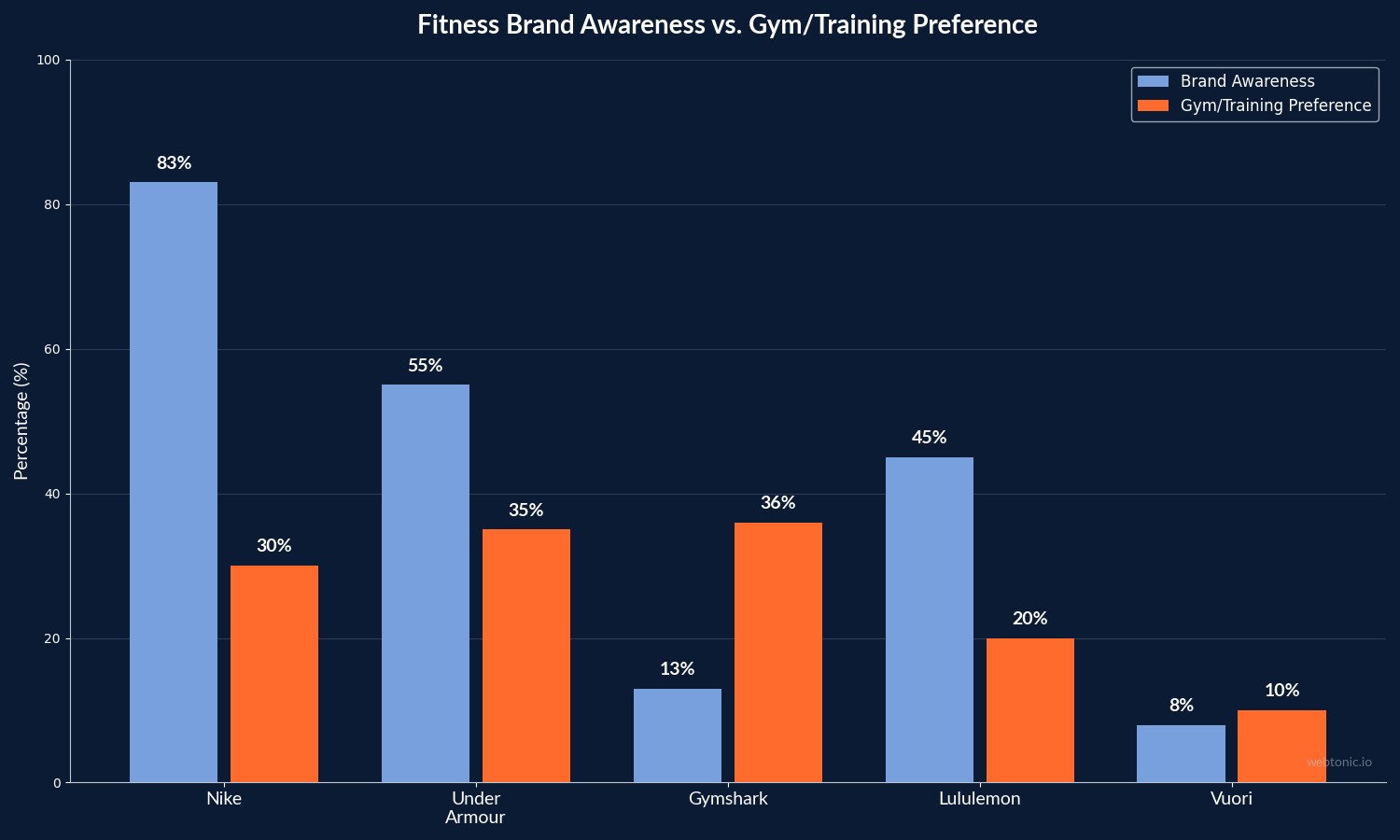
- Gymshark leads gym and training brand preference at ~36% despite only 13% brand awareness, compared to Nike's 83% awareness — proving that niche brand positioning outperforms broad awareness in purchase intent (Morning Consult).
- Gyms using influencer marketing see 25% higher brand awareness, and referral programs account for 30% of new gym memberships (Marketing LTB).
Fitness Branding Market Overview
Fitness branding encompasses every visual, verbal, and experiential element that shapes how consumers perceive a gym, studio, apparel line, or wellness platform. In a market where over 100,000 gyms and fitness studios compete for consumer attention across the United States alone, brand differentiation has become the primary driver of customer acquisition and retention.
The fitness industry has undergone a fundamental brand identity shift. Home fitness has crossed the 50% threshold for the first time as the primary workout mode for a majority of Americans, driven by Gen Z and Millennials (Morning Consult). This shift has forced brick-and-mortar gyms and fitness brands to invest heavily in digital branding to compete with app-based and home-workout alternatives.
| Metric | Value | Source |
|---|---|---|
| Gym apparel market size (2025) | $254.9 billion | Future Market Insights |
| Projected market size (2035) | $465.1 billion | Future Market Insights |
| Market CAGR (2025–2035) | 6.2% | Future Market Insights |
| Fitness apparel market (alt. estimate) | $295.6 billion (2025) | Market Research Future |
| Members influenced by social media | 72% | Marketing LTB |
| Gym members engaging with fitness content weekly | 47% | Marketing LTB |
Brand Awareness and Recognition Benchmarks
Brand awareness in fitness follows a winner-take-most pattern at the top, but niche players with strong brand identity consistently outperform larger competitors on purchase intent. The data reveals that brand preference is increasingly decoupled from brand awareness.
| Brand | Brand Awareness | Gym/Training Preference | Key Differentiator |
|---|---|---|---|
| Nike | 83% | ~30% | Universal recognition, cross-category |
| Under Armour | ~55% | 35% | Performance-first positioning |
| Gymshark | 13% | ~36% | Community-led, social-native brand |
| Vuori | ~8% | Rising | Premium lifestyle ($100k+ HHI: 3× national) |
| Lululemon | ~45% | ~20% | Women-first, yoga/athleisure cross-over |
The Gymshark data point is particularly notable: 13% brand awareness but ~36% gym/training preference — the highest in the category. This proves that deep brand resonance within a specific audience drives purchase behavior more effectively than broad awareness campaigns. Vuori's MMS among $100k+ households is 3× its national figure, demonstrating how premium fitness brands can outperform on lifetime value despite limited overall reach (Morning Consult).
Fitness Logo Design Trends and Statistics
A strong fitness logo serves as the visual anchor of brand identity — appearing on signage, apparel, social media profiles, app icons, and marketing materials. The best fitness logos work at scales ranging from a 16×16 pixel favicon to a 20-foot gym wall mural, maintaining clarity and emotional impact at every size.
Logo design in fitness is shifting toward minimalism, geometric marks, and adaptive identities that work across digital touchpoints — from app icons to social media avatars to wearable device interfaces.
- Condensed bold sans-serif fonts are the most common choice in fitness branding, communicating strength, power, and forward momentum (Inkbot Design).
- Minimalist fitness icons and geometric marks dominate 2026 logo trends, replacing the detailed illustrative logos of the early 2020s.
- Monogram sports logos and circular emblems are gaining traction for premium and boutique fitness brands.
- 80% of potential members read reviews before joining a gym, and brand logo recognition plays a measurable role in perceived trustworthiness (Marketing LTB).
- Gyms with 4+ star ratings convert 35% more walk-ins — and consistent brand identity across review platforms strengthens rating perception (Marketing LTB).
For fitness businesses investing in brand identity, the data suggests that performance creative that adapts across platforms will outperform static, single-format brand assets.
Digital Branding and Social Media Impact
Social media has become the primary brand-building channel for fitness businesses, with measurable impact on both acquisition and retention metrics.
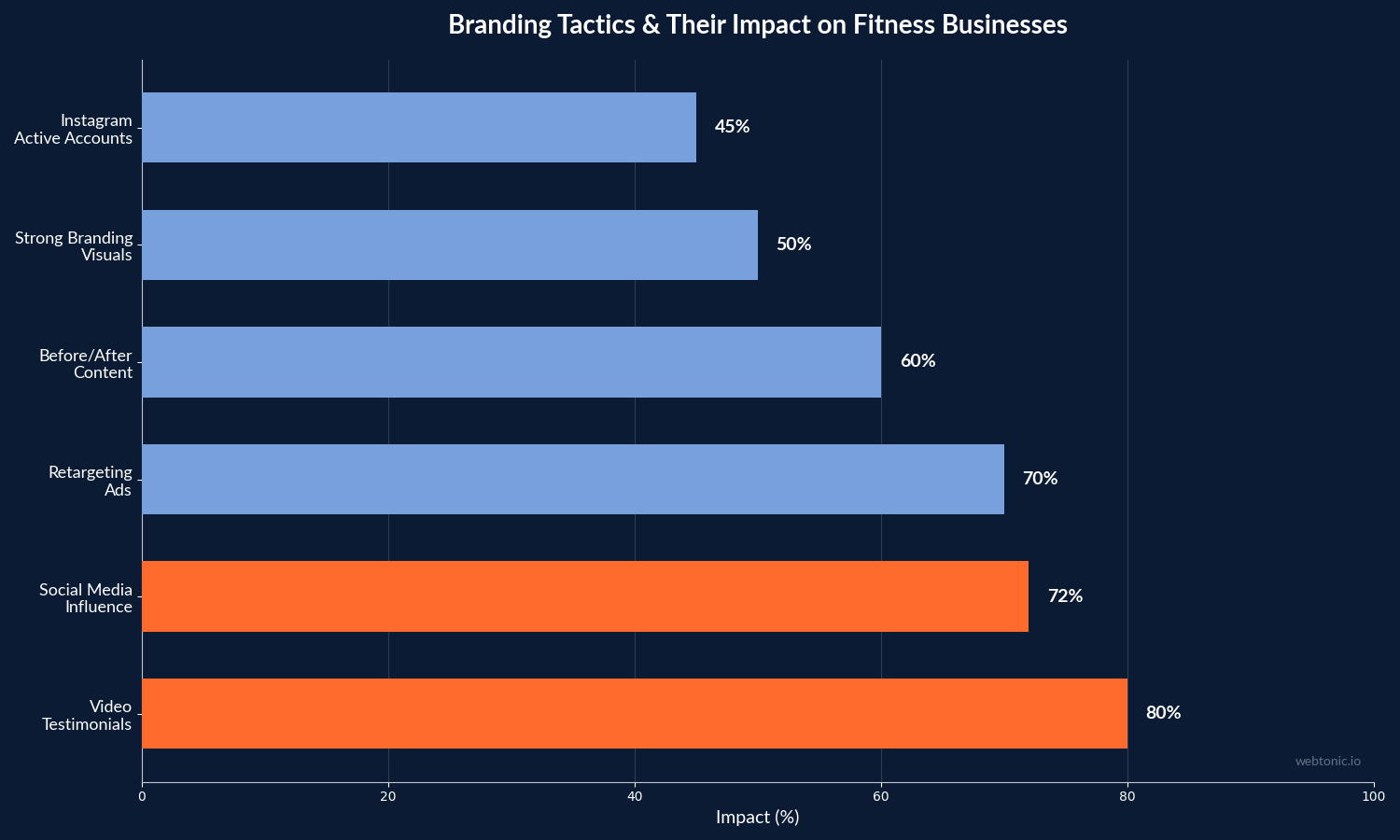
| Channel / Tactic | Impact Metric | Value |
|---|---|---|
| Instagram (active accounts) | New sign-up increase | 45% |
| Daily social posting | Growth rate multiplier | 2× |
| Video ads vs. image ads | Engagement multiplier | 2.3× |
| Instagram Reels vs. static posts | Engagement multiplier | 3× |
| Influencer marketing | Brand awareness lift | 25% |
| Before-and-after content | Conversion increase | 60% |
| Video testimonials | Trust increase | 80% |
| Retargeting ads | Membership conversion boost | 70% |
The data shows a clear hierarchy: video content drives 2.3× higher engagement, Instagram Reels specifically deliver 3× the engagement of static posts, and before-and-after transformation content produces a 60% conversion increase. Fitness brands that invest in branded video content see compounding returns across awareness, engagement, and conversion stages (Marketing LTB).
Branding ROI and Retention Metrics
Branding investment in fitness has a direct, measurable impact on both customer acquisition cost and lifetime value. Data-driven marketing improves gym ROI by up to 40%, and consistent branding across channels reduces friction at every touchpoint.
- Google Ads generate 2.5× ROI for gyms on average — but branded search campaigns outperform generic terms by a significant margin (Marketing LTB).
- Referral programs account for 30% of new gym memberships, making word-of-mouth the single largest organic acquisition channel.
- Loyalty programs improve retention by 27%, and gyms with strong branding visuals see 50% higher engagement across all digital channels.
- Gyms using automated CRM systems retain 20% more clients — consistent brand voice in automated communications directly impacts churn rates.
- Email marketing improves gym retention by 18–25% when personalized with brand-consistent templates and segmented messaging.
- Peak gym sign-ups occur in January (up to 40% annual increase), making Q4 brand awareness campaigns critical for capturing seasonal demand.
The CPL for fitness businesses averages $42 overall, with social ads costing approximately $35 per lead and LinkedIn leading B2B fitness marketing, with 75% of fitness brands using it for professional content (World Metrics). Investing in Meta Ads with strong brand creative consistently outperforms generic ad campaigns in the fitness vertical.
Industry Comparison: Fitness Branding vs. Other Verticals
| Metric | Fitness | Healthcare | Retail | SaaS |
|---|---|---|---|---|
| Social influence on purchase | 72% | 35% | 62% | 28% |
| Brand visual engagement lift | 50% | 25% | 40% | 30% |
| Referral share of acquisition | 30% | 15% | 20% | 22% |
| Video vs. image engagement | 2.3× | 1.5× | 1.8× | 2.0× |
| Review influence on purchase | 80% | 72% | 68% | 55% |
Fitness stands out as the most social-media-influenced vertical for brand building: 72% social influence versus 62% for retail and just 28% for SaaS. This makes social advertising and organic brand content disproportionately important for fitness businesses compared to other industries.
Consumer Behavior and Brand Preference Trends
Consumer buying behavior in fitness has shifted dramatically. Brand loyalty in fitness is increasingly activity-specific rather than category-wide — consumers choose different brands for gym training, outdoor running, yoga, and athleisure casual wear.
- The 18–34 cohort is the most contested demographic in fitness branding, with Gymshark, Nike, Under Armour, and emerging TikTok-native brands all competing for gym/training preference (Morning Consult).
- 91% of UK Nike online store users say they would use it again, and 89% would return to Adidas — indicating that brand loyalty in fitness apparel is extremely high once established.
- Fitness consumers are willing to splurge on quality branded gear — over three-fourths of fitness purchasers are interested in AI-powered shopping experiences that help them find the right products.
- Community-building is the strongest brand loyalty driver — gyms offering community events retain 22% more members, and loyalty programs improve retention by 27%.
- 54% of gym leads come from mobile searches, making mobile-first brand experiences a fundamental requirement, not an optional upgrade.
- 58% of gym members discover gyms through Google Maps, where consistent branding (logo, photos, reviews) directly impacts click-through to the business profile.
These statistics align with broader industry research showing that personal training upsells increase revenue per member by 35%, and gyms offering challenges increase retention by 22%. Both tactics are amplified when wrapped in strong brand identity — a branded 8-week challenge outperforms a generic one by a significant margin in both participation and completion rates.
The pattern emerging across multiple data sources is clear: fitness brands that invest in community, consistency, and niche positioning systematically outperform those relying on broad awareness campaigns or price-based competition.
Fitness Branding Budget Allocation
Allocating branding budget effectively requires understanding which channels and tactics deliver the highest returns in the fitness vertical specifically. The data points to a clear hierarchy of spend priorities.
| Budget Category | Recommended Allocation | Expected Impact |
|---|---|---|
| Social media content | 30–35% | 2× growth rate with daily posting |
| Paid social advertising | 25–30% | $35 CPL, 70% retargeting conversion boost |
| Brand identity (logo, guidelines) | 10–15% | 50% higher engagement with strong visuals |
| Email and CRM | 10–15% | 18–25% retention improvement |
| Influencer partnerships | 10–15% | 25% brand awareness increase |
| Local SEO and Google Business | 5–10% | 42% walk-in increase, 40% more calls |
The most effective fitness branding strategies combine organic social content with targeted paid campaigns. Gyms that post daily on social media grow 2× faster, but without paid amplification, organic reach alone rarely generates sufficient lead volume. A data-driven approach to budget allocation ensures every dollar works toward measurable brand equity and member acquisition.
Brand Identity Elements That Drive Fitness Membership
The components of brand identity in fitness extend well beyond logo and color palette. Effective fitness branding creates a holistic sensory and emotional experience that begins online and continues through every physical and digital touchpoint.
- Landing pages with pricing transparency convert 33% better — fitness brands that hide pricing create friction and lose price-sensitive prospects who would otherwise convert (Marketing LTB).
- 62% of gym leads abandon signup if forms are too long — branded signup flows should minimize fields while maintaining brand consistency through colors, typography, and messaging tone.
- 65% of gym visitors prefer virtual tour previews before joining — branded video tours that showcase facility, equipment, and community atmosphere significantly reduce the barriers to first visit.
- Online booking increases trial attendance by 30% — gyms with brand-consistent booking interfaces that match their website and social media presence see the strongest conversion rates.
- WhatsApp marketing increases response rates by 50% for gym promotions — branded messaging templates that maintain voice consistency across channels strengthen member relationships.
- SMS marketing has a 98% open rate for gym promotions, making branded SMS sequences one of the highest-return communication channels for fitness businesses.
The data consistently shows that brand consistency across touchpoints — from social media ads to booking pages to in-gym signage — is more important than any single design element. Gyms that maintain visual and voice consistency across 5+ touchpoints retain members at significantly higher rates.
Fitness Brand Positioning Strategies by Market Segment
Different fitness market segments require fundamentally different branding approaches. The data reveals distinct patterns for each segment.
| Segment | Brand Strategy | Key Differentiator | Avg. Member Lifetime |
|---|---|---|---|
| Budget gyms ($10–$30/mo) | Value + accessibility | Price transparency, no-contract | 8–14 months |
| Mid-range studios ($50–$120/mo) | Community + transformation | Before/after stories, class variety | 14–24 months |
| Premium boutique ($150–$300/mo) | Exclusivity + lifestyle | Experience design, brand prestige | 18–36 months |
| Online/hybrid platforms | Convenience + personalization | AI recommendations, flexibility | 6–12 months |
| Corporate wellness | ROI + employee outcomes | Health data, engagement metrics | 12–36 months (contract) |
The premium boutique segment demonstrates the strongest correlation between brand investment and member lifetime value. Premium gyms with strong brand identities retain members 2–3× longer than budget alternatives, and the higher monthly price point amplifies the revenue impact of each additional month of retention. Brands like Gymshark have proven that even with 13% awareness, deep positioning in a specific segment generates ~36% preference — a model that local boutique gyms can replicate at a smaller scale through community-led branding.
Frequently Asked Questions
How important is branding for gym businesses?
Branding is critical for gym businesses. Gyms with strong branding visuals see 50% higher engagement across digital channels, and 80% of potential members read reviews before joining. Consistent brand identity across Google Business Profile, social media, and physical signage directly impacts walk-in conversion rates and member retention.
What makes a good fitness logo?
Effective fitness logos use condensed bold sans-serif fonts that communicate strength and momentum. The 2026 trend favors minimalist icons, geometric marks, and monogram designs that adapt across digital platforms — from app icons to social media avatars. The logo should work in both color and monochrome at small sizes.
How much should a fitness brand invest in marketing?
The average fitness business CPL is $42, with social ad leads costing approximately $35. Data-driven marketing improves gym ROI by up to 40%. Most successful fitness brands allocate 8–12% of revenue to marketing, with the majority going to social media content, paid advertising, and brand identity maintenance.
What social media platforms work best for fitness branding?
Instagram is the dominant platform: gyms with active accounts see 45% more new sign-ups, and Reels generate 3× more engagement than static posts. Video content broadly drives 2.3× higher engagement than image ads. For B2B fitness services, 75% of brands use LinkedIn for professional content and partnership development.
How does brand awareness affect gym membership conversions?
Brand awareness has a non-linear effect on conversions. Gymshark achieves ~36% preference with only 13% awareness, demonstrating that deep resonance with a target audience matters more than broad recognition. Gyms with 4+ star ratings convert 35% more walk-ins, and consistent branding across all touchpoints is a key driver of perceived quality and trustworthiness.
Sources
marketingltb.com/blog/statistics/gym-marketing-statistics
morningconsult.com/articles/athletic-apparel-category-brands-research
morningconsult.com/reports/fitness-wellness-trends-2026
futuremarketinsights.com/reports/gym-apparel-market
inkbotdesign.com/fitness-logos
worldmetrics.org/marketing-in-the-fitness-industry-statistics
pilotium.cc/en/blog/state-of-gym-marketing-2026