



Table of contents
Yes for multilingual patient pages, unproven for anything else: Census data shows a large pool of patients who prefer another language, but no study measures dental-specific returns from international SEO. Search itself is also returning fewer clicks, with Pew recording 8% result clicks when an AI summary appears.
Key Takeaways
- 61.0% of US Spanish speakers speak English very well (Census, 2018-2022).
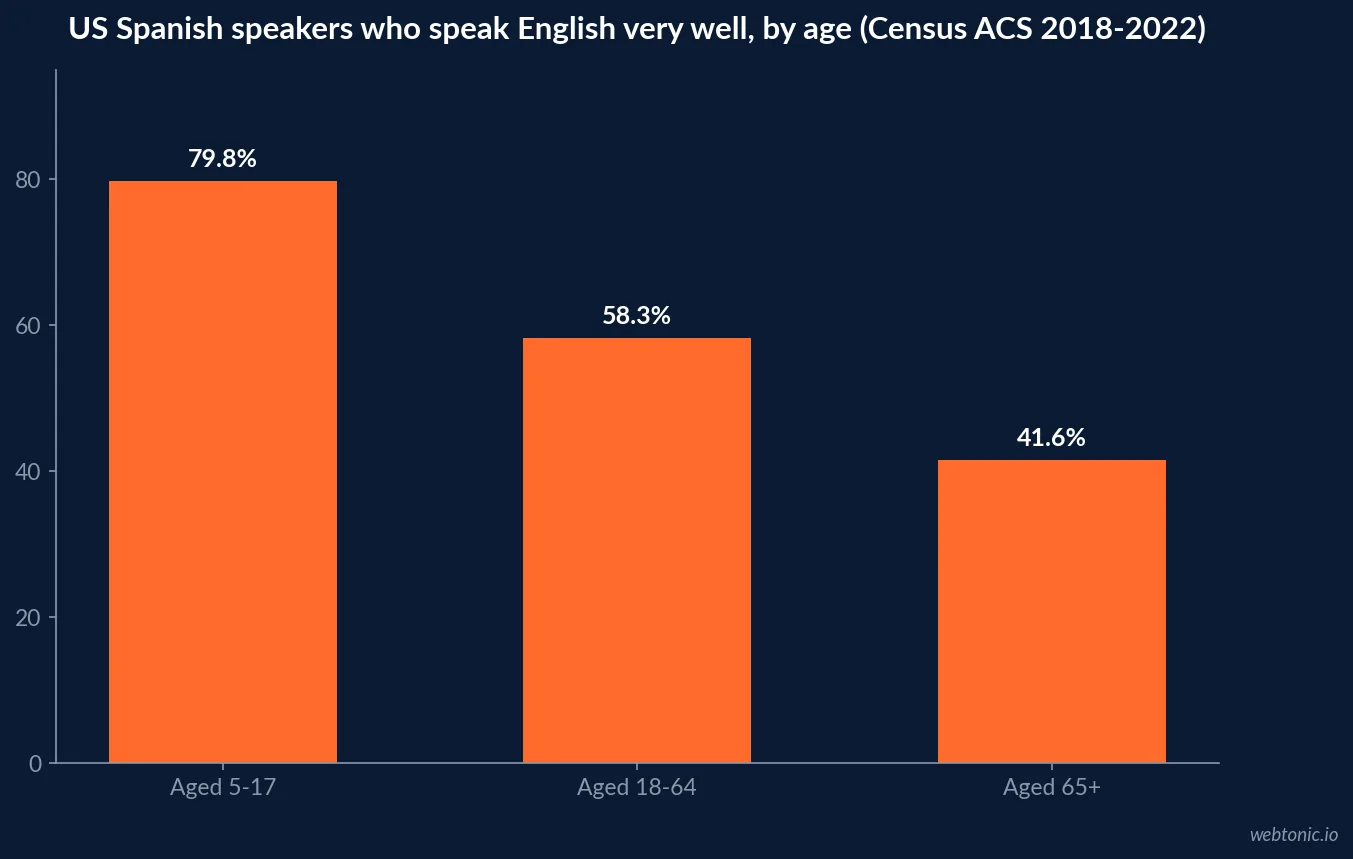
- That falls to 41.6% among Spanish speakers aged 65+.
- 58.3% of working-age Spanish speakers speak English very well.
- Spanish is 61.1% of non-English home languages.
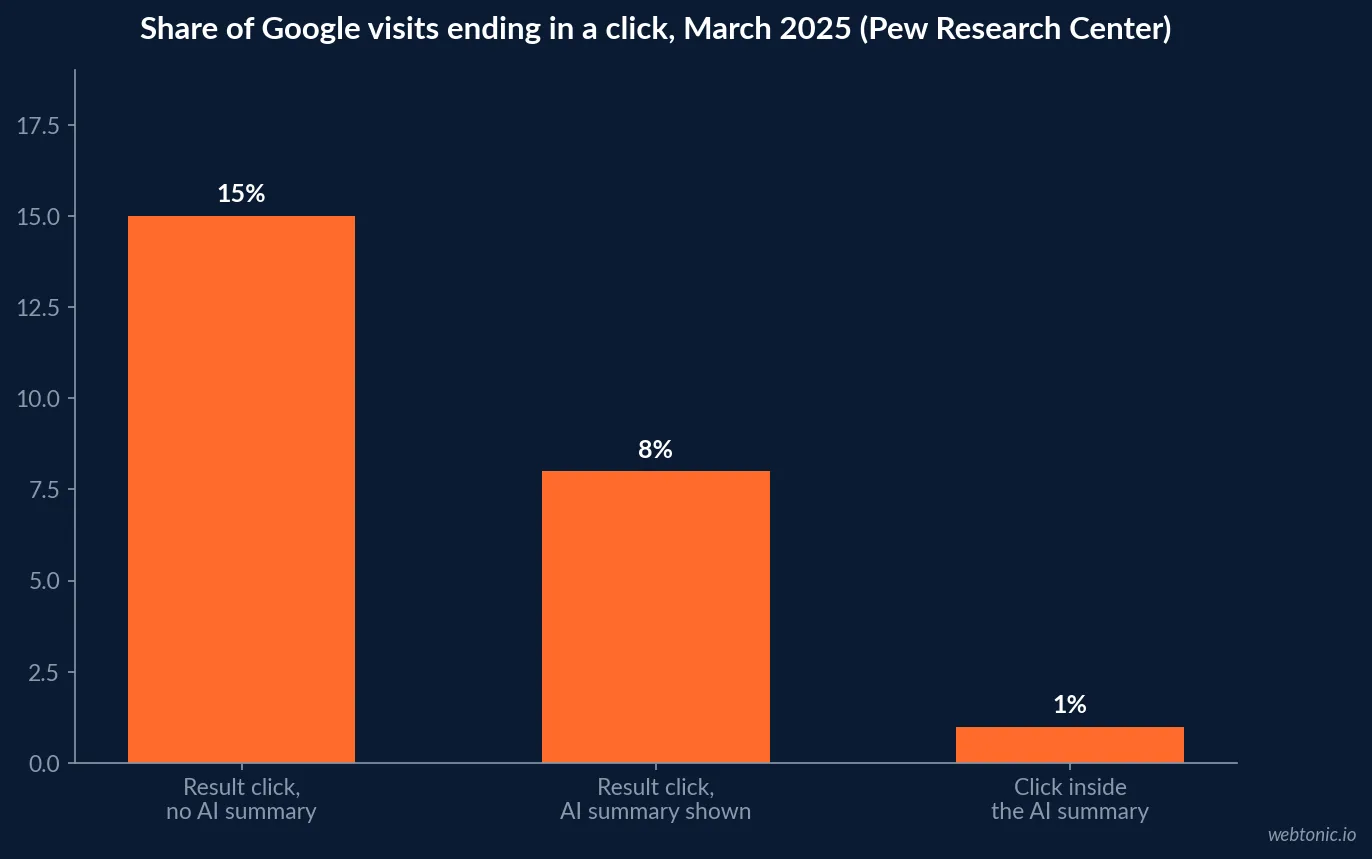
- Result clicks drop to 8% of visits with an AI summary, versus 15% without (Pew, March 2025 data).
- AI Overviews cut top-result CTR by 58% (Ahrefs, Dec 2025 data, Feb 2026 update).
- The April 2025 Ahrefs estimate was -34.5%.
- 58.5% of US Google searches end without a click (SparkToro/Datos 2024).
- Google held 88.08% of Mexican search in September 2026 (Statcounter).
- 94.2% of dental firms employ fewer than 20 people (Census SUSB 2022).
- No dental hreflang adoption or multilingual CTR benchmark is published.
What "international SEO" means for a dental practice
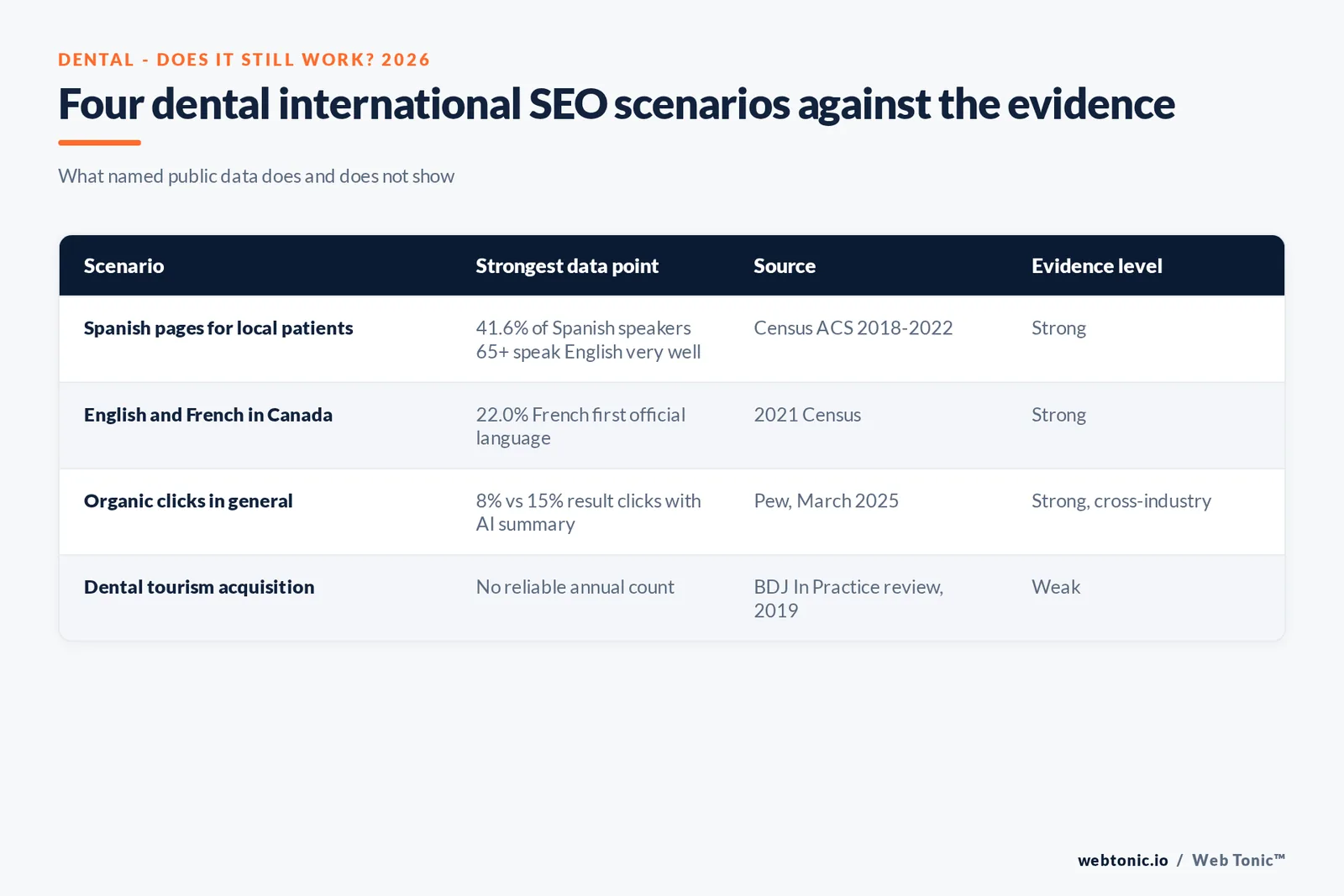
A dental practice treats people who can reach its chair. For nearly every US or Canadian practice, international SEO therefore narrows to two jobs: pages in the languages local patients prefer, and, in Canada, English and French versions. A third, much smaller group of clinics, mostly in destination countries, markets to foreign patients. The question "does it still work" has a different answer for each group, and only the first has strong public data behind it.
| Practice type | International SEO job | Data available | Verdict from the data |
|---|---|---|---|
| US practice in a multilingual area | Spanish or other-language patient pages | Census language and proficiency data | Demand clearly exists |
| Canadian practice | English and French versions | 2021 Census official languages | Required in Quebec, useful elsewhere |
| DSO or group with clinics abroad | Country versions per clinic | Company filings only | Case by case |
| Clinic courting dental tourists | Foreign-language acquisition pages | Qualitative reviews, no reliable counts | Unproven |
| Single-language local practice | None | Not applicable | Not needed |
The patient language data
The US Census Bureau's December 2023 release of 2018-2022 survey data breaks English ability down by age for Spanish speakers, and that breakdown is the strongest argument a dental practice has. Among Spanish speakers aged 5-17, 79.8% spoke English very well; among those aged 18-64, 58.3%; and among those aged 65 and older, only 41.6%. Older patients drive a disproportionate share of restorative and prosthetic work.
| Age group (Spanish speakers, ACS 2018-2022) | Speak English very well | Prior period (2013-2017) | Dental relevance |
|---|---|---|---|
| 5-17 | 79.8% | 80.3% | Parents usually book, children's pages can stay bilingual |
| 18-64 | 58.3% | 54.8% | Working adults booking cleanings and emergencies |
| 65 and older | 41.6% | 38.0% | Dentures, implants and complex treatment plans |
| All ages, Spanish | 61.0% | Not stated | About four in ten prefer support in Spanish |
Is search still sending patients?
The second half of "still work" is about search itself, and here the trend is down for everyone. Pew Research Center, analysing the browsing of 900 US adults in March 2025, found users clicked a traditional result in 8% of visits when an AI summary appeared and 15% when it did not. Ahrefs measured top-result click-through rate falling 58% on queries with an AI Overview in its February 2026 update, up from 34.5% in April 2025. SparkToro and Datos found 58.5% of US Google searches in 2024 ended without a click.
None of these studies isolates dental or non-English queries. They tell you each ranking earns fewer clicks than it did, which makes the conversion quality of each language page more important, not less.
| Search behaviour study | Finding | Data period | Scope |
|---|---|---|---|
| Pew Research Center | 8% vs 15% result clicks with vs without AI summary | March 2025 | 900 US adults, all topics |
| Pew Research Center | 1% of visits clicked a link inside the summary | March 2025 | All topics |
| Ahrefs AI Overviews update | -58% top-result CTR | Dec 2025 data, Feb 2026 | Cross-industry keywords |
| Ahrefs AI Overviews first study | -34.5% top-result CTR | April 2025 | Cross-industry keywords |
| SparkToro / Datos | 58.5% of US searches zero-click | 2024 | US Google searches, all topics |
Language access rules for health providers
Federal rule 45 CFR 92.201 requires a covered entity to take reasonable steps to provide meaningful access to each individual with limited English proficiency, and says language assistance must be provided free of charge and be accurate and timely. Coverage depends on federal funding, so a fee-for-service practice may sit outside it, but a practice billing Medicaid should ask counsel. The rule is about services; a translated website does not satisfy it on its own, though it signals that help exists.
Ethics: every language version must say the same thing
The ADA Code of Ethics, section 5.F, states that although any dentist may advertise, no dentist shall advertise or solicit patients in a manner that is false or misleading in any material respect. A Spanish or French page is advertising under that standard. Machine translation of claims about pain-free procedures or guaranteed results can drift into overstatement, so clinical copy needs a fluent human reviewer.
Dental tourism: what the evidence supports
Dental tourism is the scenario people picture when they hear "international dental SEO", and it has the weakest numbers. A 2019 narrative review in BDJ In Practice examined US patients travelling to Mexico for dental care and its ethical and economic effects, but it is a literature review, not a count. We found no primary source that reliably measures how many patients cross borders for dental treatment each year, so we publish no figure.
For a border clinic, the search side is straightforward: Statcounter put Google at 88.08% of Mexican search in September 2026, against 86.1% for Google in the US in August 2026, so one Google-focused bilingual site covers both audiences.
Technical rules that still apply
Practices that swap content by visitor location should read Google's note on locale-adaptive pages: Googlebot's default IP addresses appear to be based in the USA and it sends requests without an Accept-Language header, so Google might not crawl, index or rank all locale content. Google recommends separate locale URLs annotated with hreflang instead.
| Setup choice | Google's position | Dental recommendation |
|---|---|---|
| Content swapped by IP or browser language | May not be crawled for every locale | Avoid for patient pages |
| Separate URLs with hreflang | Recommended | /es/ or /fr/ folders per service |
| Automatic language redirects | Advised against | Offer a visible language switch |
| Side-by-side translations on one page | Discouraged; one language per page | Keep each page monolingual |
| Fallback page | Use x-default for unmatched languages | Point to the main language version |
Canada: bilingual by population
Canadian practices work in a formally bilingual market. Canadian Heritage's 2021 Census summary shows 22.0% of Canadians with French as first official language and 18.0% bilingual. In Quebec, French versions are a legal baseline for businesses; elsewhere, a French page reaches a minority that relatively few anglophone competitors serve.
Search engine share in the markets dental sites serve
One reason multilingual dental SEO stays manageable is that a single engine dominates every market a North American practice is likely to serve. Statcounter data shows Google at 88.08% in Mexico and 85.3% in Canada in September 2026, and at 86.1% in the US in August 2026. Bing is the only meaningful second engine in all three, at roughly 9-10%. Practices serving Korean-speaking communities are the exception: in South Korea, Naver held 43.06% of search in September 2026, close to Google's 47.97%, although Korean speakers in the US mostly search on US Google.
The practical consequence is that "international" dental SEO is a content and language problem, not an engine problem. The same technical foundations that rank an English page rank its Spanish or French twin, provided each version has its own URL and the hreflang annotations point both ways.
| Market (Statcounter) | Month | Google share | Implication for a dental site |
|---|---|---|---|
| United States | August 2026 | 86.1% | Spanish pages compete on Google |
| Canada | September 2026 | 85.3% | English and French both ranked by Google |
| Mexico | September 2026 | 88.08% | Border-clinic pages need only Google |
| South Korea | September 2026 | 47.97% (Naver 43.06%) | Only relevant for clinics abroad |
How to test whether it works for your practice
Because no benchmark exists, every practice has to run its own test. A sensible version takes one quarter: translate the five pages that generate most bookings, add a Spanish or French booking path and a named staff member who answers in that language, then compare new-patient calls and form fills by language against the previous quarter. Track query language in Search Console and tag calls by language in your phone system. If the language pages draw impressions but no bookings, the problem is usually the follow-up, not the ranking. If they draw neither, the local demand may simply be smaller than the national averages suggest.
Who can afford to test it
Most practices are small. Census Statistics of US Businesses data for 2022 counts 120,488 dental office firms, 94.2% of them with fewer than 20 employees. For that size of business, a full multilingual site is rarely the first move; translating the five pages that drive bookings, and having someone who can answer the phone in that language, is. Group practices with more locations can learn from our dental enterprise SEO data.
The verdict in one paragraph
The data supports multilingual dental pages where the local population needs them, and says nothing either way about dental tourism SEO. Search is delivering fewer clicks per ranking across every industry, which raises the value of pages that convert the patients who do click. Measure language-page bookings yourself; our analytics team and growth marketing team can wire that up, or contact us to review your setup.
Frequently Asked Questions
Does dental international SEO still work in 2026?
For the version most practices need, multilingual pages for local patients, the demand data still supports it: the Census Bureau reports that only 61.0% of Spanish speakers in the US speak English very well, falling to 41.6% among those aged 65 and older. What no study shows is a dental-specific conversion rate or ranking lift from multilingual pages, so the honest answer is that demand exists and results must be measured locally.
Has AI search reduced the value of dental SEO?
It has reduced clicks per search across all industries. Pew found that users who saw an AI summary clicked a traditional result in 8% of visits versus 15% without one, and Ahrefs measured a 58% lower click-through rate for the top result on queries with an AI Overview in its February 2026 update. These are cross-industry figures, not dental ones.
Are dental offices required to offer language access?
Covered entities under federal rule 45 CFR 92.201, generally health programs receiving federal financial assistance such as Medicaid, must take reasonable steps to provide meaningful access to individuals with limited English proficiency, free of charge. Whether your practice is covered depends on its funding; check with counsel. The rule concerns services, not websites specifically.
Is dental tourism a reason to run international SEO?
For clinics in destination countries, possibly; for US practices, rarely. A 2019 BDJ In Practice review examined US patients travelling to Mexico for dental care, but no primary source publishes a reliable annual count of dental tourists, so any traffic forecast built on one is speculation.
What do dental ethics rules say about multilingual marketing?
The ADA Code of Ethics, section 5.F, says no dentist shall advertise or solicit patients in a manner that is false or misleading in any material respect. That applies equally to every language version, so a Spanish page cannot promise more than the English one.
Sources
US Census Bureau - Language spoken at home, ACS 2018-2022 (Dec 2023)
Pew Research Center - AI summaries and clicks (Jul 2025)
Ahrefs - AI Overviews reduce clicks, update (Feb 2026)
SparkToro - 2024 zero-click search study
eCFR - 45 CFR 92.201 language access
ADA - Code of Ethics, veracity and advertising
BDJ In Practice - Implications of dental tourism (2019)
Statcounter - Search engine market share, Mexico (Sep 2026)
Google Search Central - Locale-adaptive pages
Canadian Heritage - Statistics on official languages (2021 Census)
US Census Bureau - Statistics of US Businesses 2022


