Dental SEO that fills the diary, not a ranking report.
fills the diary
Most dental websites rank for the clinic name and very little else. The blog posts were written for a organic engine, the map listing has the wrong hours, and nobody can say which new patients arrived from organic organic. We work the other way round: the treatments you want more of, the map pack in your own catchment, pages fast enough to book on a phone, and reporting that ends at booked bookings. It runs from the same plan as your dental marketing and dental PPC work, so no patient is counted twice.






Tell us a little about your brand and we'll be in touch within 24 hours to lock in a time.



FOUR WORKSTREAMS
Four workstreams decide whether dental SEO pays.
Four workstreams
Local visibility, treatment pages, a technically healthy site and honest measurement. Everything else in dental SEO is decoration on top of those four.
Local search & the map pack
Treatment pages & content
Technical health & speed
Measurement & reporting
The map pack is the dental organic result.
Patients searching for a dentist near them rarely scroll. The three map results carry the decision, and the listing that wins them is the one with current hours, real treatment categories, photographs of the actual clinic and a steady flow of recent ratings — 97% of consumers read ratings for nearby businesses before they choose one.
We rebuild the Google Business Profile properly, keep the name, address and phone consistent everywhere they are published, add the treatments you want to be found for, and put a review routine in place your front desk can actually keep up. Maps traffic is worth the trouble: organic nearby map visits convert at about 8.5% against 4.2% site-wide.
- Google Business Profile rebuilt around real treatments
- Consistent clinic name, address and phone across directories
- Review routine your reception team can sustain
- Local landing pages for each clinic location
8.5%
conversion rate from organic Google Maps visits for dental practices
97%
of consumers read ratings for nearby businesses
One strong page per treatment beats forty blog posts.
Implants, clear aligners, emergency bookings, hygiene and cosmetic work are separate queries with separate questions about cost, recovery, finance and insurance. A single services page tries to answer all of them and ranks for none. We build one substantial page per treatment, written with your clinicians, answering the questions patients actually ask before they call.
That work is where the traffic lives: organic organic brings 48.2% of dental website traffic, more than paid, social and referral combined. Blog copy comes after the money pages, never instead of them.
- One page per treatment, written with your clinical team
- Cost, finance and insurance questions answered on the page
- Internal linking that guides patients toward booking
- Existing thin pages merged rather than multiplied
48.2%
of dental website traffic comes from organic search
4.2%
average conversion rate on dental clinic websites
A slow clinic site loses the patient before the ranking matters.
Dental sites are usually built on a locked provider platform, stuffed with sliders and third-party scripts. It shows: the average dental clinic site takes 9.4 seconds to render its main copy against Google's 2.5 second threshold. Patients on a phone leave long before that.
We fix what can be fixed on the platform you have — images, scripts, crawl waste, duplicate location pages, broken schema — and where the platform blocks us, our site health SEO and site speed specialists build around it rather than waiting for a rebuild.
- Core Web Vitals measured on a real phone connection
- Crawl, indexation and duplicate page clean-up
- Structured data for the clinic, treatments and reviews
- Fixes shipped on your current platform where possible
9.4s
average largest contentful paint on dental clinic websites
2.5s
Google's threshold for a good largest contentful paint
Rankings are a signal. Booked patients are the result.
Most dental SEO reporting stops at positions and sessions, which is why the conversation about whether it works never ends. We track phone enquiries from organic organic, form enquiries, online bookings and, where your clinic management system allows it, bookings actually attended.
That also lets you compare channels honestly. With dental clicks averaging $8.00 and a $72.97 benchmark cost per lead on paid search, knowing what organic contributes changes how the whole budget is set rather than just how the agency looks.
- Call tracking on organic traffic, not just paid
- Bookings and enquiries separated from raw sessions
- One monthly read anyone at the clinic can follow
- Search Console and analytics in accounts you own
$72.97
benchmark cost per paid lead for dentists, the number organic is judged against
$8.00
average cost per click on dental search ads
Website, analytics and Search Console stay in your name
Booked appointments are the metric we are judged on
Weekly working session with the people doing the work
Long-term lock-ins
We made the difference for those brands

Creative, content, arts & culture

Consumer tech and platforms

Travel & mobility

Home essentials, appliances, kitchen & pet

Home essentials, appliances, kitchen & pet

Consumer tech and platforms

Food & beverage

Beauty, personal care & wellness

Travel & mobility

Consumer tech and platforms

Creative, content, arts & culture

Apparel and lifestyle

Creative, content, arts & culture

Retail & commerce

Healthcare & regulated services

Apparel and lifestyle

Home essentials, appliances, kitchen & pet

Apparel and lifestyle

Home essentials, appliances, kitchen & pet

Travel & mobility

Food & beverage

Retail & commerce

B2B software, fintech, insurance

Beauty, personal care & wellness

B2B software, fintech, insurance

Consumer tech and platforms

Consumer tech and platforms

Consumer tech and platforms

B2B software, fintech, insurance

Consumer tech and platforms
01 — The challenge
You rank for your own name. Patients search for something else.
The pattern is familiar. The clinic site sits at the top for its own name, a stack of blog posts about brushing technique earns nothing, and the treatments with real margin — implants, aligners, emergency appointments — are owned by two competitors and a directory. Meanwhile the map listing still shows old opening hours, and the last agency report counted sessions rather than patients.
“We are number one for our practice name. That was never the problem.”
The gap is worth closing in plain money terms: organic search already brings 48.2% of dental website traffic, and the map results convert at roughly double the site average. Ranking for treatments in your own catchment is the work, and it is measurable.
02 — Our approach
Fix the listing, own the treatments, then prove it in bookings.
We start with the two things that move fastest: the Google Business Profile and the measurement. Hours, categories, treatments, photographs and reviews get sorted in the first fortnight, and call tracking goes on organic traffic so the arguments later are about numbers rather than impressions. Then we choose the treatments worth owning with you, based on what your chairs and clinicians have room for, and build one strong page for each — written with your team, answering cost, finance and recovery questions honestly, and linked so a patient reading about implants can book without hunting. Technical work runs alongside: speed, crawl waste, duplicate location pages and schema, fixed on your existing platform wherever the provider allows it. From month three the work is compounding rather than dramatic — more treatment pages, nearby coverage for each practice location, reviews kept current, and a monthly read showing phone enquiries and bookings from search. We hold category exclusivity by area, so we never rank two competing clinics against each other in the same town.
03 — What we did
A first ninety days that ends the guessing.
Profile and tracking first, treatment pages second, site health repairs alongside, then a monthly read that stops at booked patients.
Weeks 1-2 / Foundations
Profile, tracking and a real baseline
Google Business Profile rebuilt, listings made consistent, call tracking added to organic traffic, and a baseline agreed with you before anything on the site changes.

Weeks 2-8 / Treatment pages
One page per treatment, written with your clinicians
Implants, aligners, emergency care, hygiene and cosmetic work each get a page that answers cost, finance and recovery questions, reviewed by the people who deliver the treatment.

Weeks 3-10 / Local & technical
Map coverage and a site that loads
Location pages per practice, reviews kept current, plus speed, crawl and schema repairs shipped on the platform you already have.

Ongoing / Reporting
Calls and bookings from search, monthly
One page a month showing organic phone enquiries, enquiries and booked appointments by treatment, next to what changed and what happens next.

WHAT YOU GET
Deliverables your practice manager can audit.
can audit
Everything below lands in accounts you own and stays yours if you ever leave.

Search and site audit
What your practice currently ranks for, what the competition owns, and which technical faults are holding pages back.

Treatment keyword map
Every treatment mapped to one page, so your own pages stop competing with each other for the same search.

Treatment page content
Substantial pages per treatment, written with your clinicians and answering the cost questions patients ask first.

Local search coverage
Profile, listings, reviews and location pages kept current for every site your practice operates.

Technical repairs
Speed, crawl, indexation and structured data fixed on the platform your website already runs on.

Monthly reporting
Organic calls, enquiries and bookings by treatment, next to what changed and what happens next month.
HOW WE WORK
Operating standards, not promises.
Operating standards


General & family practices
Hygiene, exams and emergency demand covered so the diary fills evenly across the week.
ExploreImplant & cosmetic clinics
High-value treatment pages built to answer cost and finance questions before the call.
ExploreOrthodontics & aligners
Longer research cycles supported with copy that keeps the practice in the decision.
Explore

















Built on trust. Proven by results.
We partner with SMBs and Fortune 500 companies to deliver more than reach — we bring clarity, execution, and measurable outcomes. Every successful partnership starts with a strong culture fit and a shared drive to grow.





CASE STUDIES
Case studies
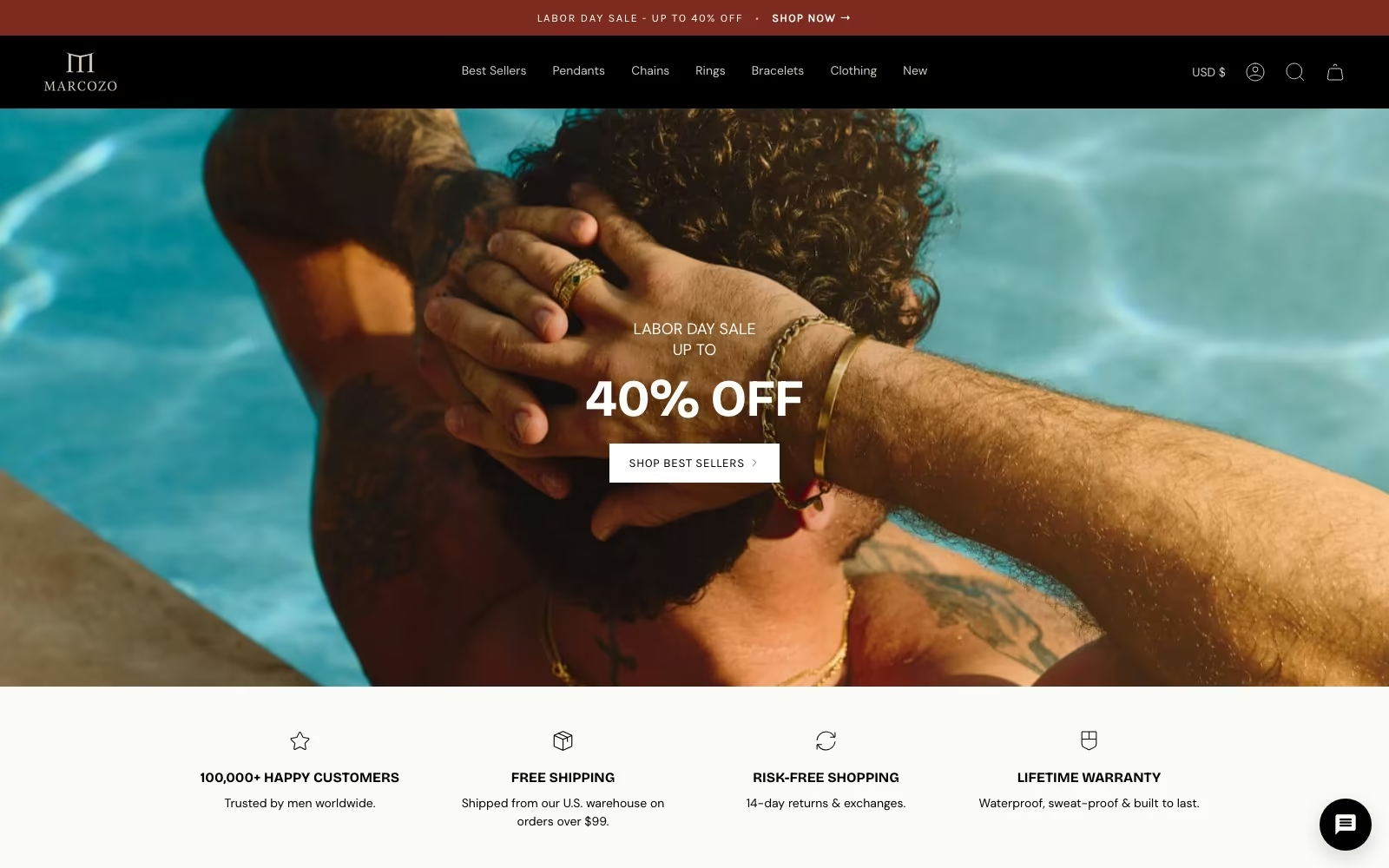
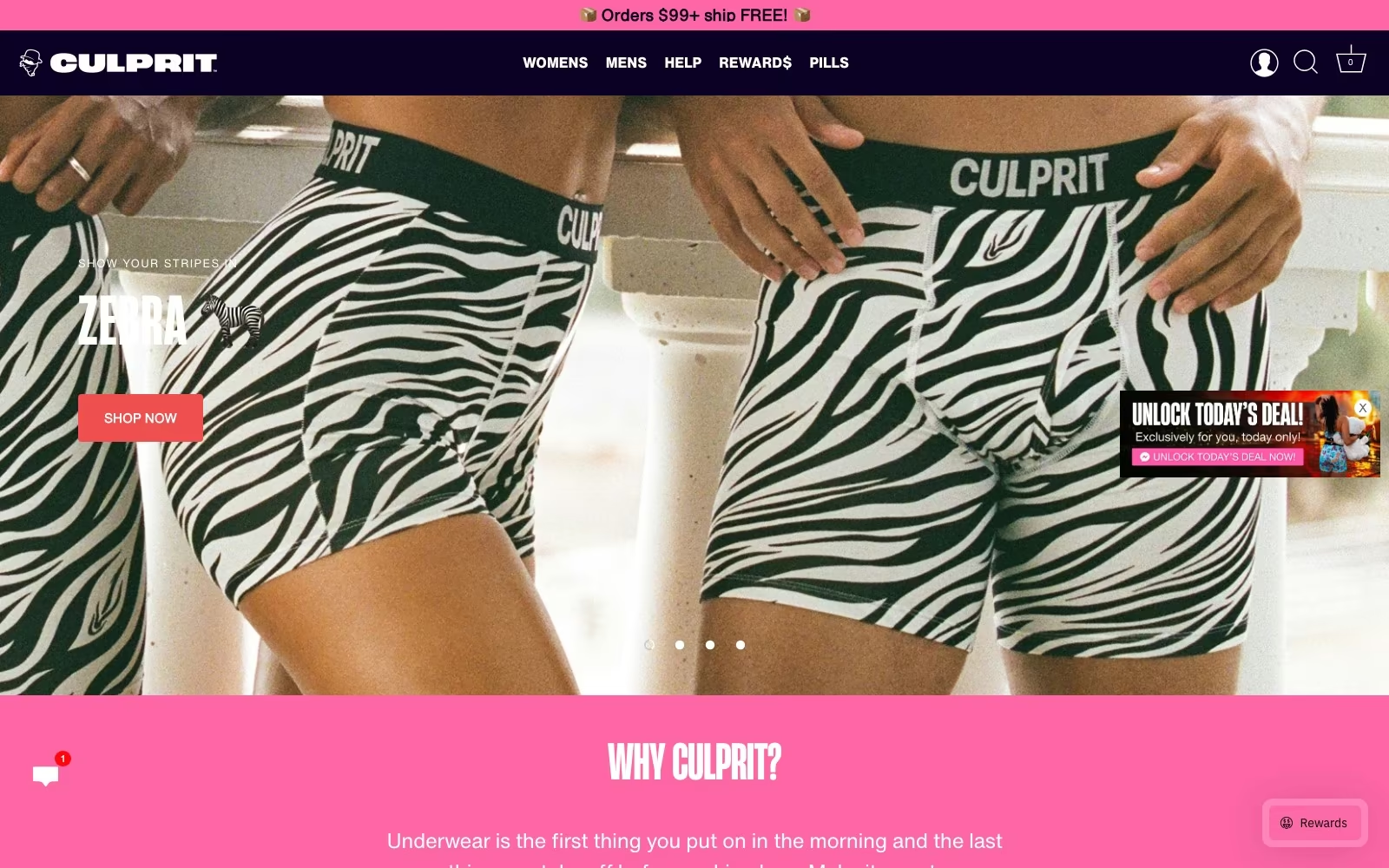
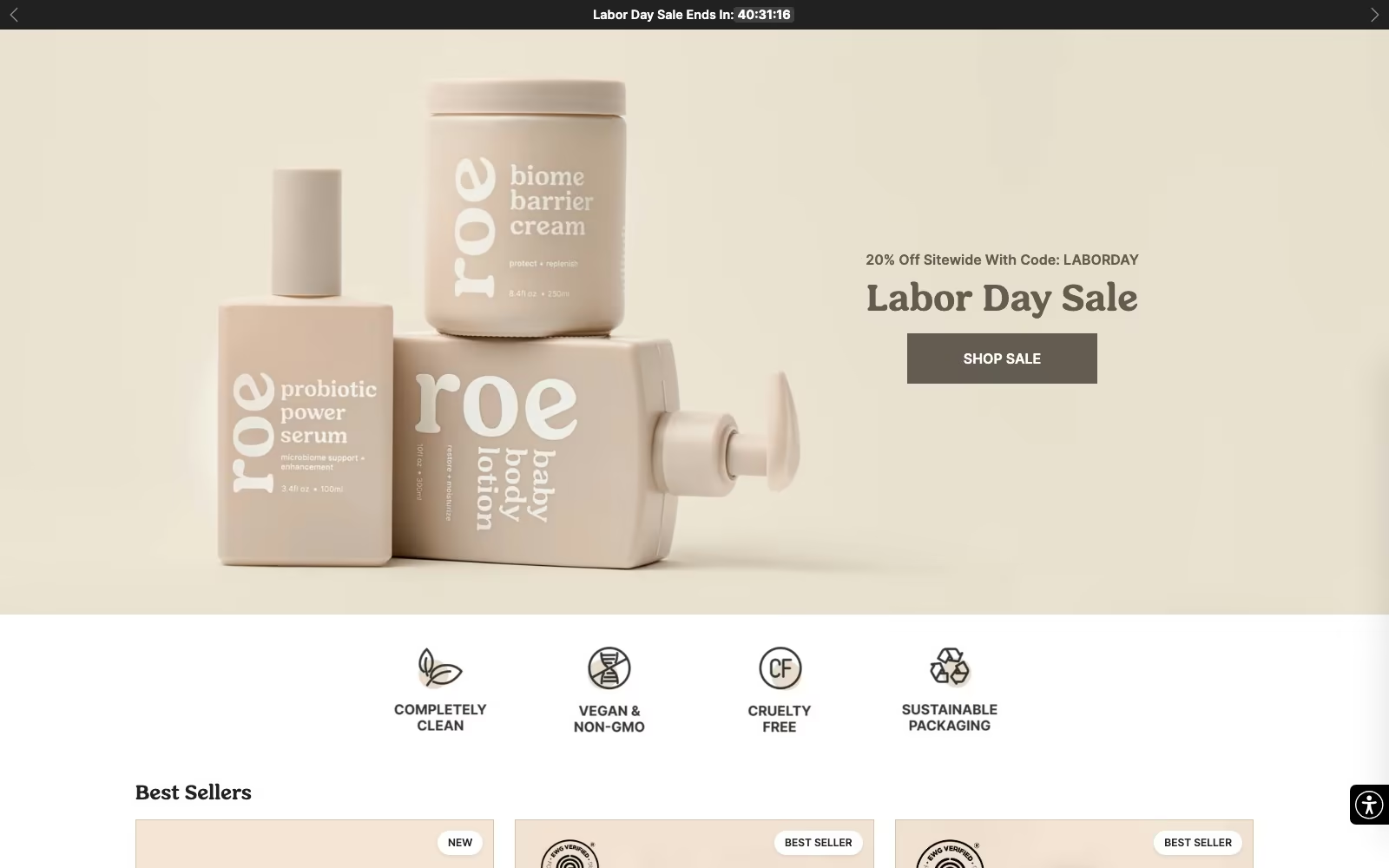
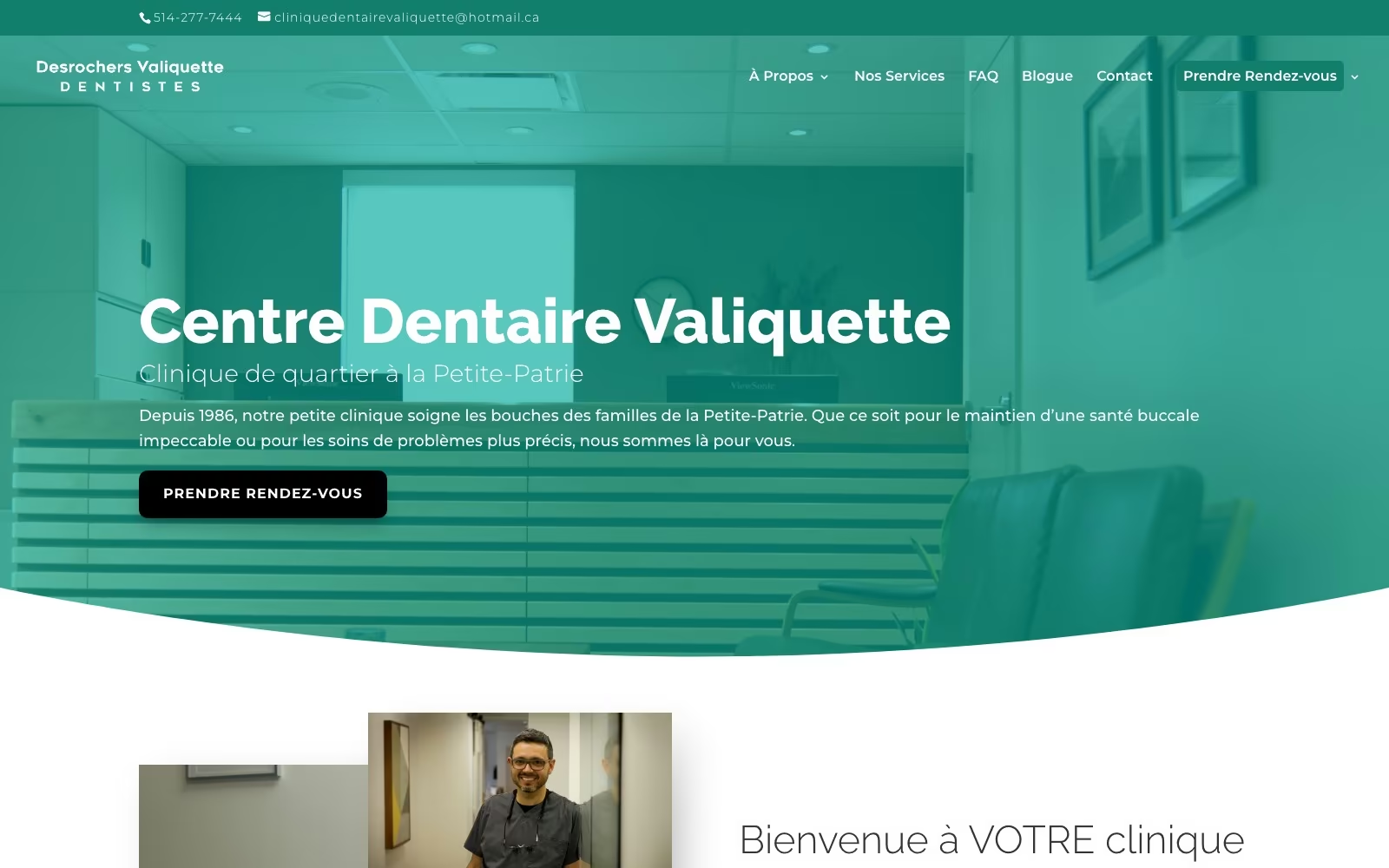
Website Portfolio
Video Ads
Static Ads
































































FAQ
What dentists ask us first.
How long before dental SEO shows up in the schedule?
Local visibility moves first. A rebuilt Google Business Profile, correct hours, real treatment categories and fresh reviews often shift map placement inside four to eight weeks, and that is where most dental clicks are decided. Treatment pages take longer, typically one to two quarters to settle. We agree that shape up front and report against it, so nobody judges the work on a month of data.
Our website is locked to a dental website provider. Can you still do SEO?
Yes, and it is a constraint we work with constantly. We audit what the platform allows, ship every fix it permits, and build fast standalone pages for the treatments carrying real demand when the platform blocks us. If a rebuild would genuinely pay for itself, we will show you the arithmetic rather than assume it — and we would rather improve what you have than sell a project you do not need.
Do we need to write blog posts every month?
Only when a post answers a question patients really ask. Volume blogging is how most dental sites end up with forty thin pages competing with each other. We put the effort into treatment pages first, then add supporting content where a search deserves it — cost guides, recovery expectations, insurance and finance explanations — which also gives your front desk something useful to send patients.
How important are reviews to dental rankings?
Very, and they work twice: they feed nearby ranking and they carry the decision once the patient sees you, since 97% of consumers read reviews for local businesses. We set up a routine your reception team can keep up with, so requests go out consistently rather than in bursts, and we help you respond to the occasional difficult one in a way that reads well to the next patient reading it.
Can you help a practice with several locations?
Yes, and the structure changes. Each site needs its own listing, its own location page with real detail rather than a copied template, and its own tracked phone number so one busy clinic cannot mask a quiet one. Shared treatment content stays central so the group is not paying for the same page five times, and reporting rolls up for the group while still drilling into each practice.
How does dental SEO compare with running Google Ads?
They answer different questions, and the strongest clinics run both. Paid search buys demand today at a known price — $8.00 a click and a $72.97 benchmark cost per lead — while organic compounds and keeps working when you pause spend. We often start clients on dental PPC for immediate flow, then let organic take over the treatments where it wins, with one plan behind both.
What does dental SEO cost with Web Tonic?
A fixed monthly fee scoped to the size of the practice, the number of locations and how much content the treatments need — not a percentage of anything, and no charge for media. We will tell you before you sign if the market is too competitive for the budget you have in mind, and which treatments to fund first if it is tight. Everything we build stays yours.
Will changing our pages hurt the positions we already have?
Your existing positions are protected first. We record current positions and traffic before touching anything, keep URLs that already earn visits, redirect properly whenever a page must move, and stage changes so any effect is visible and reversible. The risk we remove is bigger than the one we take: most dental sites are already losing patients to duplicate pages and slow load times.
Do you handle the Google Business Profile as well?
Yes, and for a local practice it is often the highest-return part of the engagement. We manage categories, treatments, hours, holiday hours, photos, questions and posts, keep the details consistent across the directories that matter, and watch for the listing edits Google sometimes applies on its own. It stays in your ownership throughout.
How do you report results?
One page a month in plain language: calls and enquiries from organic search, booked appointments where your practice software lets us see them, treatment pages gaining ground, what we changed and what is next. Rankings are included as a signal rather than the headline, because organic already carries 48.2% of dental site traffic and the useful question is what that traffic booked.
Do you do keyword research, and how do you choose the keywords?
Yes, and it starts with your chairs rather than a tool. We check which keywords real dentists in your area rank for, what your competitors are designed to capture, and which keyword clusters carry high commercial intent for the services you want to grow. Each relevant keyword is mapped to one page, so the strategy is legible: a dentist can read the map and see exactly which page is meant to win which search.
Does dental SEO need backlinks, and how do you build them?
Fewer than most agencies claim, and only ones a dentist would be happy to show a patient. We earn each link from local sponsorships, dental associations, supplier and university pages, local press and genuine community work — a small number of relevant backlinks beats a bulk package every time. We check every link source before outreach, and no page on your site is ever pointed at from a network we would not name.
Do you offer a free audit before we commit?
Yes. The first conversation includes a free review of your current online visibility: what your practice ranks for, which competitors own the treatment searches near your locations, how the design and images on your site affect the patient experience, and where the realistic growth is. You keep the document either way, and if our services are not the right fit for the company at this stage we will say so.
How do you track growth, and what does the strategy look like after year one?
We track rankings, organic sessions, phone enquiries and bookings against the baseline set in week one, so growth is a number rather than a feeling. After the first year the strategy shifts from repair to compounding: more treatment pages, new locations as the company opens them, refreshed images and design on the pages doing the heavy lifting, and a link plan aimed at the handful of high-value searches still owned by a competitor. Marketing that boring is what keeps dental practices ahead online.
Can you run our other marketing too?
Yes, and the numbers get more honest when one team holds them. Our local SEO, dental web design and analytics specialists work from the same plan, so a new patient is attributed once instead of claimed by three vendors. Hiring us for search alone is equally fine — everything is documented and left in accounts you own.

.webp)
.webp)