A gym website that signs people up.
signs people up
Most gym websites are a tour of the building. The ones that work are closer to a front desk: clear pricing, a class timetable you can read on a phone, and a join button that is never more than a tap away. We design and build websites for gyms, studios and fitness clubs, with our web design and gym SEO teams working on the same plan.






Tell us a little about your brand and we'll be in touch within 24 hours to lock in a time.



FOUR WORKSTREAMS
Four workstreams behind a fitness website that converts.
that converts
A design that looks like your gym and not a template, a membership journey built for a phone, class and pricing content people can actually use, and the technical foundation that keeps it fast and findable.
Design and brand
Membership journey and conversion
Classes, timetable and pricing content
Build, speed and local visibility
Look like your gym, not like a theme.
Fitness is a physical, specific business, and a website built on a generic template flattens exactly what makes a club worth joining. The room, the equipment, the coaches, the people who actually train there — that is your differentiator, and stock photography quietly throws it away.
We design around real photography of your space and a clear visual hierarchy, so a first-time visitor understands what kind of gym this is within seconds. Social proof is part of the design, not an afterthought: Codivox graded 36 US gym websites in 2026 and found 91.7% were missing social proof such as ratings or member counts.
- Design built on real photography of your space and coaches
- Clear visual hierarchy from first screen to join button
- Ratings, testimonials and member proof designed in
- Brand applied consistently from website to signage
91.7%
of graded gym websites were missing social proof
65/100
median gym homepage score in the same 2026 study
From the first screen to a booked trial.
The journey is where gym websites lose money, and the research is unusually blunt about it. In Codivox's 2026 sample, pricing transparency was the weakest category at a mean of 46.4 out of 100, 94.4% of sites did not state contract terms, and half were missing a trial, intro or join call to action entirely. People will not fill a form to discover a price.
We design the path deliberately: pricing visible, contract terms stated plainly, a persistent join or book action, and a secondary capture for visitors who are not ready. The upside is large — gym landing pages convert at 11.2% on average but 26.0% in the top decile.
- Pricing and contract terms stated on the site
- Persistent join and book actions on every template
- Trial or intro offer given its own clear path
- Secondary capture for visitors who are not ready yet
94.4%
of graded gym websites did not state contract terms
26.0%
conversion rate of top-decile gym landing pages
The timetable is the product page.
For a gym, the class schedule and the pricing page carry more commercial weight than anything else on the site. When the timetable is a PDF, an image, or an embed that will not load on a phone, the visitor leaves and books somewhere else. Class content also does real SEO work, because people search by class type long before they search by gym name.
We build the schedule and class pages as proper content: readable on a phone, bookable in as few taps as your software allows, and structured so search engines can index each class type. That matters given organic search delivers 48.2% of traffic in the fitness sector.
- Timetable rendered as real content, never a PDF or flat image
- A page per class type, indexable and linkable
- Booking software integrated rather than bolted on
- Pricing, trials and personal training clearly separated
48.2%
of fitness sector traffic arrives through organic search
80.6
average class schedule and experience score out of 100
Fast on a phone, findable on a map.
Almost all of this traffic is mobile: 72.4% of fitness sector visits come from a phone, and mobile bounce rates run 48.2% against 39.1% on desktop. A site that takes four seconds on a car park connection has already lost the visitor whether or not the design is good.
We build fast, accessible sites on a platform your team can actually update, wired into local search from day one — schema, location data and a Google Business Profile that matches the site. The urgency is real: 76% of people who run a local search visit a business within 24 hours.
- Core Web Vitals treated as a build requirement, not a retrofit
- A CMS your front desk can update without a developer
- LocalBusiness and class schema implemented at build time
- Accessibility and contrast checked before launch
72.4%
of fitness sector traffic comes from mobile
76%
of local searchers visit a business within 24 hours
of graded gym websites score a C or lower (Codivox, 2026)
average pricing transparency score out of 100 in that study
Design files, code and accounts handed over in your name
Your team taught to run the site before we step back
We made the difference for those brands

Creative, content, arts & culture

Food & beverage

Retail & commerce

B2B software, fintech, insurance

Creative, content, arts & culture

Travel & mobility

Consumer tech and platforms

Beauty, personal care & wellness

Beauty, personal care & wellness

Home essentials, appliances, kitchen & pet

Food & beverage

Consumer tech and platforms

Beauty, personal care & wellness

Apparel and lifestyle

Home essentials, appliances, kitchen & pet

Apparel and lifestyle

Healthcare & regulated services

Home essentials, appliances, kitchen & pet

Healthcare & regulated services

Retail & commerce

B2B software, fintech, insurance

Healthcare & regulated services

Food & beverage

Retail & commerce

B2B software, fintech, insurance

Apparel and lifestyle

Food & beverage

B2B software, fintech, insurance

Beauty, personal care & wellness

Healthcare & regulated services
01 — The challenge
The gym is great. The website undersells it.
Almost every gym owner we meet has the same problem in a different form. The club is busy, the coaching is good, members stay for years — and the website looks like it was built in a weekend three years ago, with a PDF timetable and no prices. Every ad and every search result lands there.
“People love us once they walk in. The website is the problem.”
It is not an unusual failing. Codivox scored 36 US gym websites in 2026 and 83.3% earned a C or lower, with a median homepage score of 65 out of 100. The bar in this industry is genuinely low, which is the opportunity.
02 — Our approach
Design the signup, then design the site around it.
We start from the journey rather than the homepage. Who lands here, what they need to know before they will book, and how few taps stand between them and a trial. That produces the page structure, and the structure decides the design — not the other way round. Pricing goes on the site, contract terms get stated, and the join action becomes persistent rather than buried in a menu.
Then we photograph the real thing. Your room, your equipment, your coaches, your members mid-session. That single decision separates a gym website from a template more than any layout choice, and it feeds your ads and social content afterwards. Class and pricing pages get built as proper indexable content, with the timetable readable on a phone and bookable in as few steps as your software permits.
The build is fast, accessible, and on a platform your own team can update. Local search, schema and tracking are wired in before launch rather than added later, and we hand over the working files and the accounts in your name.
03 — What we did
From audit to launch, without the site going dark.
Audit and journey design, then design, build and launch — with the current site staying live and its rankings carried across.
Week 1 / Audit
Where the current site loses people
The booking flow walked end to end on a phone, with the drop-off points, speed problems and missing information listed in priority order.

Weeks 2-3 / Design
Structure first, then the look
Page structure and the membership journey designed before any visual work, then a design built on real photography of your space.
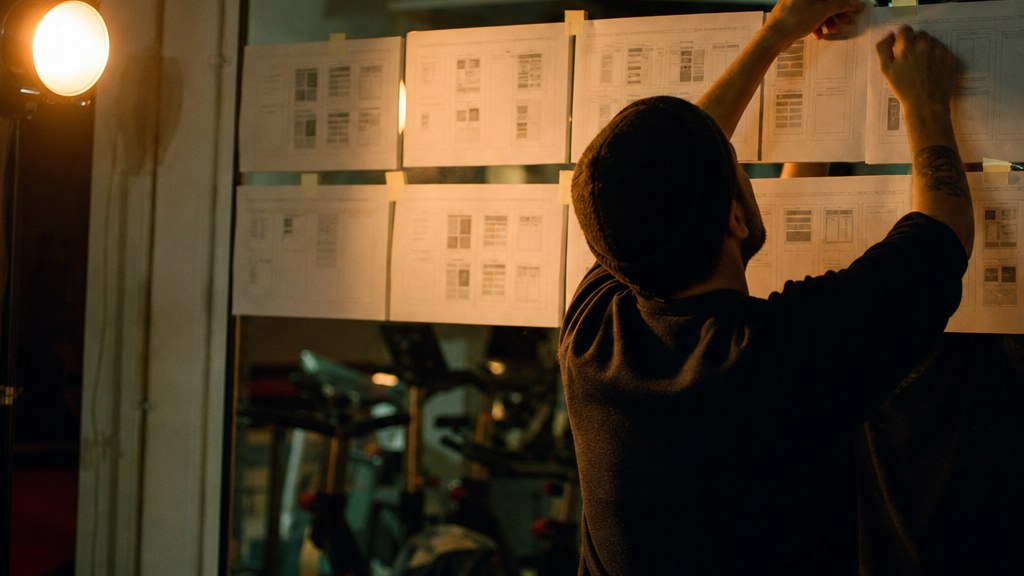
Weeks 4-6 / Build
Fast, accessible, and yours to edit
Built for Core Web Vitals and accessibility, booking software integrated, schema and tracking in place, on a CMS your team can run.

Launch / Aftercare
Launched with rankings intact
Redirects mapped, search visibility protected, then a period of watching real behaviour and fixing what the data exposes.

WHAT YOU GET
Deliverables you keep, whatever happens next.
you keep
Design files, code, photography and accounts are handed over in your name.

Website and journey audit
Where the current site loses visitors, walked step by step on a phone and ranked by what costs you the most.

Site structure and page map
Every page the site needs, what it is for, and which search demand or class type it exists to serve.

Design system and templates
A designed template set with type, colour and components, so new pages stay consistent long after launch.

Photography direction
A shot list and direction for capturing your room, coaches and members, usable on the site, in ads and on social.

Built and tested website
Fast, accessible and integrated with your booking software, on a CMS your own team can update.

Launch and handover kit
Redirect map, tracking setup and training so your staff can run the site without calling an agency.
HOW WE WORK
Operating standards, not promises.
Operating standards



















Built on trust. Proven by results.
We partner with SMBs and Fortune 500 companies to deliver more than reach — we bring clarity, execution, and measurable outcomes. Every successful partnership starts with a strong culture fit and a shared drive to grow.






CASE STUDIES
Case studies
Website Portfolio
Video Ads
Static Ads


































































FAQ
Questions gym owners ask us
How much does a gym website cost?
Scope drives it: the number of class and location pages, whether we integrate booking or membership software, and whether photography is part of the job. We give a scoped, itemised number after the audit rather than a package price, and we will tell you which parts your own team can handle to bring it down.
How long does a gym website take to build?
Around six to ten weeks for a single-location gym from kickoff to launch, and longer where several clubs, member areas or complex booking integrations are involved. Photography and content gathering are usually the parts that decide the timeline, so we start those early.
Will a redesign hurt our Google rankings?
Handled properly it protects and usually improves them. We map every redirect before launch, preserve the pages that already earn traffic, and build faster templates with better structure than the old site. Rankings are monitored through launch so anything unexpected is caught in days, not months.
Can we update the site ourselves afterwards?
That is the intention. We build on a CMS your front desk can use, and we train your team on the pages they will actually change — timetable, pricing, coaches, news. You get documentation as well, so a staff change does not put the site back in an agency's hands.
Do you integrate with our booking or membership software?
Yes, wherever the platform allows it. The goal is booking in as few taps as the software permits, rather than sending members to a separate portal that looks nothing like your brand. Where a system is genuinely closed, we will tell you honestly what is and is not possible.
Do we really need new photography?
It is the highest-impact decision in the whole project. Stock fitness imagery makes every gym look like every other gym, while photographs of your actual room and coaches communicate the thing people are choosing between. The same shoot then feeds your ads and social for a year.
What makes a good gym website?
Clear pricing, a readable timetable, obvious next step, fast on a phone, and real proof from real members. That is most of it. The graded research on gym sites shows the common failures are informational rather than aesthetic — missing prices, missing terms, missing social proof — which is good news, because those are fixable.
Should we use a free gym website template instead?
A template can be a reasonable starting point for a brand-new studio with no budget, and we would rather say so than sell you something you do not need yet. What templates cannot do is reflect your specific space or shape the membership journey around your offer, which is where the return on a designed site comes from.
What platform do you build on?
We choose it around your team rather than our habits — usually Webflow or WordPress for gyms, depending on who maintains it and what has to integrate. We explain the trade-offs before deciding, and the choice is always one you can leave, with the site and files in your ownership.
How does the website affect our SEO?
Enormously, because structure and speed are the foundation everything else stands on. Indexable class pages, clean URLs, schema and fast mobile templates give gym SEO something to work with. It matters commercially too: organic search delivers 48.2% of fitness sector traffic.
What conversion rate should a gym website achieve?
Use benchmarks rather than hope. Gym landing pages average 11.2% conversion, with 18.5% in the top quartile and 26.0% in the top decile, while the fitness sector's overall site conversion rate averages 3.2% with the top 10% at 5.8%. We set a target from your current baseline and measure against it.
Do you design personal trainer websites too?
Yes. A personal trainer website is a smaller build with a different job — establishing credibility fast and booking a consultation — so the structure and price differ from a club site. The same principles hold: clear pricing, real photography, and an obvious next step.
Can you work with our existing brand?
Of course. Where a brand is solid we apply it consistently and extend it for the web. Where it is holding the gym back we will say so and show you what a refresh would involve, but it is your call, and a redesign does not require rebranding.
What about accessibility?
It is part of the build, not an upsell. Contrast, keyboard navigation, focus states, alt text and readable type get checked before launch. Accessible sites are also easier for search engines to read and better for the older members who are one of the fastest-growing groups in fitness.
How big is this market, really?
Big enough that a good website pays for itself quickly. 81 million Americans held a fitness facility membership in 2025, with 26.1% penetration of the population aged six and over. Your catchment has more prospective members in it than your timetable can hold; the site's job is converting the ones already looking at you.
Can the website help build our gym community?
It can carry it, which is the realistic version. Coach profiles, member stories, class descriptions written in your own voice and a genuine events or schedule page give visitors a feel for the community and the experience before they ever visit. For CrossFit boxes and small studios that culture is the main reason people choose one gym over a cheaper one nearby.
How do we make it easy to book online?
Reduce the steps and remove the surprises, the same discipline our landing pages team applies. An easy online booking flow shows the classes with real availability, does not force an account before someone can see times, and works on a phone. Every extra screen loses visitors, so the great gyms treat booking as the product and everything else on the website as support for it.
Will a better website actually produce more leads?
It is usually the cheapest place to find more leads, because you are converting traffic you already pay for, including every click your gym PPC budget buys. Better quality pages help every other channel at once — the same Google visitors, the same ads, the same referrals, more of them booking. We can show gym owners the current drop-off points in the audit before you commit to anything.
What happens after launch?
Backed by conversion tracking we watch real behaviour for several weeks and fix what the data exposes — a step losing people, a form field nobody completes, a slow page. After that you can run it yourself with the documentation, or keep us on for ongoing improvement. Both are genuinely fine.
Who will actually work on our project?
A named senior designer and developer, and you will meet them before you commit. The person who designs your site is the person in the review calls. Nothing is handed to an anonymous production queue after the pitch.

.webp)
.webp)