Be the family lawyer ChatGPT puts in front of a frightened client.
ChatGPT puts in front
People now describe a custody problem to an assistant at midnight before they ever call a firm. Two things decide whether your practice appears in that conversation: whether you are eligible to run ads inside ChatGPT, and whether the model has anything of yours worth citing. We handle both — the OpenAI ads account and approval process, and the content work that makes your firm the source the answer is built from, tracked alongside our AI search programme.






Tell us a little about your brand and we'll be in touch within 24 hours to lock in a time.



FOUR WORKSTREAMS
Four workstreams behind a family practice's AI visibility.
Four workstreams
Eligibility and approval, the paid placements themselves, the organic answer layer that gets your firm cited, and intake wired to catch a client who arrives already half-informed.
Eligibility & approval
Campaign build
Answer-layer content
Intake & measurement
Legal is a restricted category. We start with what is actually allowed.
OpenAI reviews advertising in financial services, healthcare and legal services case by case, approving advertisers manually as those categories roll out, and ads are kept away from sensitive conversations. Coverage of the policy is worth reading before anyone promises you placements: Search Engine Journal noted the restriction on legal advice and representation ads while Search Engine Land reports lawyer ads running since at least May 2026.
So the first thing we do is establish where your firm stands, prepare the application and the compliant creative, and give you a candid read on timing. Where placements are not yet open to you, the organic answer work below starts immediately and carries the results in the meantime.
- Category eligibility checked against current OpenAI policy
- Advertiser verification and application prepared for you
- Creative written to survive a manual policy review
- A written timing expectation, not a promise
1bn
weekly ChatGPT users, with 20% showing commercial intent, per OpenAI
Placements bought carefully, in the conversations that matter.
Once a firm is approved, the mechanics are familiar and the discipline is not. ChatGPT advertising now runs across 31 European markets on top of the US, with tens of thousands of marketers already buying and cost-per-click bidding available. For a family practice the value is concentrated in a narrow set of moments: someone weighing whether they need representation, comparing local firms, or asking what a first consultation involves.
We build to those moments, keep the copy plain and compliant, exclude the crisis conversations no firm should be advertising into, and pace spend against booked consultations rather than impressions.
- Ads Manager account, billing and tracking set up in your name
- Copy written for a person mid-question, not mid-scroll
- Sensitive and crisis contexts excluded deliberately
- Budget paced against booked consultations
31
European markets added to ChatGPT advertising in August 2026
The citation is worth more than the placement.
An assistant answering “how is custody decided in my state” builds its reply from sources it trusts. If your firm wrote the clearest page on the subject, you are in the answer permanently rather than for the length of a budget. The consumer research says this is now decisive: 96% of respondents said they trust AI platforms to recommend a good law firm and 84% would not trust a firm absent from AI results, and 42% of consumers would use ChatGPT to help decide which lawyer to hire.
We build that layer: state-specific explainers on divorce, custody, support and property, written by your lawyers' knowledge, structured so a model can quote them cleanly and a worried person can read them.
- State and county-specific explainers, not generic law
- Structured so an assistant can quote a clean answer
- Attorney bios and credentials machine-readable
- Citation tracking across ChatGPT and the other assistants
96%
of surveyed consumers trust AI platforms to recommend a good law firm
84%
say they would not trust a firm that does not appear in AI results
This client arrives informed. Your intake has to match.
Someone who has spent an hour with an assistant arrives knowing the vocabulary, holding a rough plan, and expecting a firm that answers directly. Intake built for a cold caller loses them. We rework the first contact for this: a consultation booking that takes a minute, honest pricing context, a named person, and a response time your team can actually meet.
Then we measure what few firms do — which assistant conversations produced enquiries, which pages were cited, and what a signed matter costs by source, with the paid and organic sides reported together instead of separately.
- Consultation booking rebuilt for an informed client
- Assistant referrals tracked separately in analytics
- Cost per consultation and per signed matter by source
- One monthly read in plain language
42%
of consumers say they would use ChatGPT to research which lawyer to hire
Ads account, analytics and content stay in your name
A signed matter is the metric, never an impression count
Weekly working session with the people doing the work
Long-term lock-ins
We made the difference for those brands

Food & beverage

Creative, content, arts & culture

Creative, content, arts & culture

Retail & commerce

B2B software, fintech, insurance

Home essentials, appliances, kitchen & pet

Retail & commerce

Travel & mobility

Healthcare & regulated services

B2B software, fintech, insurance

Healthcare & regulated services

B2B software, fintech, insurance

Food & beverage

Apparel and lifestyle

B2B software, fintech, insurance

Creative, content, arts & culture

Creative, content, arts & culture

Food & beverage

Beauty, personal care & wellness

B2B software, fintech, insurance

Home essentials, appliances, kitchen & pet

Beauty, personal care & wellness

Food & beverage

Apparel and lifestyle

Healthcare & regulated services

Creative, content, arts & culture

Beauty, personal care & wellness

Consumer tech and platforms

Consumer tech and platforms

Creative, content, arts & culture
01 — The challenge
The first conversation about the divorce is not with a lawyer.
It happens at night, in a phone, in a chat window, and by the time the client calls a firm they have a working theory of their own case. Family practices that spent a decade winning the search result now find a layer sitting above it, summarising, comparing, and quietly deciding which two practices get named.
“They arrive quoting a statute they read at 2am and a firm we have never heard of.”
The consumer numbers are already decisive: 96% trust AI to recommend a firm, 84% distrust firms missing from AI answers, and 42% would use ChatGPT to help choose a lawyer. Being present in that conversation is now part of the practice's visibility, not a side experiment.
02 — Our approach
Establish eligibility, earn the citation, buy the placement, count matters.
We begin with a candid eligibility read, because legal is a manually reviewed category on this platform and you deserve to know that before a budget is set. In parallel we audit how the major assistants currently answer the twenty questions that precede hiring a family lawyer in your jurisdiction: who is cited, what those sources say, and where your firm is invisible. That audit becomes the content plan. Your attorneys supply the substance in a short interview each, we write and structure the pages so an assistant can quote them cleanly, and we make the firm's credentials machine-readable. Where advertising is open to you, we set up the Ads Manager account in your name, write copy that survives a manual policy review, exclude sensitive and crisis contexts on purpose, and start small enough to learn honestly. Intake is reworked for a client who arrives informed, because that is where most of this spending is lost. Reporting is one page: citations gained, enquiries by source, cost per consultation, cost per signed matter. We report the flat months too, and when the platform is not yet the right place for your practice we will say so and put the budget where it works.
03 — What we did
A first quarter that builds standing, not just spend.
Eligibility, an assistant audit, the answer layer, then paid placements and a monthly read — in sequence, with a working session every week.
Weeks 1-2 / Position
Eligibility read and an assistant visibility audit
Where your practice stands with the platform's legal category, and how the assistants answer the twenty questions that precede hiring a family lawyer in your jurisdiction today.

Weeks 2-6 / Answer layer
State-specific explainers your attorneys stand behind
Custody, divorce process, support and property questions answered properly for your jurisdiction, structured so a model can quote them and a worried person can follow them.

Weeks 4-8 / Placements
Compliant campaigns, narrow moments, careful pacing
Account and billing in your name, copy built to pass manual review, sensitive contexts excluded, spend paced against booked consultations.

Monthly / Read
Citations, consultations and signed matters by source
One page: where you are being cited, what came in, what it cost, what changed and what happens next month.

WHAT YOU GET
Deliverables your managing partner can audit.
can audit
Everything below lands in accounts you own and stays yours if you ever leave.

Eligibility and platform read
Where your firm stands under the current legal-category rules, what approval requires, and a candid view of timing.

Assistant visibility audit
How ChatGPT and the other assistants answer the questions that precede hiring a family lawyer near you, and who they cite.

Answer-layer content
State-specific explainers written from your attorneys' knowledge and structured so a model can quote them cleanly.

Campaign build and management
Ads Manager set up in your name, compliant creative, deliberate exclusions, and weekly pacing against booked consultations.

Intake rework
A booking path built for a client who arrives informed, with honest pricing context and a named person to speak to.

Monthly reporting
Citations, enquiries, cost per consultation and cost per signed matter, paid and organic reported together.
HOW WE WORK
Operating standards, not promises.
Operating standards


Solo and boutique practices
A small, sharp answer layer in one county beats a national firm's generic content in that county.
ExploreMulti-attorney firms
Attorney-level authority built deliberately, so the model has a person to name and not just a brand.
ExploreFirms with adjacent practice areas
Estate, mediation and support work covered as their own answer sets rather than folded into one page.
Explore

















Built on trust. Proven by results.
We partner with SMBs and Fortune 500 companies to deliver more than reach — we bring clarity, execution, and measurable outcomes. Every successful partnership starts with a strong culture fit and a shared drive to grow.





CASE STUDIES
Case studies
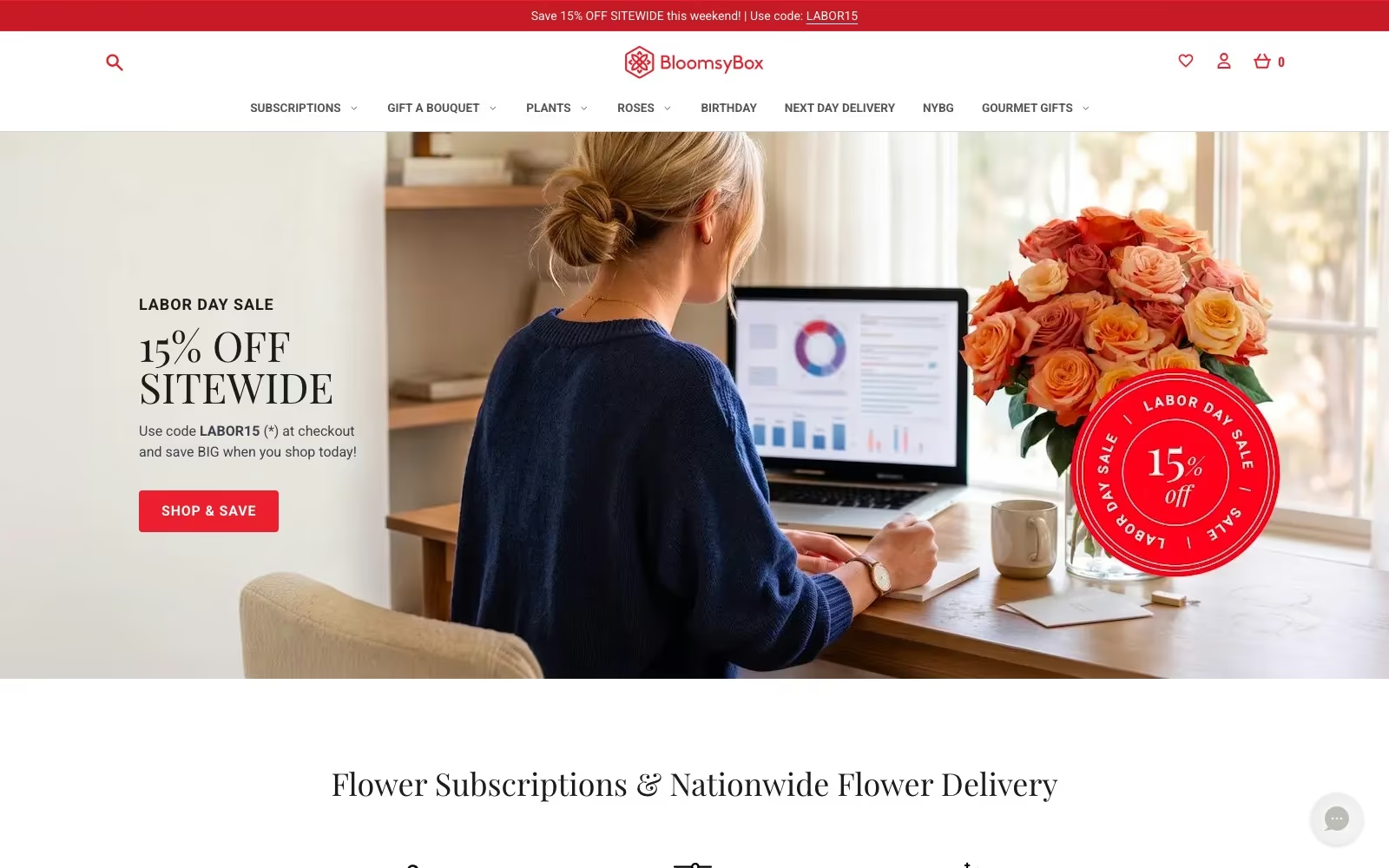
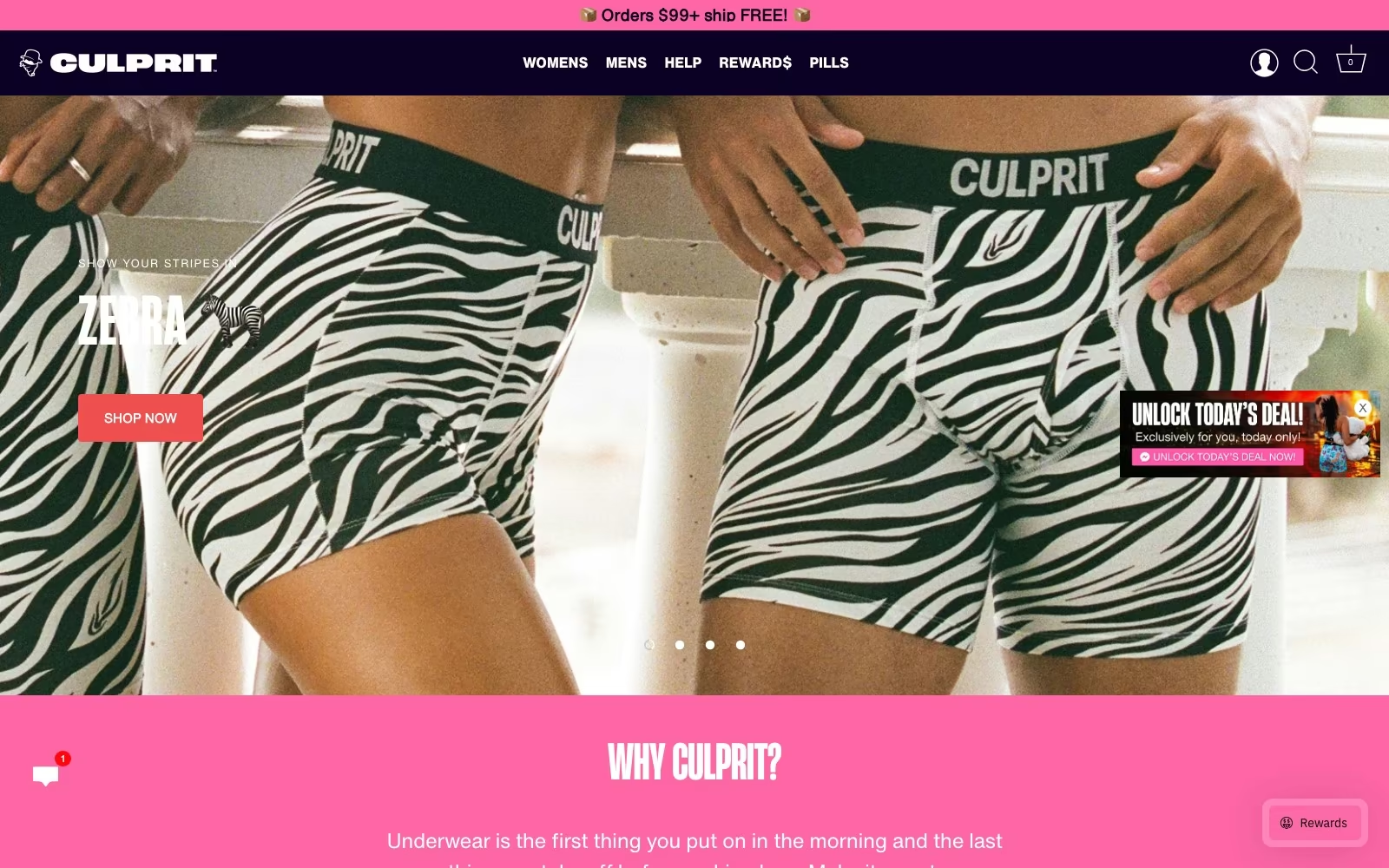
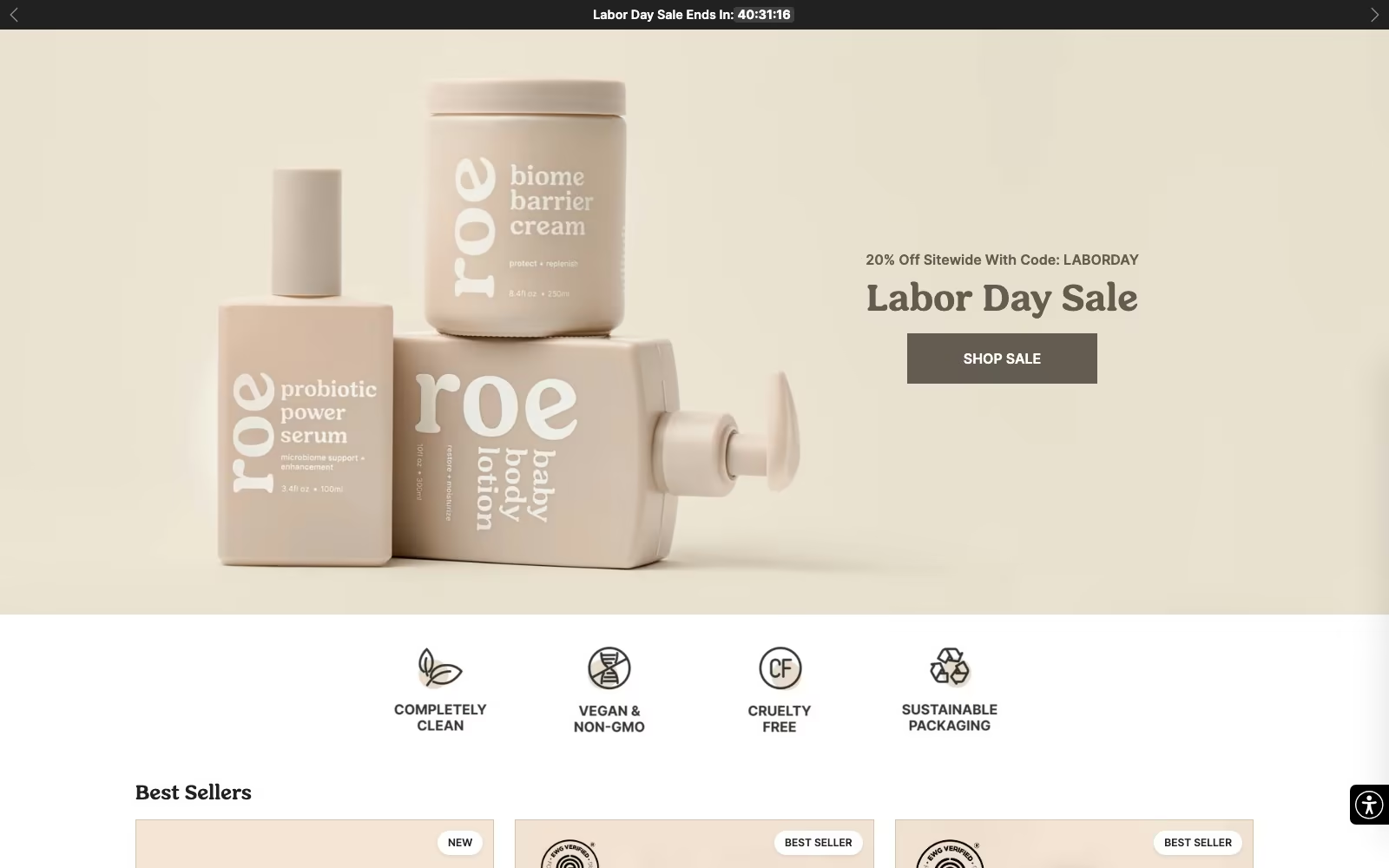
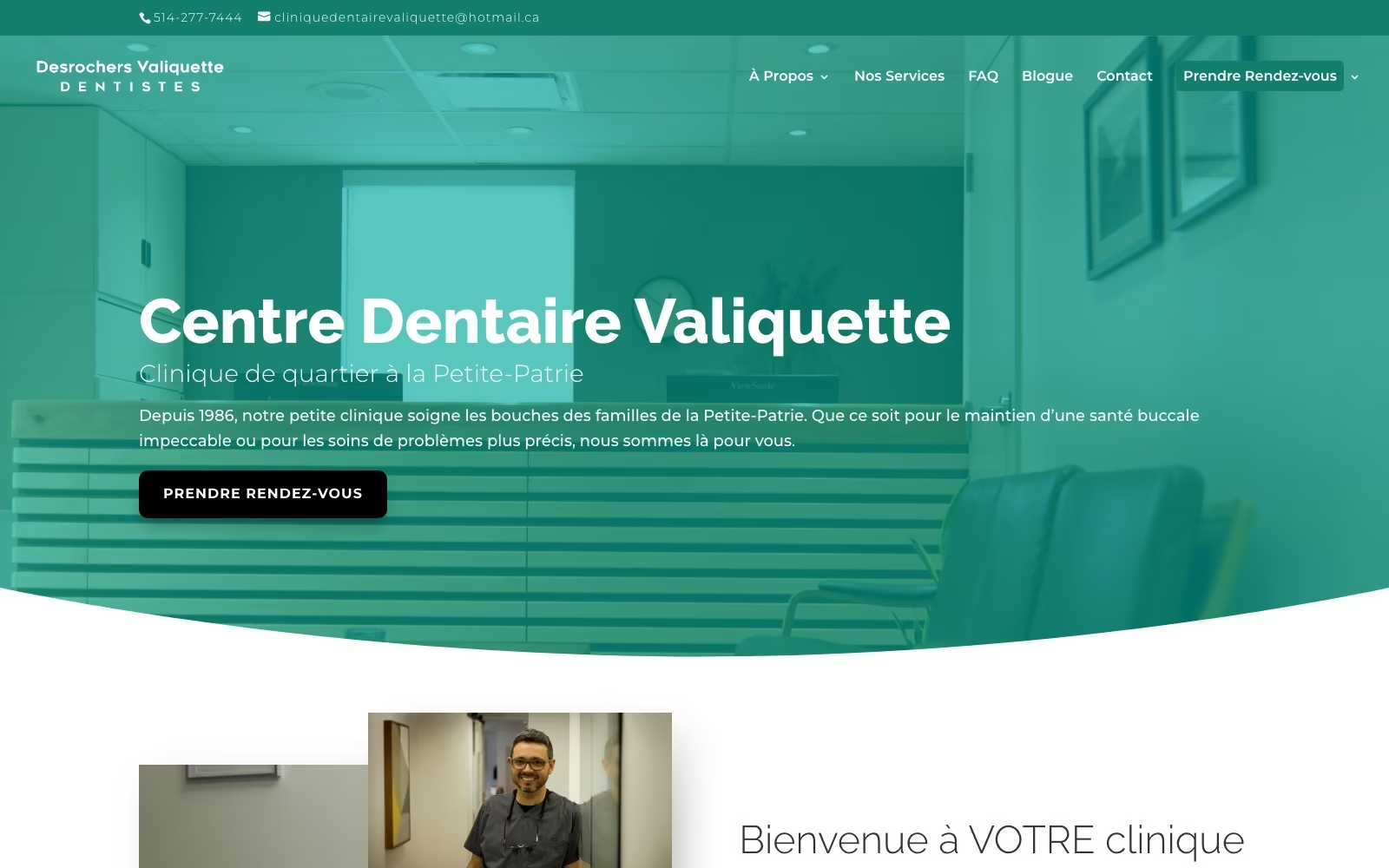
Website Portfolio
Video Ads
Static Ads

































































FAQ
What family law firms ask us first.
Can a family law firm actually run ads inside ChatGPT right now?
Sometimes, and we will tell you which side of the line you are on before any budget is committed. OpenAI treats legal services as a restricted category approved advertiser by advertiser, and coverage of the policy reflects that tension: the published rules restrict ads for legal advice and representation while lawyer ads have been running since at least May 2026. We prepare the verification and the application, and we build the organic answer layer in parallel so your practice is gaining ground either way.
Is this just SEO with a new name?
They overlap, and that is an advantage rather than a problem. Classic search rewards a page that ranks; an assistant rewards a page it can quote accurately, which means clear answers, a jurisdiction stated up front, credentials it can verify and structure it can parse. Much of that work helps both surfaces at once. The parts that are genuinely new are prompt auditing, citation tracking across several assistants, and the paid placements themselves, which behave differently from a search auction.
How do you measure something as vague as being cited by an assistant?
With a fixed prompt set and a repeatable test. We agree the questions a prospective client in your jurisdiction would actually ask, run them across ChatGPT and the other major assistants on a schedule, and record whether your firm appears, what is said, and which sources the answer is built from. That gives a baseline and a monthly trend line. Alongside it we tag assistant referrals in analytics and ask at intake, so the qualitative picture and the enquiry count are checked against each other.
What does a programme like this cost?
A fixed monthly fee for the work, quoted after the audit rather than off a rate card, plus whatever media budget you approve separately and pay directly. For most family practices the content and citation work is the larger share early on, because it produces the durable position, with media layered in once eligibility is confirmed. We agree a target cost per consultation and per signed matter in month one and report against it.
Will clients from an AI conversation be worse quality?
In our experience they are better informed and more decisive, which cuts both ways. They arrive understanding the process, so consultations are shorter and more productive, and they have often already ruled out firms that felt evasive online. They also expect straight answers about cost and timelines. Practices that publish honest pricing context and respond quickly do well with this group; the ones who rely on a vague brochure tone tend not to.
Is it safe to advertise a family practice near sensitive conversations?
It is, because the platform and we both keep you out of them. OpenAI does not place ads near sensitive user content and does not allow political advertising, and we add our own exclusions on top for crisis, safety and abuse contexts. That is a deliberate choice: it protects the practice's reputation, and it is the right thing to do when the person on the other side is in distress. The moments we do buy are practical ones — comparing firms, understanding process, preparing for a first consultation.
Do our attorneys have to write the content?
No. They talk for forty minutes and we do the rest. A short recorded conversation with the attorney who handles custody, or support, or property division gives us the specifics that make a page worth citing: how the local court actually behaves, what clients get wrong, what a realistic timeline looks like. We draft, they review and approve, and nothing publishes without a lawyer's sign-off.
How long before we see anything?
Citation movement usually appears within one to three months of the first content going live, because assistants re-crawl and re-rank sources faster than classic search settles. Paid placements, where eligibility allows, produce data in days but need a few weeks before the numbers mean anything. A stable, predictable flow of consultations from this channel is a six to twelve month proposition, and we agree the leading indicators up front so nobody is waiting in the dark.
What if the platform changes its rules again?
It will, and the plan is built for that. The answer-layer content is yours and keeps working across every assistant and classic search regardless of what any one platform decides about advertising. The media side is deliberately kept flexible: small tests, monthly commitments, nothing that depends on one placement type surviving. We track the policy pages and changelogs weekly and tell you what changed and what it means for your firm, in the monthly read.
Should we do this instead of Google Ads?
Alongside, not instead, and the split should follow the evidence rather than the excitement. Search still produces the majority of family law enquiries for most firms. What is changing is the layer above it: ChatGPT reports a billion weekly users with 20% showing commercial intent, and 42% of consumers say they would use it to help choose a lawyer. We usually recommend keeping the search programme funded and adding a measured position here, then letting cost per signed matter decide the balance.
We are a small practice. Is this only for big firms?
Small practices often do better, because an assistant is looking for the clearest answer to a specific question in a specific county rather than the biggest brand. A two-attorney practice that publishes genuinely useful local guidance can be cited ahead of a national directory. The work scales down sensibly: fewer pages, a tighter prompt set, a smaller test budget, and the same reporting so you can see whether it is paying.
Can you run our other channels too?
Yes, and the numbers get more honest when one team holds them. Our AI search, paid search and analytics specialists work from the same plan, so a signed matter is attributed once instead of claimed by three suppliers. Hiring us for this channel alone is equally fine — we document the setup and leave every account open in your name.

.webp)
.webp)