An electrician website built to get the call, not the compliment.
to get the call
Your website has about four seconds with a homeowner standing next to a dead consumer unit. We design and build electrical company websites for that moment: fast on a phone, one obvious way to call or book, licence and insurance proof where a nervous customer looks for it, and a real page behind every service and every town you cover. It is built to be found too, alongside our electrician SEO work.






Tell us a little about your brand and we'll be in touch within 24 hours to lock in a time.



FOUR WORKSTREAMS
Four things separate an electrical website that converts.
Four things
Speed on mobile, trust proof above the fold, a page for every service and area, and a booking path a customer can finish one-handed. The visual design sits on top of those, not instead of them.
Speed & mobile
Contact & booking
Trust & proof
Structure & CMS
Most electrician websites are slow, and it costs the enquiry.
Contractor websites are usually built once and inherited twice. The benchmark data is blunt: the average electrician website takes 8.8 seconds to render its main content against Google's 2.5-second good threshold. In a study of 200 contractor websites, sites loading under 2.5 seconds converted at 6.8% while sites over 4.5 seconds converted at 2.1% — the same traffic, three times the work.
We build light. Compressed and correctly sized images, no plugin sprawl, fonts and scripts kept to what the page needs, and every template tested on a mid-range phone on mobile data rather than on a designer's monitor.
- Mobile-first build, tested on real devices
- Core web vitals inside Google's thresholds at launch
- Image weight and script sprawl controlled
- Clean markup a search engine can read
8.8s
average largest contentful paint on electrician websites vs Google's 2.5s threshold
6.8%
conversion on contractor websites under 2.5s, against 2.1% over 4.5s
One obvious next step, on every screen, at every hour.
The most expensive defect in this trade is quiet. An audit of more than 1,200 electrician websites found 29% have a telephone number that is not clickable on mobile, and the same team's ranked fix list puts click-to-call, service-area pages, online booking, after-hours capture and licence display at the top of what actually moves an electrician's score.
So we design the contact path first and the hero image second: a tappable number pinned where a thumb rests, a short booking form that asks four questions, an after-hours route that captures the job instead of losing it, and confirmation the customer can trust.
- Tap-to-call fixed in the mobile viewport
- Short booking form, four fields, no account required
- After-hours capture rather than a dead voicemail
- Enquiries pushed straight into your scheduling tool
29%
of electrician websites cannot be dialled with one tap on a phone
A stranger is about to give you their address. Earn it above the fold.
Electrical work is bought on trust, and the proof a homeowner wants is specific: licence and registration numbers, insurance, how long you have traded, photographs of your own jobs and vans rather than a stock crew, reviews shown with names and dates, and a clear statement of the areas you cover. The ranked audit list puts licence display among the five fixes that move an electrician website's score most, and it is one of the cheapest.
We design those signals into the templates so they appear on every page, not only on an About page nobody reaches, and we keep them editable by your office without a developer.
- Licence, registration and insurance visible sitewide
- Photographs of your real work, shot or sourced properly
- Reviews pulled in with names, dates and replies
- Service areas stated plainly, not hidden in a footer
$1,434
average electrical ticket in SearchLight's 2026 benchmark of 112 accounts
A page for every service and every town, editable by your office.
A single services page listing eleven trades cannot rank and cannot sell. We structure the website around the work: a page for panel upgrades, rewires, EV charger installation, fault finding, lighting and commercial maintenance, plus a genuine page for each area you serve. Those pages are also what makes paid traffic cheaper, given electrical leads run $39 apiece with a 43.4% book rate before you send them somewhere generic.
It ships on a content system your team can actually use — WordPress or Webflow, chosen for your situation, with editable templates so adding next year's service takes ten minutes and no invoice.
- Service and area page templates built once, reused cleanly
- WordPress or Webflow, chosen for your team not for us
- Custom design, no marketplace theme underneath
- Training and documentation so your office owns it
$39
average electrical cost per lead across $335K of tracked spend (Feb 2026)
Design files, code, hosting and domain stay in your name
Every template tested on real phones before launch
Weekly working session while the build is running
Marketplace themes under the hood
We made the difference for those brands

Consumer tech and platforms

Beauty, personal care & wellness

Beauty, personal care & wellness

Creative, content, arts & culture

Retail & commerce

B2B software, fintech, insurance

Creative, content, arts & culture

Apparel and lifestyle

Consumer tech and platforms

Consumer tech and platforms

Apparel and lifestyle

Healthcare & regulated services

B2B software, fintech, insurance

B2B software, fintech, insurance

Food & beverage

Healthcare & regulated services

Consumer tech and platforms

Home essentials, appliances, kitchen & pet

Consumer tech and platforms

Consumer tech and platforms

Beauty, personal care & wellness

Food & beverage

Retail & commerce

Consumer tech and platforms

Healthcare & regulated services

Food & beverage

B2B software, fintech, insurance

Food & beverage

B2B software, fintech, insurance

Consumer tech and platforms
01 — The challenge
The website looks fine. It just does not produce work.
Most electrical companies we meet have a website somebody's relative built, a photograph of a van from two liveries ago, and a contact form that emails an address nobody checks. It looks acceptable on a desktop monitor. On a phone, in a hallway, next to a tripped board, it is eight seconds of blank screen and a number that will not dial.
“People say the website looks nice. Nobody ever says they called because of it.”
The measurable version: 8.8 seconds to paint on average, 29% with an untappable number, and a 3.2x conversion gap between fast and slow contractor websites. Not one of those is a design taste problem, which is why we start with the mechanics.
02 — Our approach
Design for the thumb, build for speed, structure for the searches.
We start with a short discovery: the jobs you want more of, the areas you cover, what your office already loses enquiries to, and what the current website is doing measurably wrong. Then we map the pages before anyone opens a design tool, because the structure is the strategy — a page per service, a real page per area, commercial split from residential, and one clear conversion on each. Design comes next, in a mobile frame first, and we prototype the contact path before the hero photograph. The build is custom rather than a bought theme, kept light on purpose, with your licence and review proof designed into the templates and your job photography edited so it looks like your work on a good day. We migrate the existing content and redirect every old address so the rankings you already have arrive on the new website intact. Before launch we test on real phones on mobile data, check the forms land where they should, and confirm call tracking and analytics are recording. After launch you get training, documentation and a month of adjustments, and every account and licence stays in your name. If the honest answer is that your current website needs three fixes rather than a rebuild, we will tell you that and quote the three fixes.
03 — What we did
A build sequence with no mystery in it.
Discovery, structure, mobile-first design, custom build, migration and launch — each stage signed off by you before the next one starts.
Week 1 / Discovery & structure
Map every page before anyone opens a design tool
The jobs you want, the areas you cover and the searches behind them, turned into a page map and one clear conversion per page.

Weeks 2-4 / Design
Mobile frames first, contact path prototyped early
Templates designed on a phone-sized canvas, with the tappable number, the booking form and the trust proof placed before the hero photograph is chosen.

Weeks 4-7 / Build
Custom build, light templates, editable by your office
No marketplace theme, no plugin sprawl. Reusable service and area templates on a CMS your team can update without calling anyone.

Week 8 / Launch & after
Migrate, redirect, measure, then hand over the keys
Old addresses redirected, tracking verified, real-device testing done, then training, documentation and a month of adjustments.

WHAT YOU GET
Deliverables your office manager can audit.
can audit
Everything below is yours: the design files, the code, the hosting and the accounts, all in your name from day one.

Discovery and page map
The jobs, areas and searches worth building for, turned into an agreed page map with one conversion per page.

Mobile-first design
Custom templates designed in a phone frame, with the contact path prototyped before the photography is chosen.

Custom website build
A light, fast build on WordPress or Webflow with reusable service and area templates, never a marketplace theme.

Trust and booking layer
Licence and insurance proof, reviews, job photography, tap-to-call and a four-field booking form wired to your scheduler.

Migration and redirects
Existing content moved and every old address redirected, so the visibility you already earned survives the launch.

Training and handover
Documentation, a training session for your office, and a month of adjustments after launch.
HOW WE WORK
Operating standards, not promises.
Operating standards


Residential electricians
Speed, a tappable number and licence proof, because the decision is made in a hallway on a phone.
ExploreCommercial & industrial
Accreditations, response times and case detail, with an enquiry route built for a facilities manager.
ExploreMulti-branch firms
Branch templates with their own areas, teams and numbers, managed from one content system.
Explore

















Built on trust. Proven by results.
We partner with SMBs and Fortune 500 companies to deliver more than reach — we bring clarity, execution, and measurable outcomes. Every successful partnership starts with a strong culture fit and a shared drive to grow.






CASE STUDIES
Case studies
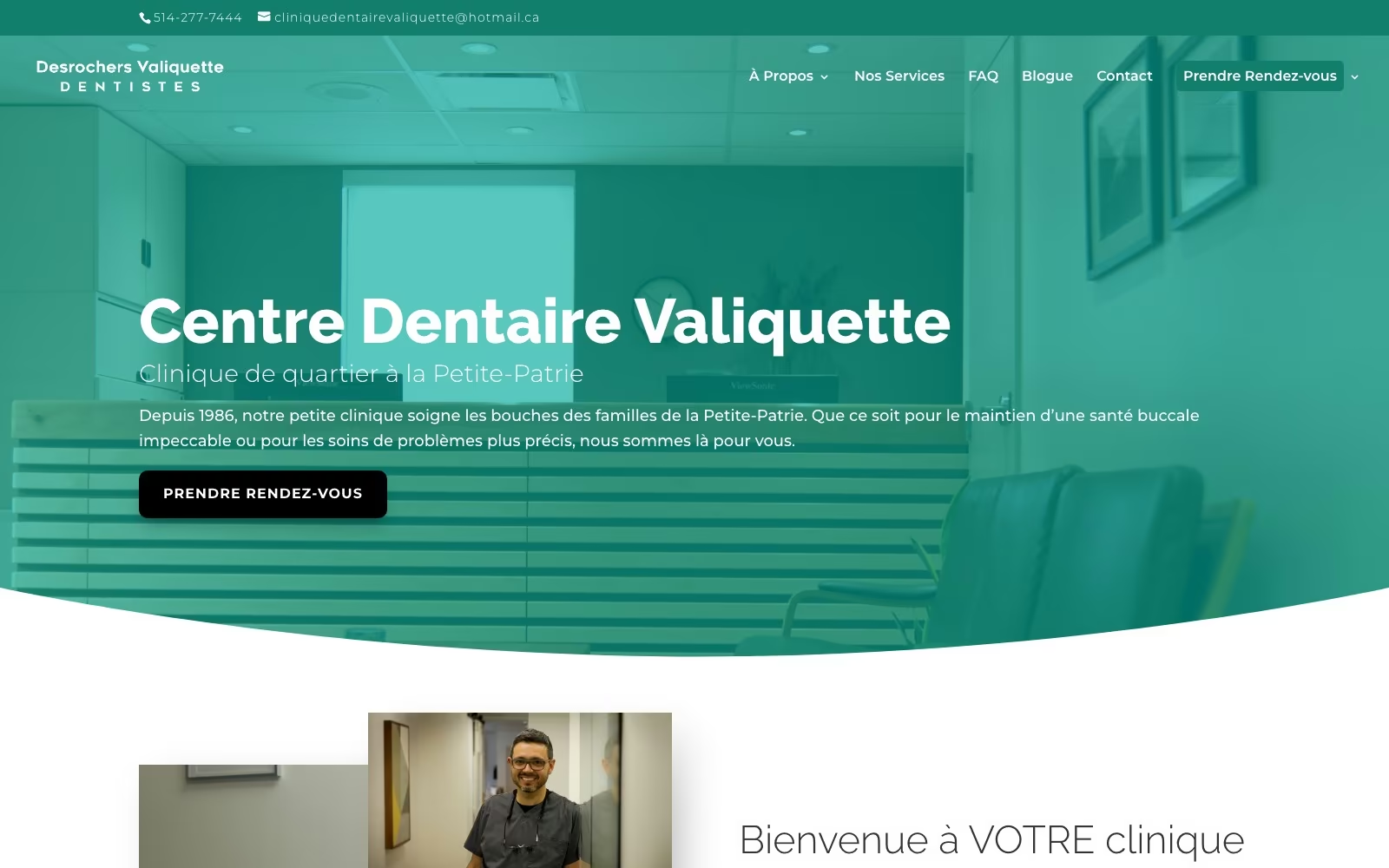
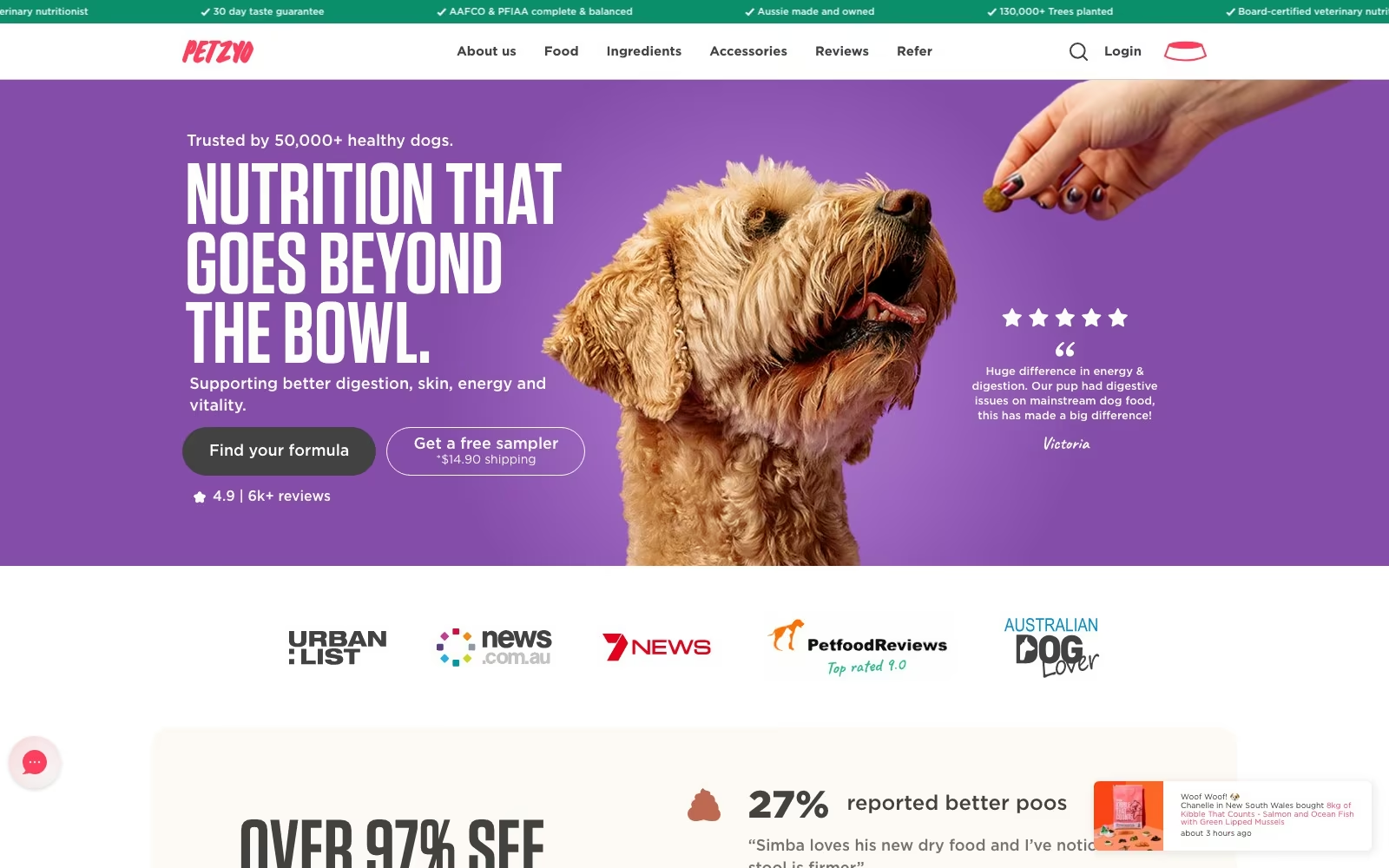
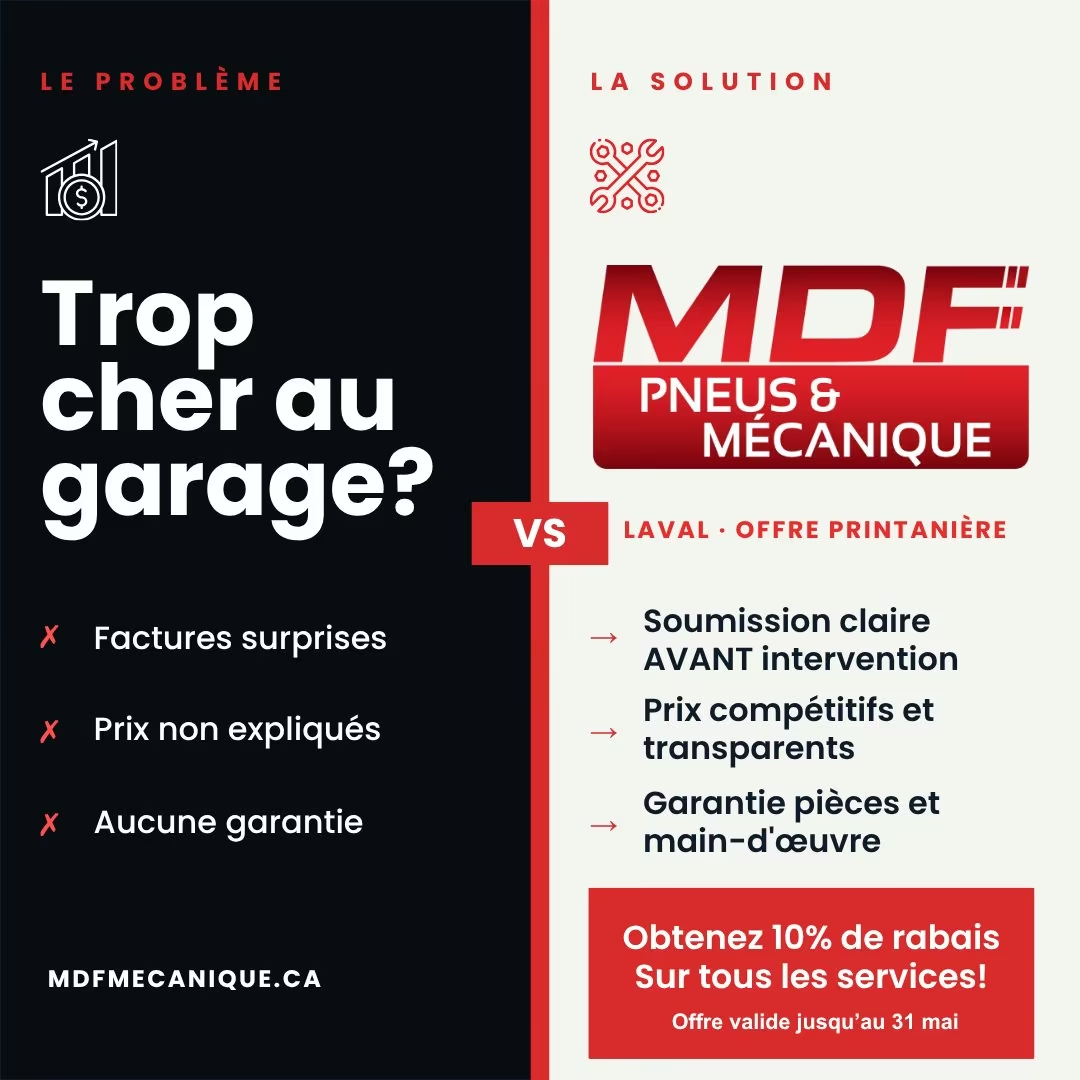
Website Portfolio
Video Ads
Static Ads










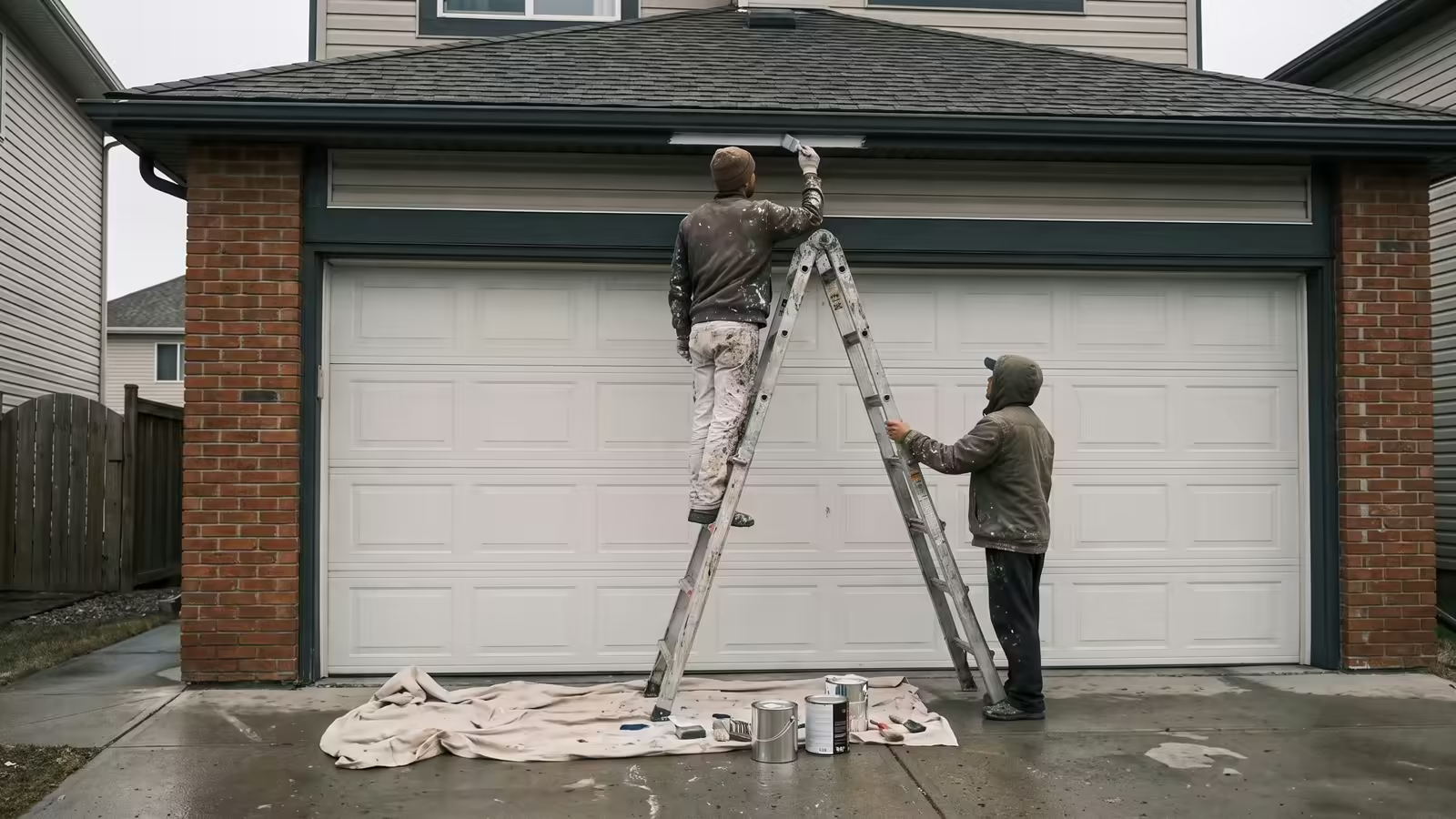





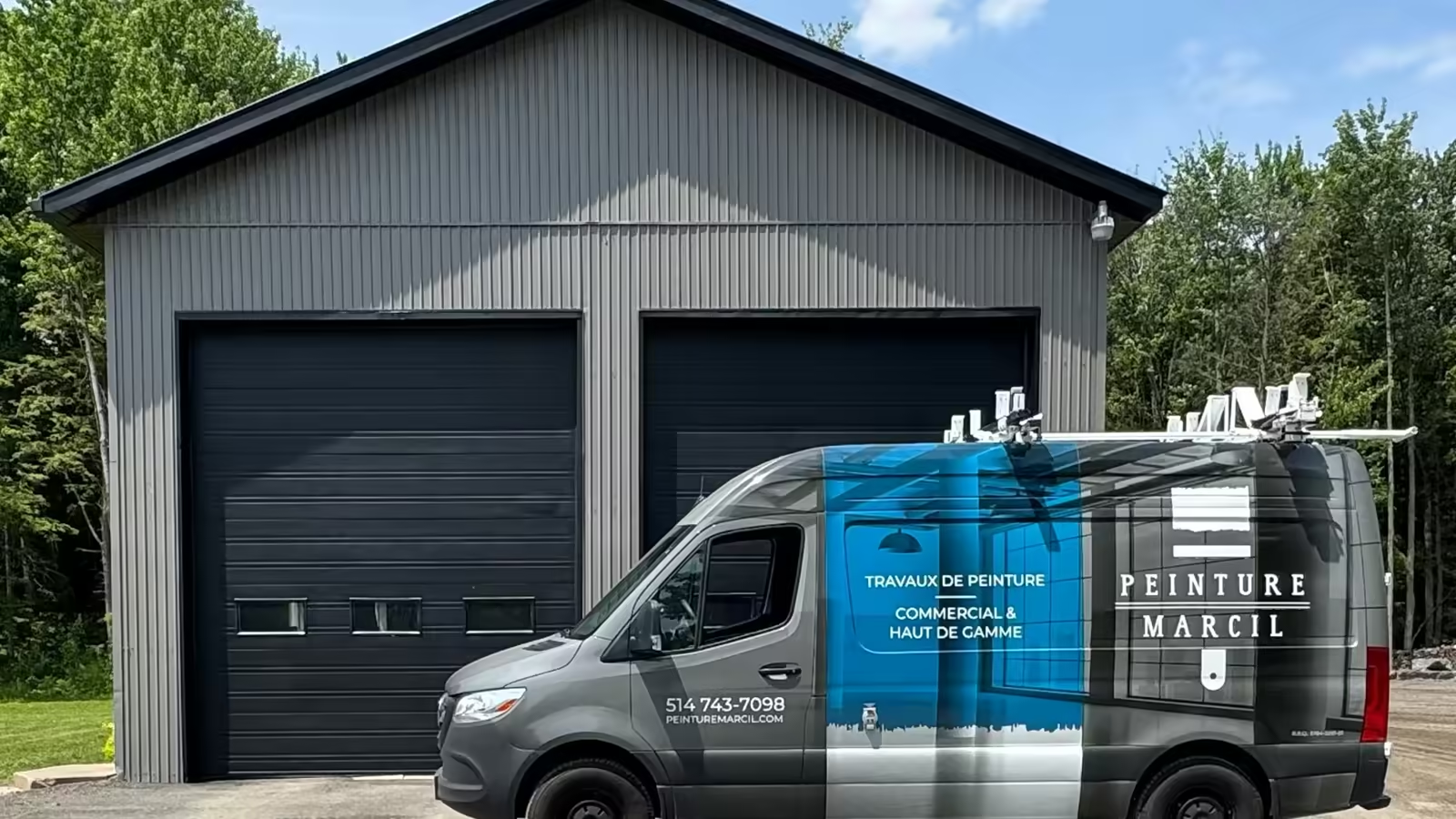

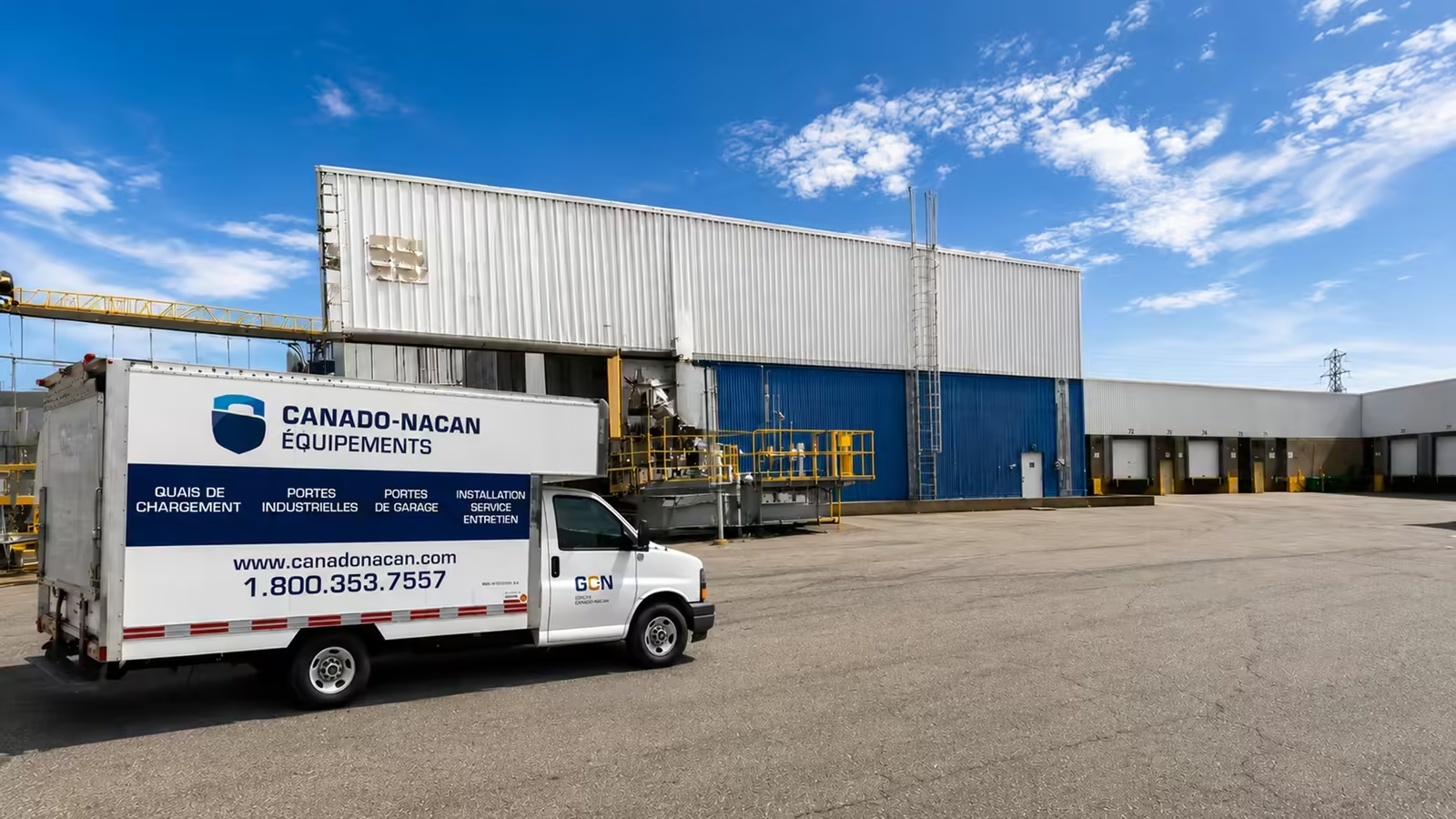



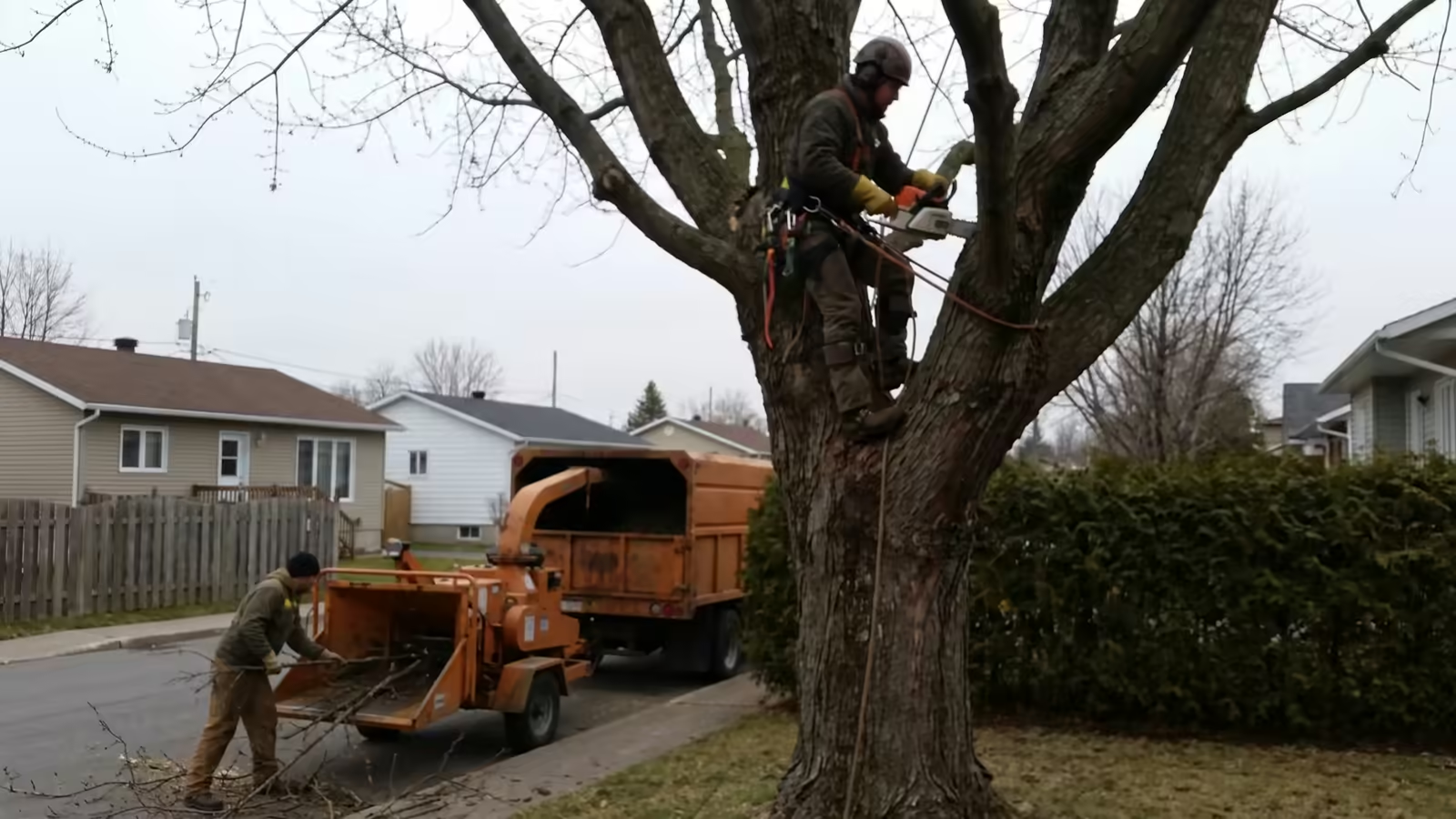












































FAQ
What electrical contractors ask us first.
How long does an electrician website take to design and build?
Six to nine weeks for a typical electrical company website, from discovery to launch. The variable is rarely us: it is how quickly content, photographs and sign-off come back from your side, so we schedule those as dated tasks rather than open requests. Larger builds with many service areas, a commercial section or a booking integration run longer, and we give you the honest range at proposal stage rather than the optimistic one.
Will we lose our Google rankings when the new website launches?
Not when the migration is done properly, and protecting what you have is part of the build rather than an afterthought. Every existing page is inventoried, mapped to its new address and redirected, titles and structured data are carried across, and we monitor Search Console daily through the launch window. Because the new build is faster — against an 8.8-second industry average — most clients see visibility improve after launch rather than dip. Where a page has to disappear, we tell you first and send its traffic somewhere sensible.
WordPress or Webflow for an electrical company?
Both are good, and the honest answer depends on your office rather than on fashion. WordPress suits teams who want maximum flexibility, many integrations and a large pool of people who can maintain it. Webflow suits teams who want a fast, clean site with less maintenance and a visual editor their office manager can use confidently. We build custom on either, never on a marketplace theme, and we recommend one in discovery with the trade-offs written down so the choice is yours.
What does an electrician website cost?
A fixed project price quoted after discovery, so you are buying a scope rather than an hourly gamble, plus an optional monthly plan for hosting, maintenance and small changes. The range depends on how many service and area pages you need, whether photography is included, and whether the website has to talk to your scheduling software. We will also tell you plainly when your current website is worth repairing instead, and quote that smaller job honestly.
Can our office update the website without calling a developer?
Yes, and we treat that as a design requirement. Text, photographs, prices, service areas, team members and reviews are all editable from a clearly labelled CMS, and adding a new service page means filling in a template rather than commissioning a page. You get a recorded training session, a short written guide, and a month of adjustments after launch while your team gets comfortable.
Do we need separate pages for every town we cover?
You need real ones for the areas that matter commercially, not a hundred cloned pages with the town name swapped. A useful area page shows work you have done there, mentions the housing stock or local supply quirks your electricians actually encounter, names the response time you can honour, and gives one clear way to book. We build the first set for your core radius and add to it as the work justifies it.
We get most of our work by word of mouth. Does the website still matter?
It matters more, not less. A referral almost always checks the website before calling, and that visit is where a recommendation is confirmed or quietly dropped. Licence and insurance proof, real job photographs, reviews with names, and a number that dials in one tap turn a warm referral into a booked appointment. The same pages then do the work for people who have never heard of you, which is where the growth comes from.
Should the website take bookings, or just phone calls?
Both, because customers split by hour. During the day most people call, which is why the tappable number sits in the mobile viewport rather than in a header nobody scrolls to. In the evening and at weekends a short booking form captures jobs that would otherwise go to whoever answers first, and the ranked audit list puts online booking and after-hours capture among the top five fixes for electrician websites. We wire enquiries into your scheduler so nothing lives in an inbox.
What photography do you need from us?
Less than you think, and phone photographs from the vans are usually enough to start. What works is real: a finished board, an EV charger on a real driveway, your team on site in branded workwear, the van outside a recognisable local building. We edit and colour-correct what you send, and where a gap remains we either arrange a short shoot or use carefully chosen imagery that does not pretend to be your crew.
How do you make the website fast and keep it fast?
By building light rather than by optimising heavy afterwards: correctly sized images, minimal scripts, no plugin sprawl, clean markup and fast hosting. We test on mid-range phones on mobile data before launch, not on a designer's monitor. It matters commercially, not just technically — contractor websites under 2.5 seconds converted at 6.8% against 2.1% for those over 4.5 seconds. Maintenance plans include quarterly speed checks so the website does not drift back.
Do you write the content, or do we?
We write it, with your electricians as the source. A short interview with the person who quotes the work gives us the detail that makes a page convincing: what a job involves, what changes the price, what a customer should have ready. You review and sign off every page before it goes live, and nothing publishes with placeholder text or invented claims about your company.
What features should an electrical company website include?
The list is shorter than most agencies pretend. A mobile-friendly layout that loads fast, a tap-to-call button visitors never have to hunt for, a short booking form, licence and insurance details, real photographs of your electrical work, reviews, a clear service-area map, and a page for each service you sell. Useful extras for some businesses: live availability, finance options on larger installs, an emergency banner, and a customer portal for commercial accounts. Everything else is decoration, and we would rather spend the budget on the things that help a customer decide.
How do you decide the design direction for an electric trade business?
From your market, not from a moodboard. A domestic electrician competing on trust and response time wants a clean, friendly, modern look with big type, warm photography and obvious contact elements. An industrial contractor bidding for contracts wants a more professional, restrained design with technical detail, accreditations and project evidence. We show two directions early, explain the reasoning behind each in plain language, and let you choose before any development work starts.
What support do you provide after launch?
A month of adjustments is included, and after that an optional plan covers hosting, updates, security, backups, quarterly speed checks and a monthly allowance of small changes. It is easy to leave: the code, the domain and the hosting are yours, and we hand over documentation good enough for another developer to pick up. Most clients stay because the same team then handles their digital marketing, but the website solutions we build are never held hostage to that.
How do we compare web design companies before we commit?
Ask four questions and the field narrows fast. Who owns the site, the code and the domain when the project ends? Is this a custom build or a theme with your logo dropped in? Can your office edit the key pages unaided? And can they show electrical services businesses they have actually launched, with the local search results to go with them? Ask for two client references and call them. The best web design partner for an electric trade company is rarely the one with the prettiest portfolio highlights; it is the one whose sites bring their customers work.
How do the website and our online marketing fit together?
The site is the destination for every other channel, so we design it to receive them. Service pages match the searches your SEO will chase, area pages give local campaigns somewhere relevant to land, and each page has a single conversion so paid traffic is not asked to browse. Tracking is installed and verified at launch, which means every potential enquiry can be traced back to the page that produced it instead of disappearing into an unattributed pile.
Can you handle the marketing after the website is live?
Yes, and it is usually the point. Our electrician SEO, paid search and analytics teams work from the same plan as the build team, so the pages are designed for the searches they will target rather than retrofitted later. Taking the website alone and keeping your current marketing is equally fine — we document everything and leave every account in your name.

.webp)
.webp)