



Table of contents
How we vet every listicle
Every agency featured on Web Tonic passes our 84-point editorial review before a single listicle goes live. This is how we vet each pick:
Verified client outcomes: We require real case studies with measurable KPIs — revenue, ROAS, CPA, retention — tied to the exact category being ranked. No cherry-picked wins, no unverifiable numbers.
Independent reputation: We cross-check Clutch, Google, G2, and Trustpilot ratings, and screen for review-bombing or suspicious patterns. Only operators with a consistent, verifiable track record make the cut.
Beyond that, every listing goes through a quarterly re-audit. We check 84 criteria across 6 pillars to make sure it still holds up — here are some of the checks we run:
Key Takeaways
- Professional infographic design agencies combine research, strategy, design, and distribution capabilities that distinguish their output from template-based alternatives.
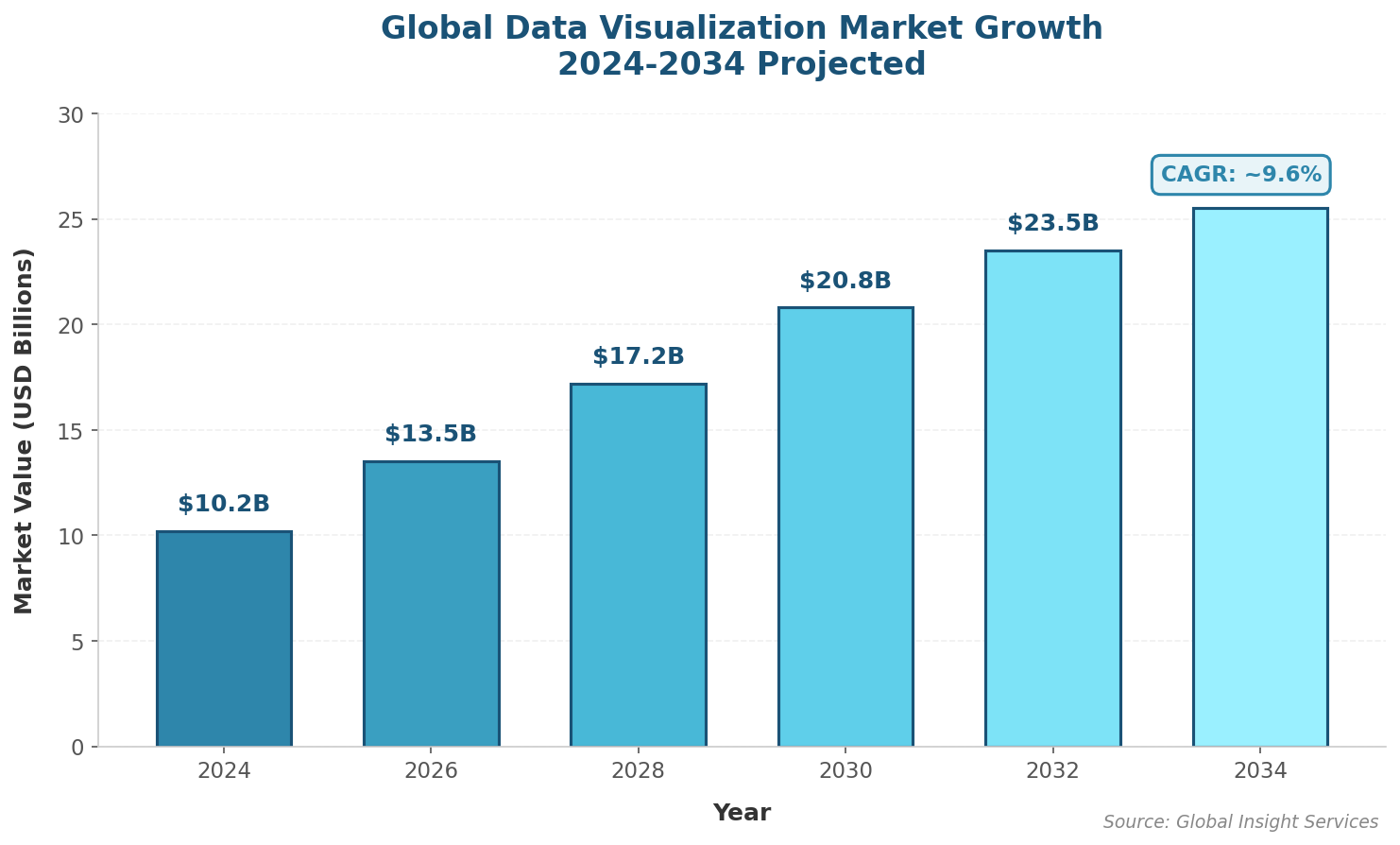
- The data visualization market continues rapid growth, with industry analysts projecting expansion from approximately $10 billion in 2024 to over $25 billion by 2034, reflecting increasing enterprise demand for visual communication services.
- Leading agencies including Column Five, Lemonly, and NowSourcing serve Fortune 500 clients while also supporting mid-market organizations, with service models ranging from project-based engagement to subscription offerings.
- Agency selection should consider industry experience, service range, research capabilities, and distribution expertise alongside creative portfolio quality.
- Organizations with complex data visualization needs or strategic communication objectives may benefit from exploring partnerships with specialized infographic agencies that bring focused expertise to their visual communication challenges.
What Are Infographic Design Agencies?
Infographic design agencies are specialized creative firms that transform complex data, statistics, and information into visually compelling graphics. Audiences can understand these visuals at a glance. These agencies combine expertise in data visualization design, graphic design, creative storytelling, and strategic communication to create assets that serve multiple business objectives: thought leadership, brand awareness, lead generation, and internal communications.
A meta-analysis of 12 empirical studies published in the Journal of Pedagogical Research found that infographics have a statistically significant positive effect on information retention and comprehension. The effect size was g=1.599, considered large by research standards. This probably explains why businesses increasingly turn to professional infographic agencies rather than attempting in-house design.
For mid-market and enterprise organizations, working with a creative agency that specializes in data visualization offers strategic advantages beyond aesthetics. Professional infographic companies bring research capabilities, strategic narrative development, and distribution expertise that transform raw data into shareable assets. The global data visualization tools market was valued at approximately $10.2 billion in 2024. By 2034, that number is projected to reach $25.5 billion, according to Global Insight Services.
How to Find the Right Agency for Your Needs
Selecting the right infographic design partner requires evaluating industry expertise, creative capabilities, service range, and pricing. But here's the thing: not all agencies work the same way. Some focus on pure design. Others bundle in research, PR, and distribution as part of their content marketing strategy. The top infographic design agencies listed below have established reputations for delivering high-quality data visualization services.
1. Column Five
Location: Costa Mesa, California (United States) Specialization: Content marketing, brand identity, data visualization for SaaS and enterprise brands Notable Clients: LinkedIn, Salesforce, Red Bull, Microsoft, Intuit
Column Five launched in 2009 and helped define infographic marketing as a category. The firm authored Infographics: The Power of Visual Storytelling (Wiley, 2012) and landed on the Inc. 500 list as one of the fastest-growing media companies. Their design process combines research, copywriting, and visual elements to create content that supports measurable digital marketing objectives.
2. Lemonly
Location: Sioux Falls, South Dakota (United States) Notable Clients: Netflix, Lego, World Health Organization, Google, Marriott, Major League Baseball
Over 2,000 projects since 2011. That's Lemonly's track record across technology, tourism, healthcare, and finance sectors. The marketing agency calls their methodology the "lemons-to-lemonade" process (a bit cheesy, sure, but it works), which transforms complex ideas into clear visual stories. They handle static infographics, animated motion graphics, interactive experiences, microsites, and explainer videos. Probably one of the more versatile shops on this list when it comes to content creation.
3. NowSourcing
Location: Louisville, Kentucky and Cincinnati, Ohio (United States) Notable Clients: Adobe, FedEx, Forbes, Google, Intel, Red Bull, American Heart Association
What makes NowSourcing different? They don't just design—they distribute. The digital agency focuses on content designed to earn media coverage and generate backlinks for blog articles and websites. Turnaround can be as fast as two weeks from concept to completion, which is unusually quick for this space. Their approach integrates data analysis, creative storytelling, and promotional strategy.
4. Killer Visual Strategies (Material)
Location: Seattle, Washington (United States) Notable Clients: Enterprise and B2B organizations across multiple sectors
Formerly Killer Infographics, this Seattle-based agency built its reputation on highly detailed, research-intensive visual communication projects. Now part of Material. They've shifted toward comprehensive visual strategy services that extend beyond standalone infographics to include interactive digital experiences and animated content. Worth noting: the acquisition likely means more resources but potentially less boutique-style attention compared to traditional agencies.
5. NeoMam Studios
Location: Manchester, United Kingdom Notable Clients: International brands seeking viral social media content
NeoMam Studios tends to focus on shareable digital content, with particular expertise in motion and interactive experiences. The creative agency's design process covers ideation, production, testing, and promotion. They're UK-based, so time zone considerations matter if you're in North America.
6. Designity
Location: New York, New York (United States) Notable Clients: Calendly, Audible, Marriott, Freethink, Kung Fu Tea
Designity operates on a Creative-as-a-Service (CaaS) model—basically a subscription for graphic designer talent. Brands get on-demand access to what the company describes as the top 3% of infographic designers. Is that claim verifiable? Hard to say. But the subscription-based approach does offer flexibility for organizations with varying social media graphics and content needs.
7. Data Design Studios
Location: United Kingdom Notable Clients: BBC, Universal Music, IFPI, UK Intellectual Property Office
Data Design Studios blends research expertise with design thinking. They serve organizations requiring sleek, data-driven visuals that simplify complex ideas while maintaining editorial integrity. Smaller than some others on this list, which can be a plus or minus depending on project scope.
8. Hot Butter Studio
Location: Prahran, Australia Notable Clients: BUPA, ANZ, Blackmores, Qantas, HP, Fender
Hot Butter Studio creates great infographics that integrate data visualization with storytelling. Their work combines editorial page compositions and animated illustrations. Strong presence in the APAC market, so they're a solid choice if that's your target geography.
9. Designbysoap
Location: United Kingdom Notable Clients: Brands seeking visual content that performs in search
Designbysoap focuses on infographics designed to perform well in search engines and drive traffic to blog articles. Their dedicated infographic design team works alongside researchers. If SEO and analytics are the primary goals (rather than, say, brand identity or investor communications), they're likely worth a conversation.
10. The Visual Agency
Location: Milan, Italy Notable Clients: Global companies seeking elegant, European-style infographics
The Visual Agency produces sophisticated infographic designs for corporate communications, annual reporting, and research visualization. European design aesthetic. Premium pricing. Probably not the right agency for scrappy startups, but strong for established enterprises needing polished stakeholder materials.
How do these agencies actually compare?
The table below shows key differences, but honestly, the "best" choice depends heavily on your specific marketing strategy. Need fast turnaround with PR baked in? NowSourcing. Want a subscription model? Designity. Targeting APAC audiences? Hot Butter.
| Agency | Best for | Key strength | Service model |
|---|---|---|---|
| Column Five | SaaS & Enterprise | Content strategy integration | Project-based |
| Lemonly | Multi-format needs | Interactive & animated | Project-based |
| NowSourcing | PR & link building | Media distribution | Project-based |
| Killer Visual | Enterprise B2B | Research depth | Project-based |
| NeoMam Studios | Viral content | Digital PR expertise | Project-based |
| Designity | Scalable needs | On-demand flexibility | Subscription |
| Data Design | Editorial/media | Research integration | Project-based |
| Hot Butter | APAC markets | Animation & editorial | Project-based |
| Designbysoap | SEO focus | Search optimization | Project-based |
| The Visual Agency | Corporate reporting | Elegant design | Project-based |
What are the actual benefits of hiring an agency vs. doing it yourself?
Professional agencies offer enhanced information retention and clarity. Research from the National Institutes of Health confirms infographics serve as effective tools for disseminating complex information and driving behavioural change. Content with infographics generates 178% more inbound links than text-only blog posts. And MIT research shows the brain processes visual information in just 13 milliseconds—which is wild when you think about it.
There's also strategic alignment to consider. 86% of global business leaders use data visualizations when creating plans and presentations. Leading agencies provide promotional support beyond design execution, including social media content distribution.

The tradeoffs? Higher cost compared to DIY tools or freelancers (professional projects typically range $1,000-$10,000+). Longer timelines too, with 2-4 weeks standard compared to template-based solutions. Whether that's worth it depends on the stakes of the project and your overall content marketing strategy.
Common Misconceptions
"It's just about making data look pretty"
This one comes up constantly. Effective infographic design requires far more than aesthetic skills. Professional infographic companies invest significant resources in research, data verification, narrative development, and strategic planning before the design process begins. The most successful agencies employ dedicated researchers, copywriters, and strategists alongside graphic designers. Creating visual content that achieves business objectives requires understanding audience psychology, information hierarchy, and communication goals. These skills distinguish professional creative agencies from general design services.
"Canva can do the same thing"
Tools like Canva, Piktochart, and Infogram have democratized basic infographic and social media graphics creation. But can they replicate the strategic value professional agencies provide? Probably not. According to industry surveys, 44% of marketers rate infographic creation difficulty at 7 or higher on a 10-point scale. And 43% cite consistently creating quality visual content as their biggest challenge. Professional agencies bring expertise in creative storytelling, data interpretation, and content distribution that template-based tools can't match, particularly for complex B2B or enterprise communications.
"Infographics are just for digital marketing"
Infographics are powerful digital marketing tools, sure. But their applications extend throughout organizations—internal communications, investor relations, employee training, compliance documentation, executive reporting. Research published in PubMed found that patients who received health statistics in infographic form were 2.84 times more likely to accurately estimate risks and make informed decisions. Healthcare, finance, education. The use cases go well beyond marketing and email campaigns.
Why Simpler Infographics Often Outperform Complex Ones
Here's something counterintuitive: more sophisticated visuals don't necessarily deliver greater impact. Sometimes they backfire entirely.
Studies published in the Journal of Pedagogical Research emphasize that the main function of an infographic is to transfer comprehensible information accurately while remaining attractive. Industry data shows the time required to find critical information in documents decreases by 39% when appropriate visual elements are added. The key word is "appropriate." Overly complex infographics can actually impede understanding and clarity—the opposite of what you're trying to achieve.
The most effective infographic design agencies understand that restraint matters. Edward Tufte, the data visualization theorist, emphasizes that every element in a visualization should serve the data, not distract from it. Professional agencies apply principles of cognitive load management, ensuring that visual elements clarify rather than complicate. This explains why agencies specializing in data visualization design often deliver simpler-looking outputs than clients initially expect. Yet these designs consistently outperform more elaborate alternatives in comprehension testing and analytics. Less is more, genuinely.
Why You Should Care About Distribution (Not Just Design)
Many organizations focus exclusively on design quality when selecting infographic agencies. They're missing something critical: distribution and promotion expertise. Creating a visually stunning infographic delivers limited value if nobody sees it. Seems obvious, but it's overlooked constantly.
Research from the National Institutes of Health notes that in the era of social media, disseminating information via infographics on digital channels may achieve more traction and engagement than traditional journal sites or static publications.
Agencies like NowSourcing have developed what they describe as "predictably viral" systems for social media content. The difference between a well-designed infographic that sits unused on a blog and one that generates hundreds of backlinks and media mentions? Often the agency's promotional capabilities, not design quality. Organizations evaluating data visualization agencies should probably weight distribution expertise alongside creative portfolios, particularly when link building and thought leadership are primary objectives.
Real-World Examples
Column Five and Microsoft
Column Five developed visual content strategies that helped Microsoft communicate complex technology concepts to diverse audiences. The collaboration included the viral "Child of the 90s" video campaign for Internet Explorer, which earned recognition at the Webby Awards and racked up over 48 million views. The campaign demonstrated how creative storytelling capabilities extend beyond static infographics to multimedia content creation.
Lemonly and the World Health Organization
Lemonly created visual content that made complex health information accessible to global audiences for the World Health Organization. The work required navigating multiple languages, cultural contexts, and rigorous technical accuracy requirements. When the stakes are public health messaging—where miscommunication can literally cost lives—you need specialized expertise that few traditional agencies possess.
Frequently Asked Questions
How much does an infographic actually cost?
Pricing depends on scope and agency positioning. Basic infographics from established agencies typically start around $1,000-$2,000. Comprehensive packages (research, copywriting, design, revisions) can reach $3,000-$10,000 or more. Enterprise-level projects with extensive research, interactive elements, or animation? Even higher. Subscription services like Designity offer alternative models starting around $1,000/month.
How long does it take?
Standard projects typically require 2-4 weeks from kickoff to delivery. Some agencies (NowSourcing, notably) can turn things around in two weeks. Interactive or animated infographics generally take longer. Research-intensive projects may extend to 6-8 weeks when original data collection is involved.
Agency or freelance graphic designer—which is better?
Agencies offer team-based expertise, established processes, and typically faster turnaround. Freelancers may provide cost savings and more direct communication. For strategic projects requiring research, narrative development, and promotional support, a marketing agency generally delivers better outcomes. For straightforward visualization of existing data? An experienced freelance graphic designer can work fine.
What should be in the creative brief?
Target audience definition. Primary objectives and key messages. Available data or research sources. Brand identity guidelines and style preferences. Distribution channels (blog, email, social media graphics). Competitive context. Success metrics for analytics. The more context you provide, the better positioned the right agency is to deliver strategic visual content rather than just pretty pictures.
How do you measure success?
Depends on your goals and analytics setup. Brand awareness? Track social shares, impressions, brand mention lift. Lead generation? Monitor traffic, conversions, download rates. SEO? Measure backlinks acquired and organic traffic increases to your blog. Thought leadership? Track media coverage and speaking invitation inquiries. Whatever you're measuring, establish baseline metrics before launch.


