Mare Jouel
Named collections, sold as stories
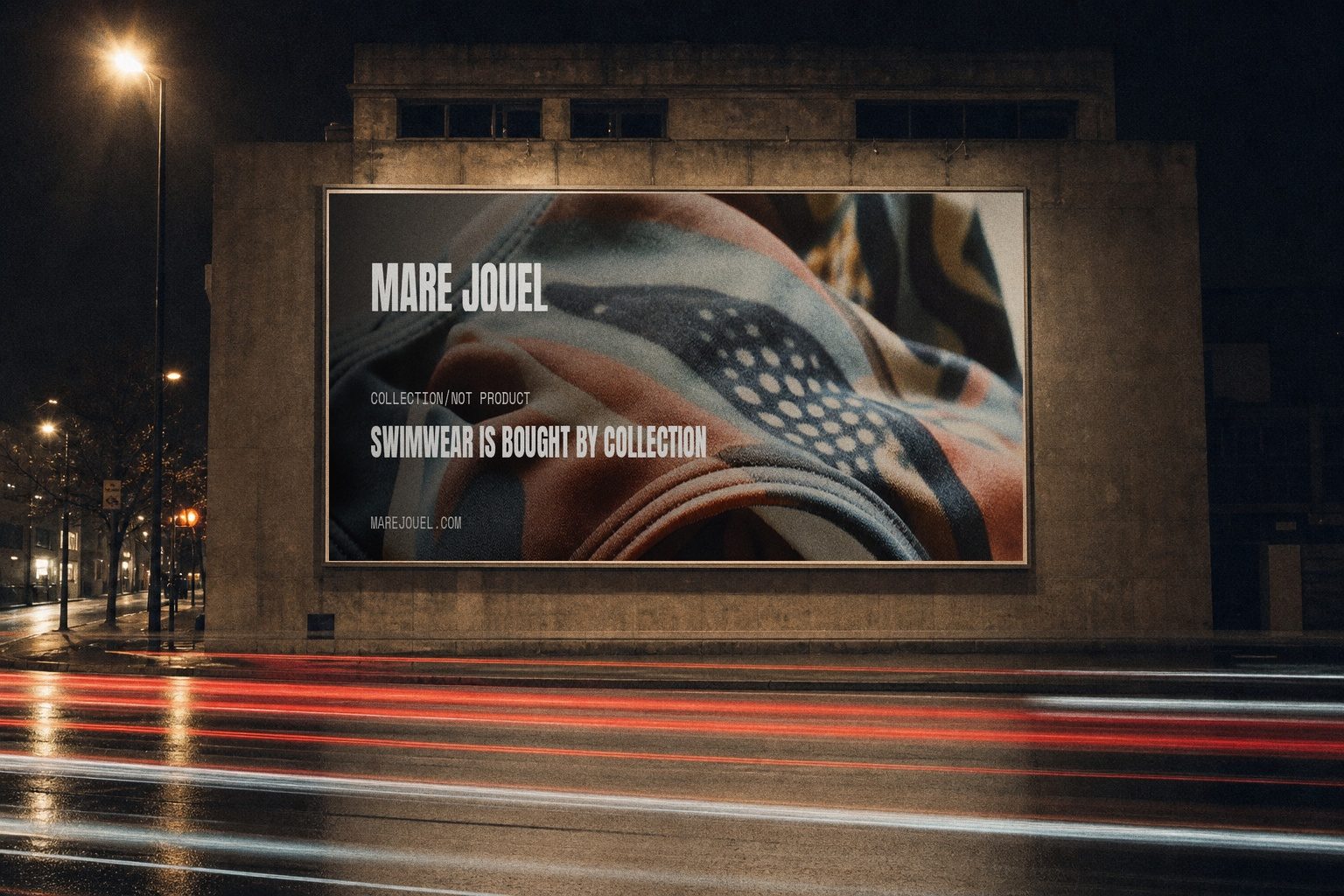
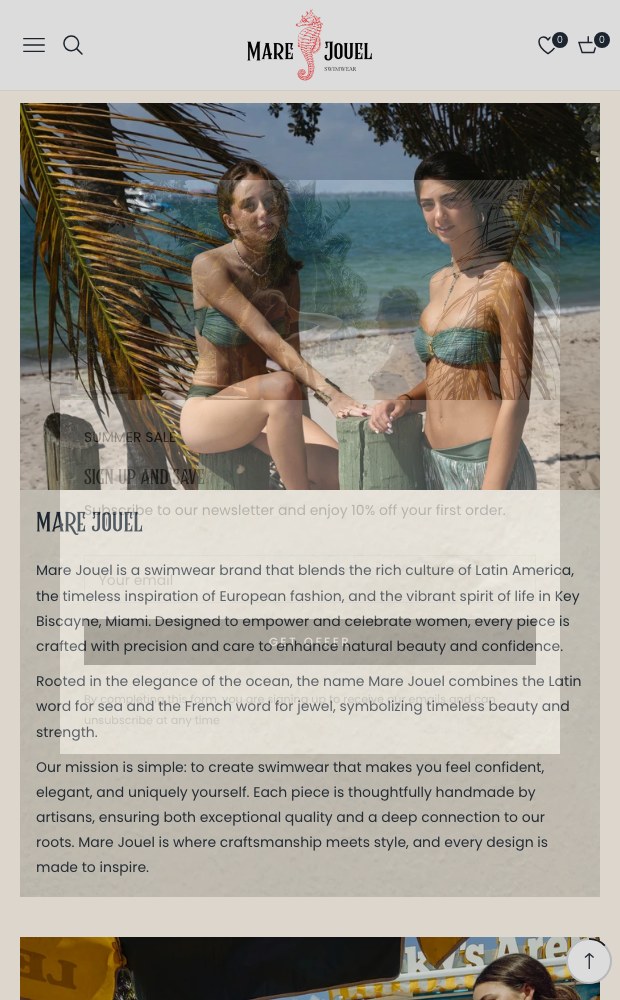
Mare Jouel is a Key Biscayne, Florida swimwear brand founded by a Colombian designer: bikinis, one-pieces, cover-ups and accessories built around named collections — Di Mare, Jewel Bikinis, Oceana One-Pieces — and produced in small runs.
01 — The challenge
A boutique catalogue is small. That has to read as curation, not as an empty store.
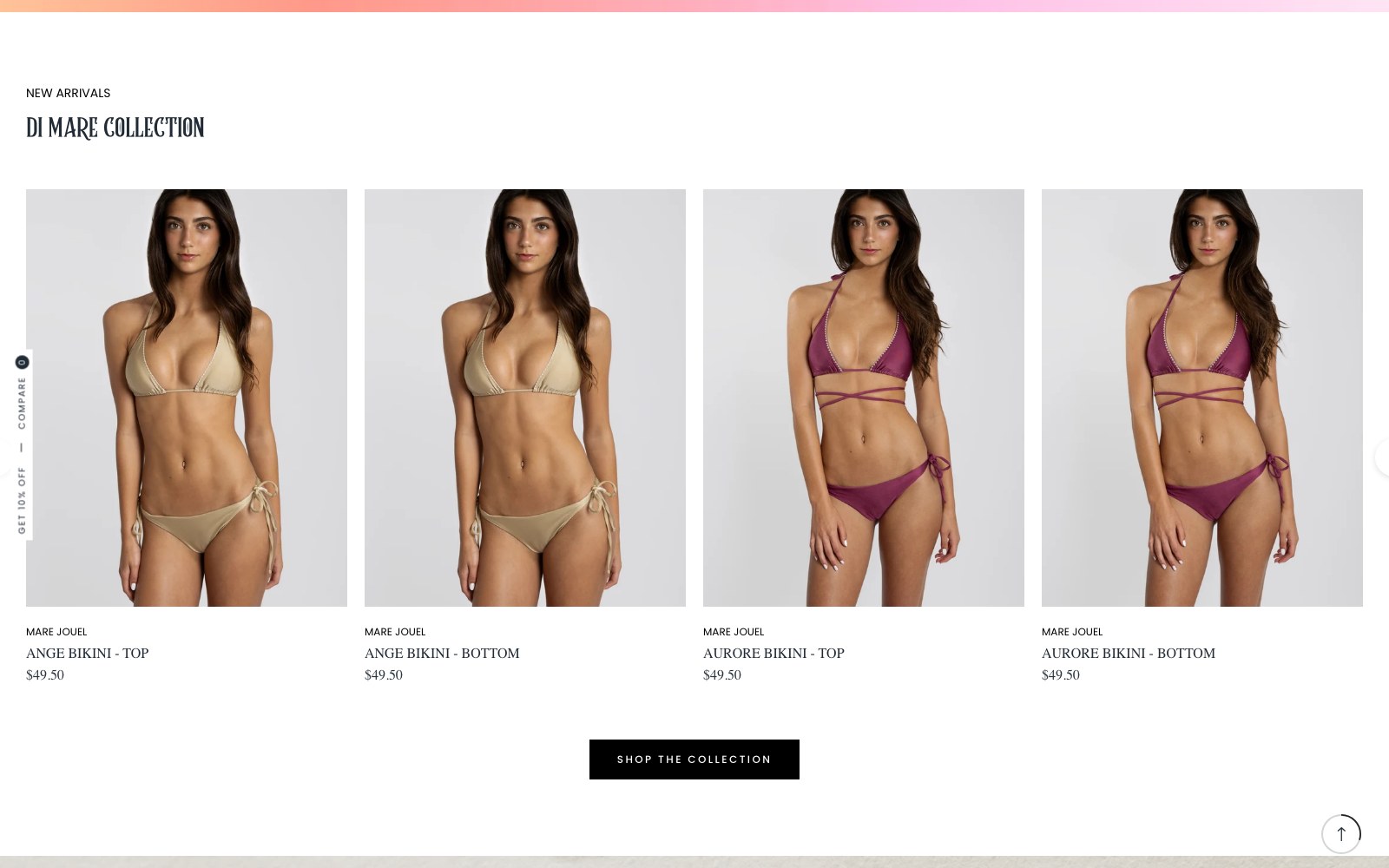
Mare Jouel carries a few dozen SKUs across bikinis, one-pieces, cover-ups, tees and hats. Dumped into a single grid, a small catalogue looks thin. Split into named collections with their own imagery and story, the same catalogue reads as a designer's edit.
The brand's actual differentiators — Latin American craftsmanship, a founder with a jewellery-design background, mixed-and-matched tops and bottoms sold separately, and a giving-back programme in Colombia — were the things a plain product page had no room to say.
The catalogue was never the problem. The absence of a story around it was.
*
5
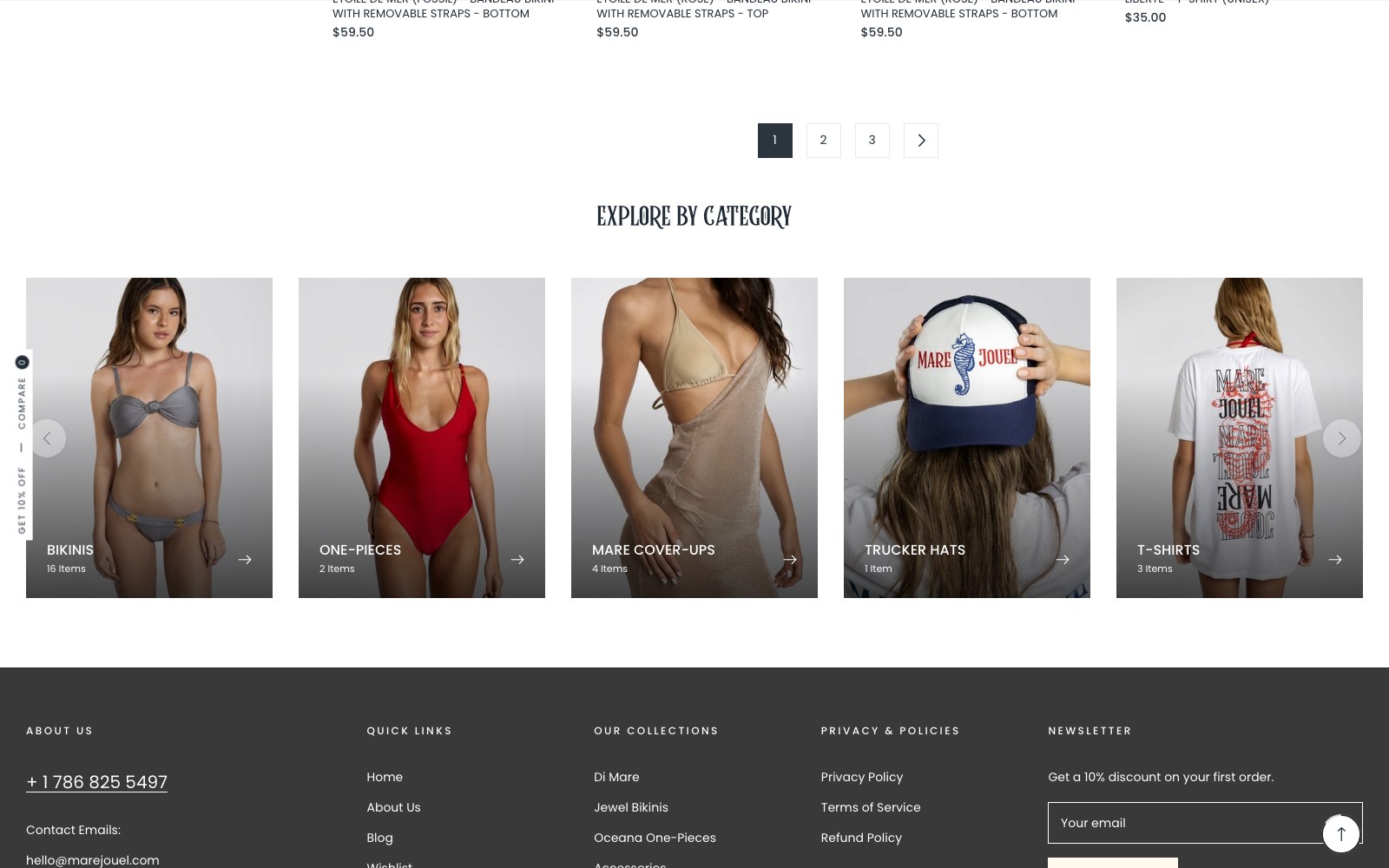
Merchandised category entry points: bikinis, one-pieces, cover-ups, hats, T-shirts
*
3
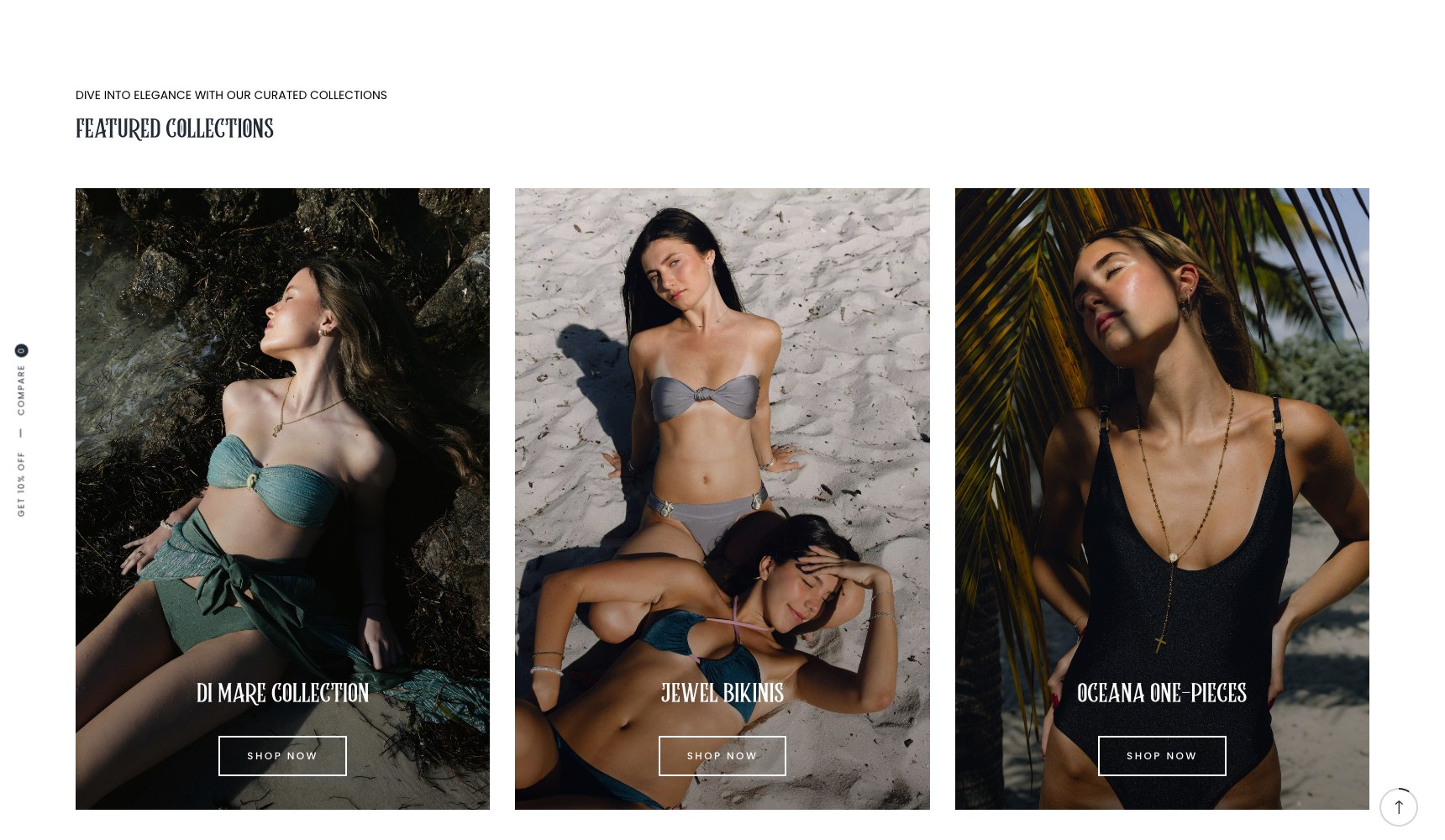
Named collections given their own landing treatment — Di Mare, Jewel Bikinis, Oceana
*
10%
First-order incentive used to convert first-time visitors into subscribers
02 — Our approach
Give each collection its own entrance, then make mixing sizes effortless.
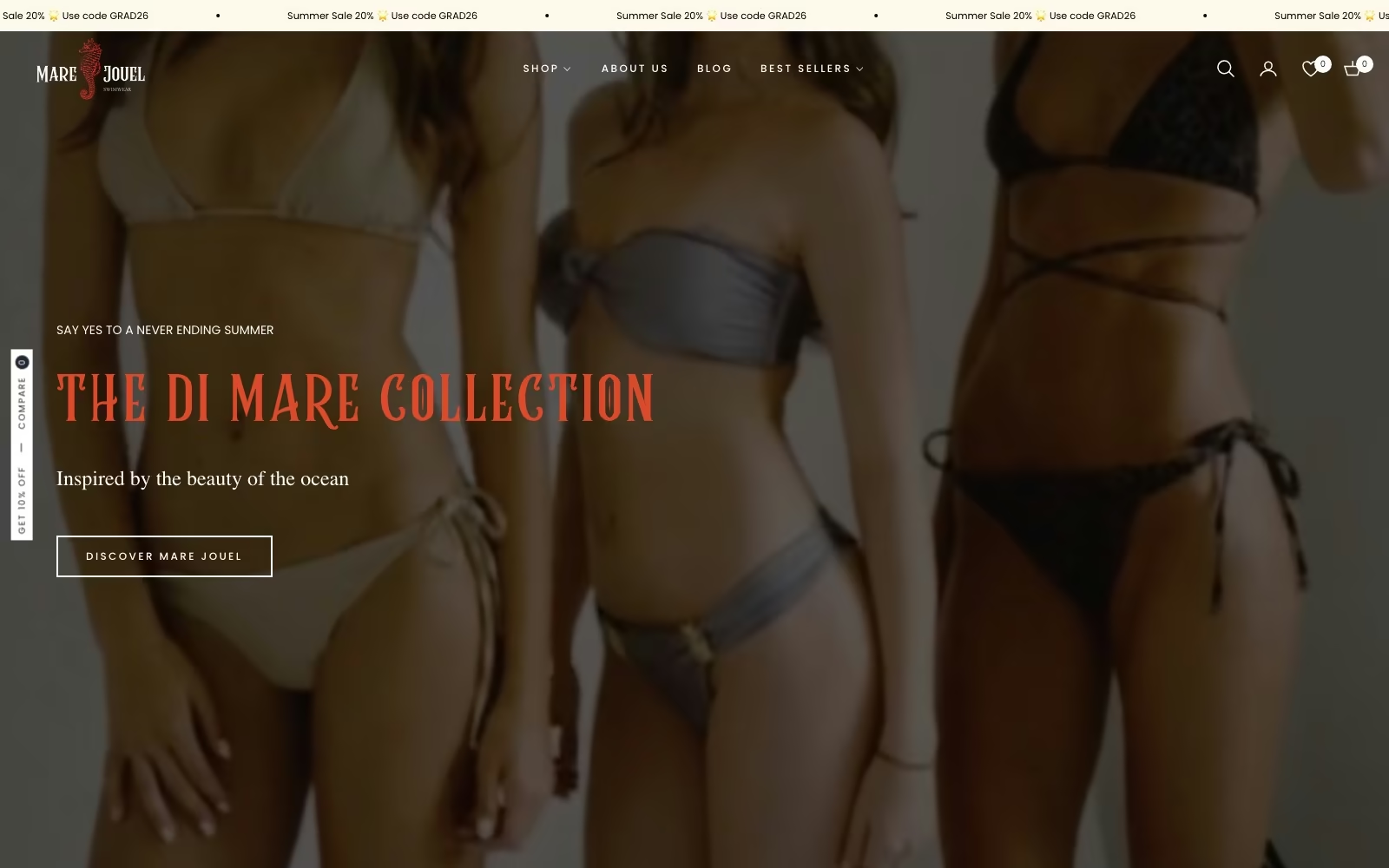
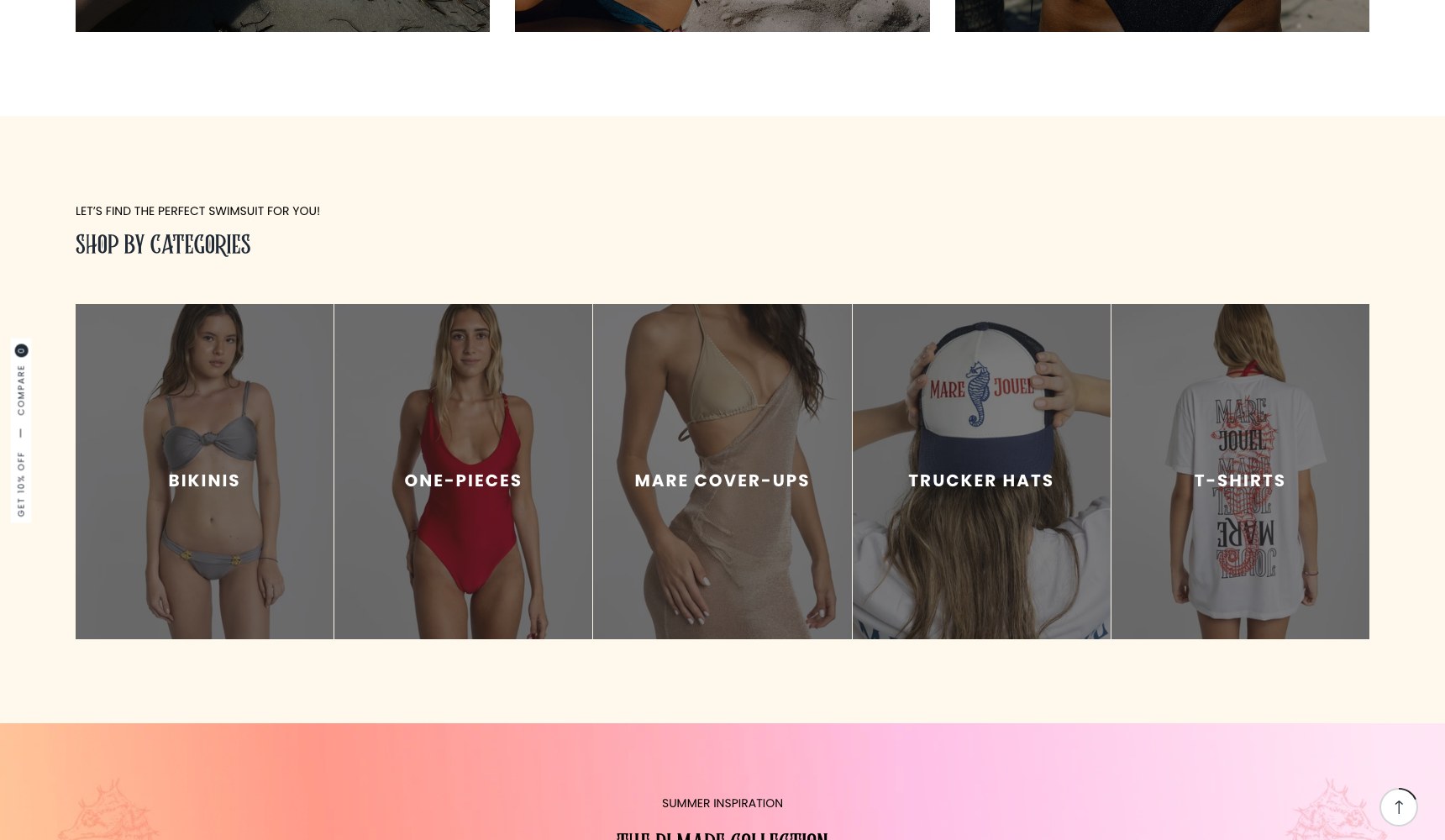
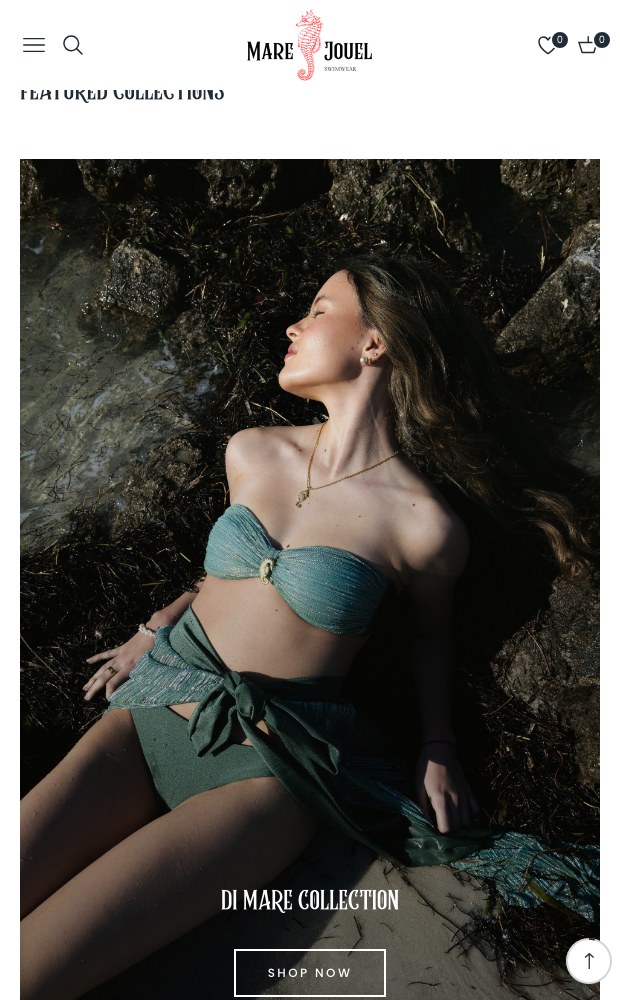
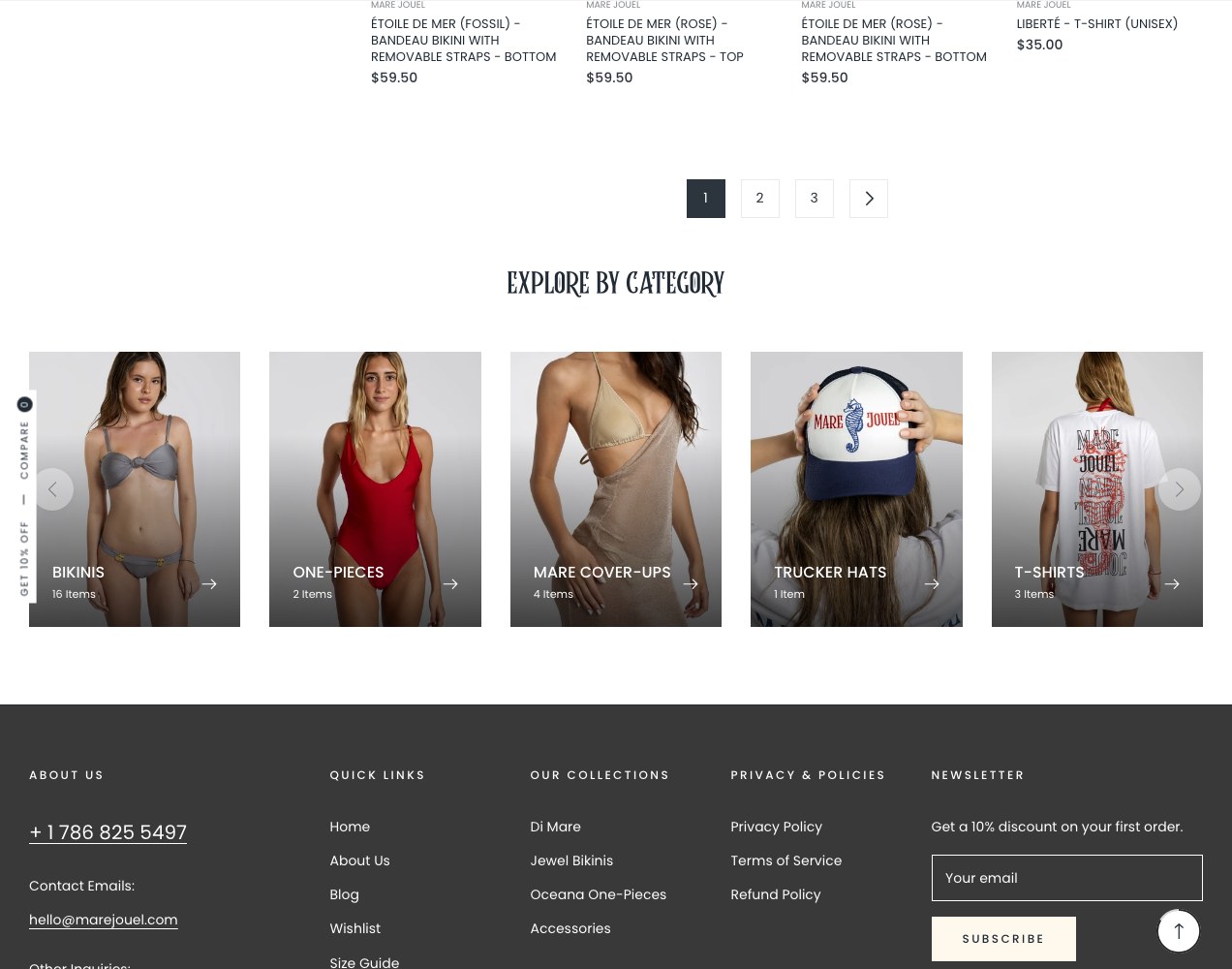
The homepage works as a series of doors: a campaign hero for the current collection, a featured-collections row, a shop-by-category strip, then a best-sellers module with tabs so a shopper can browse bikinis and one-pieces without leaving the page. Each collection page opens with its own editorial hero and copy before the grid starts, so Di Mare does not look like Cover-Ups with different photos.
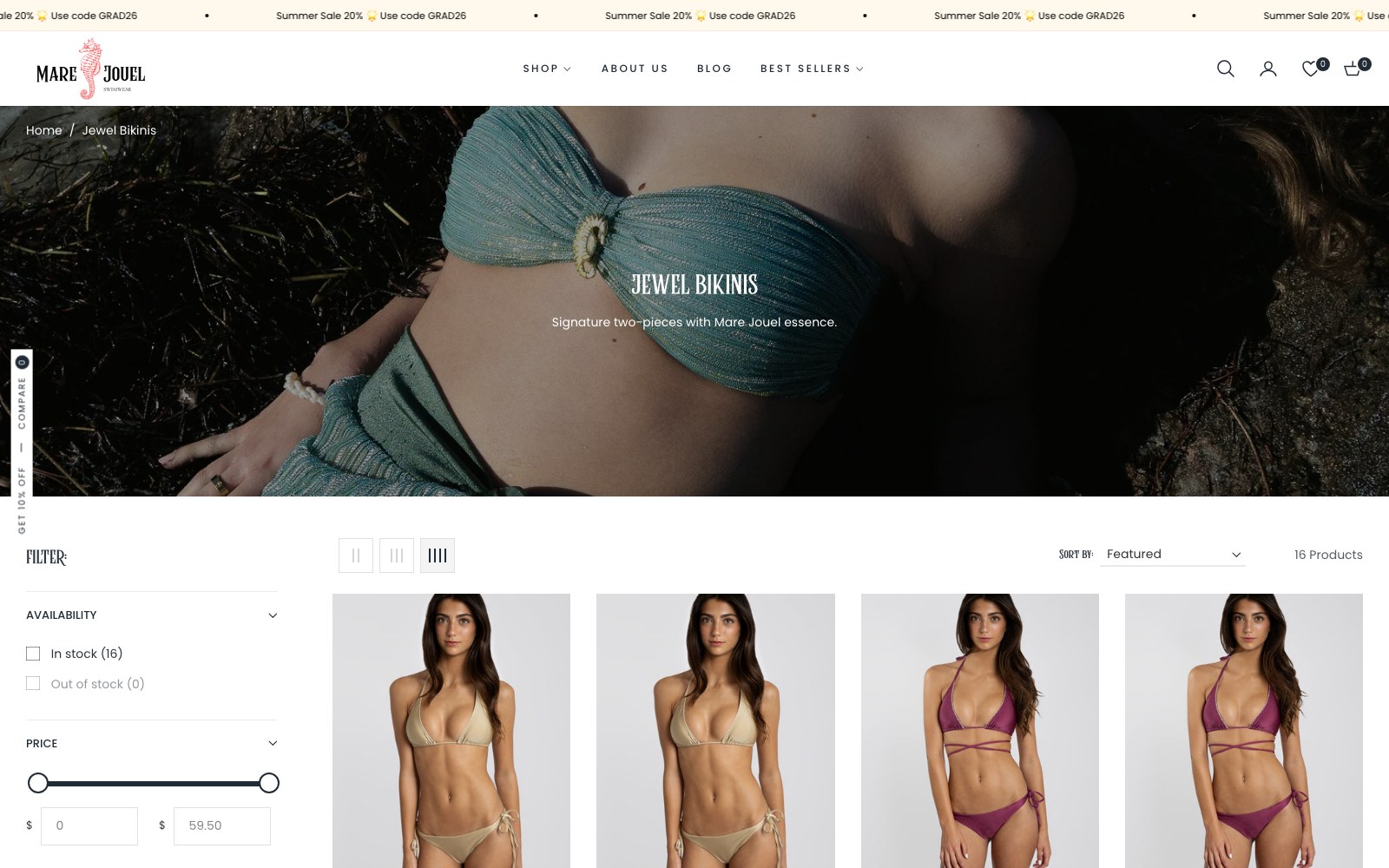
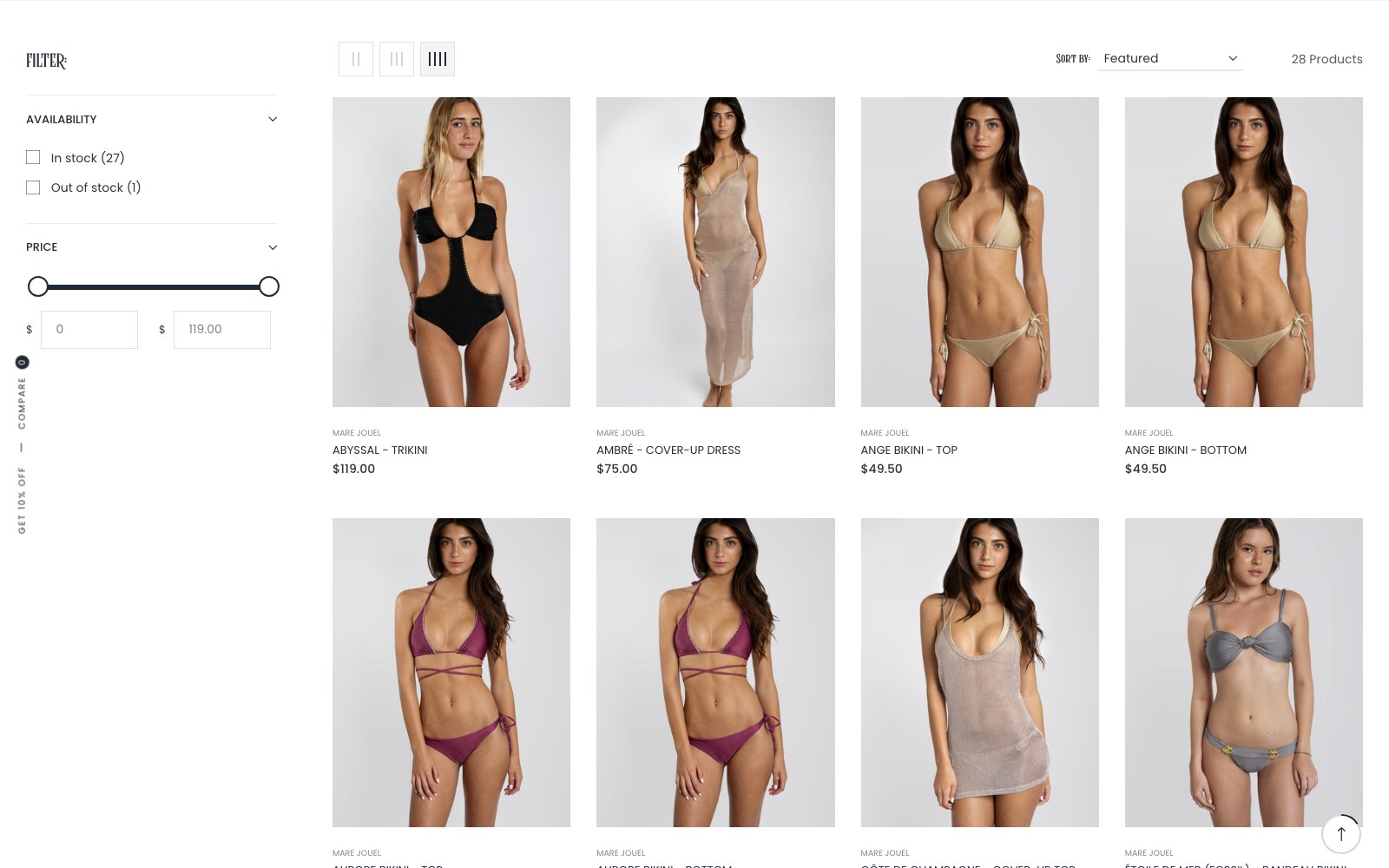
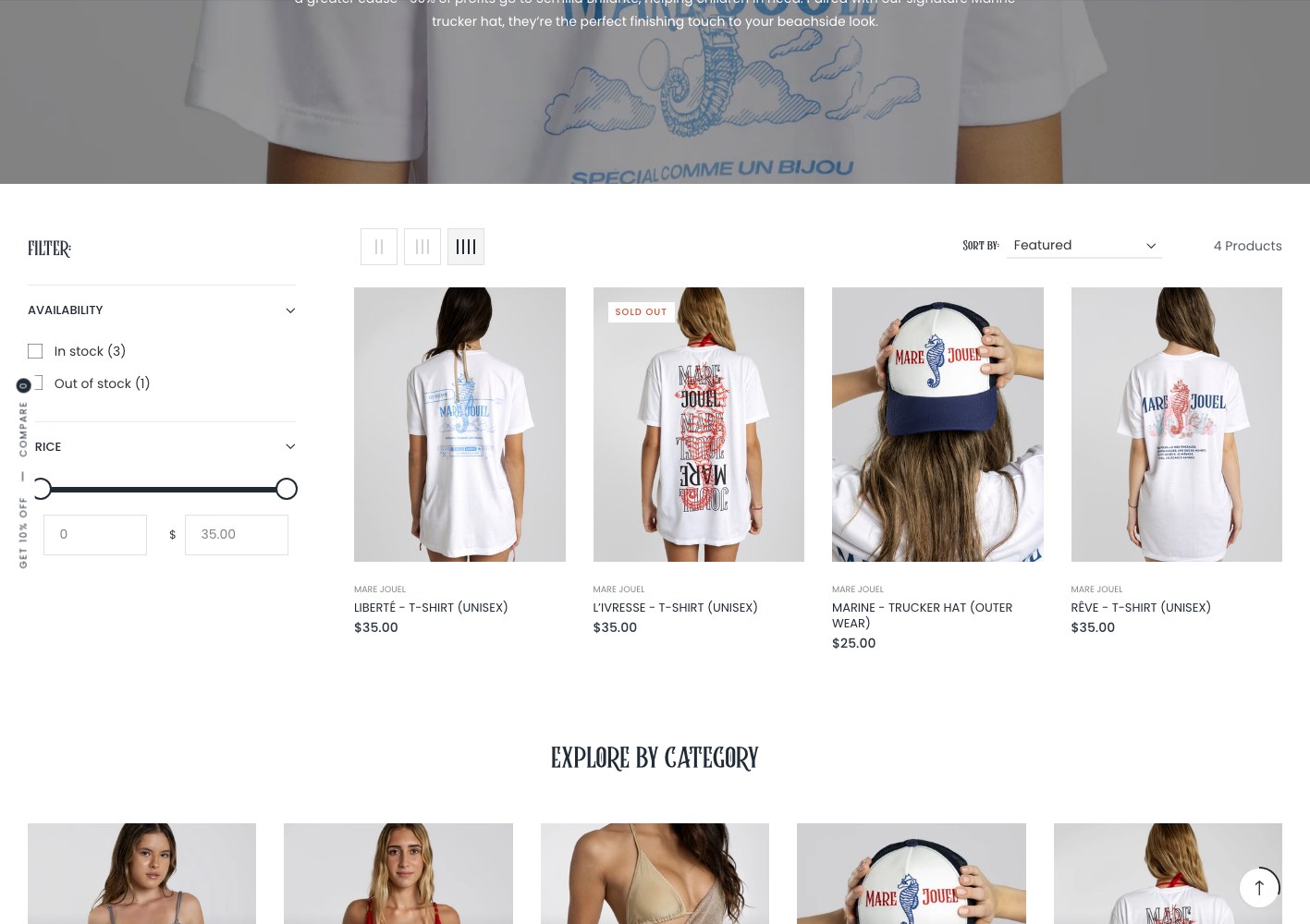
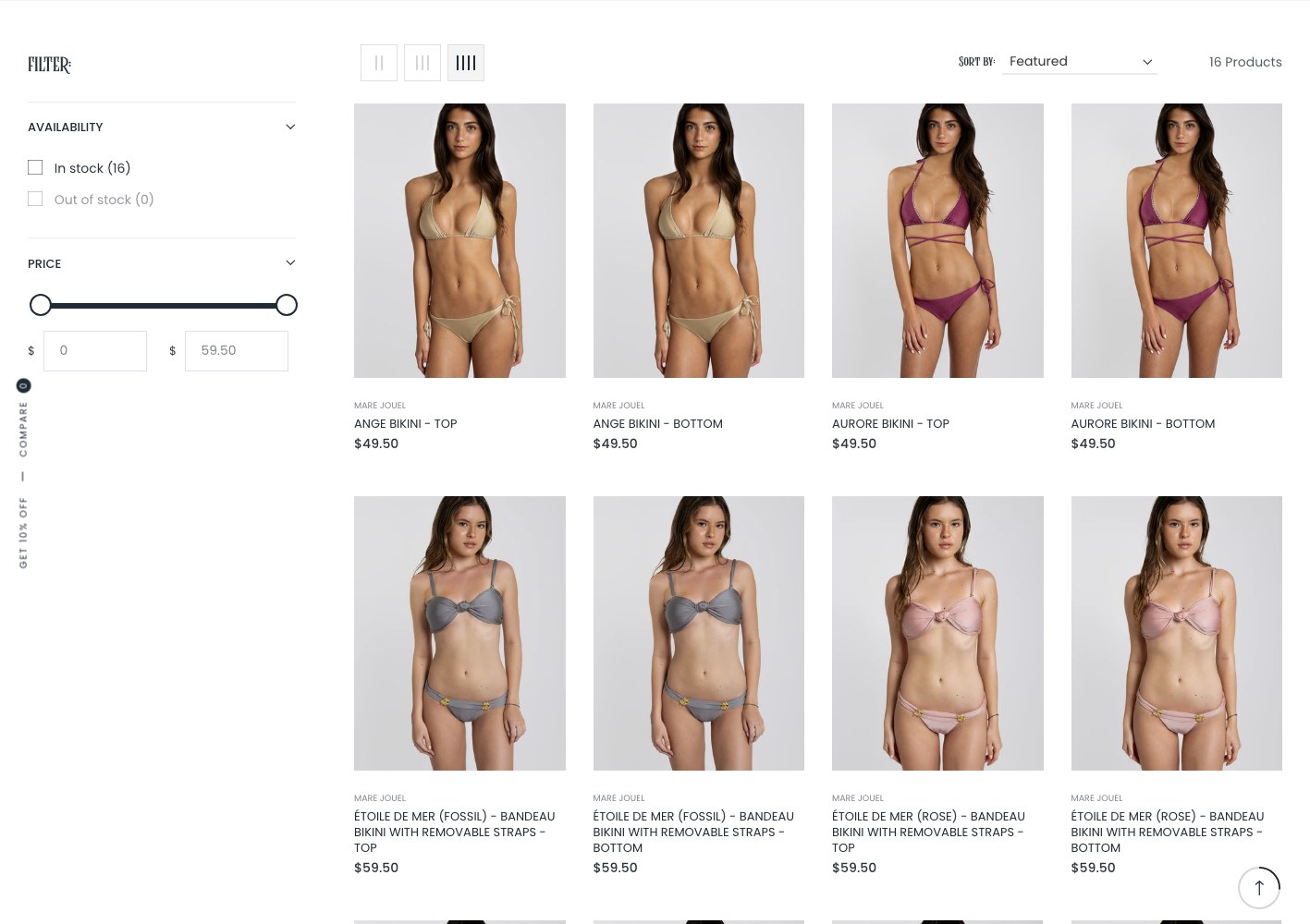
Because tops and bottoms sell separately, the listing templates carry availability and price filtering, view-density controls, wishlist and quick-add, so building a set is a few clicks rather than a hunt. A size guide, swimwear care guide and an FAQ block sit where the objections actually happen.
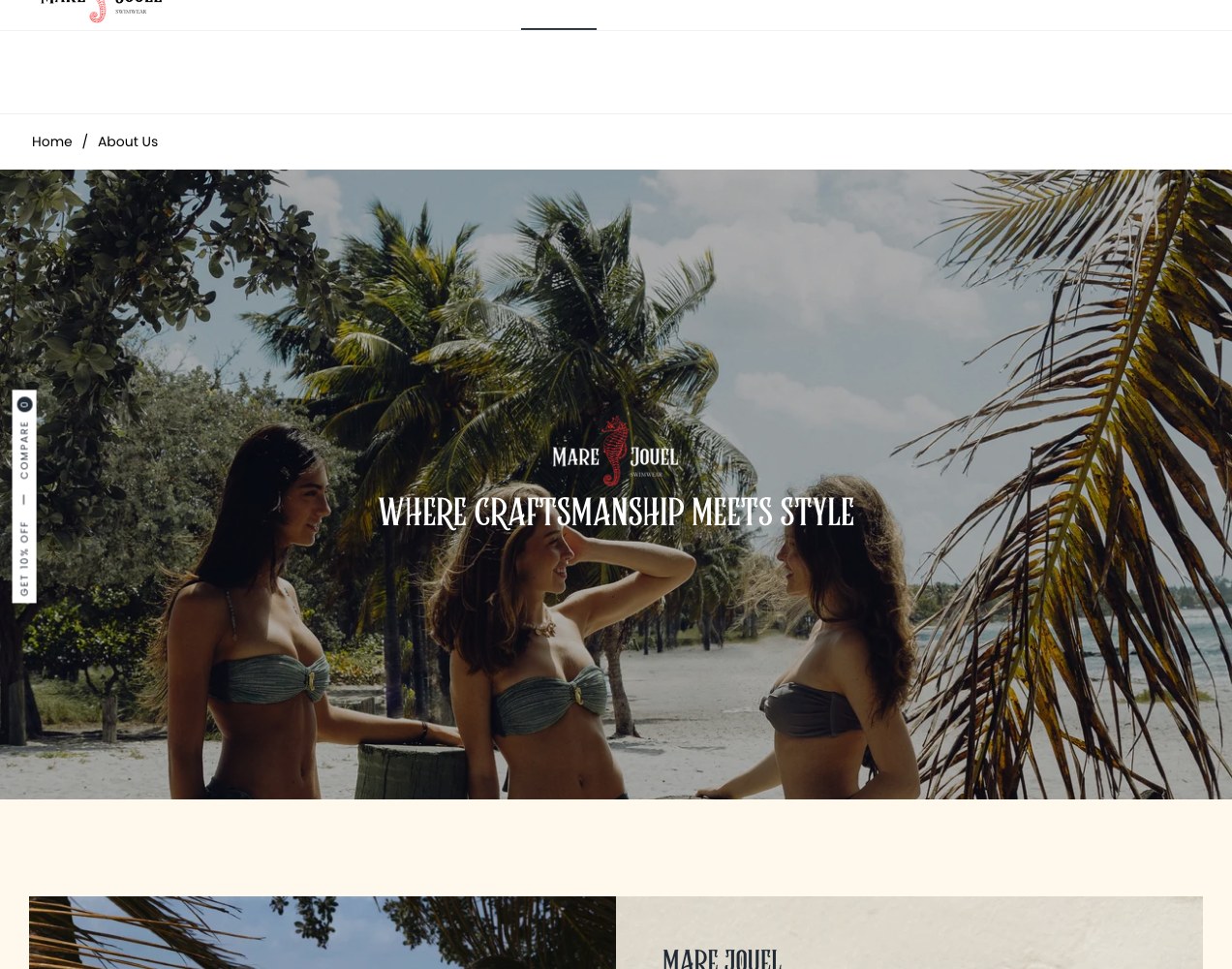
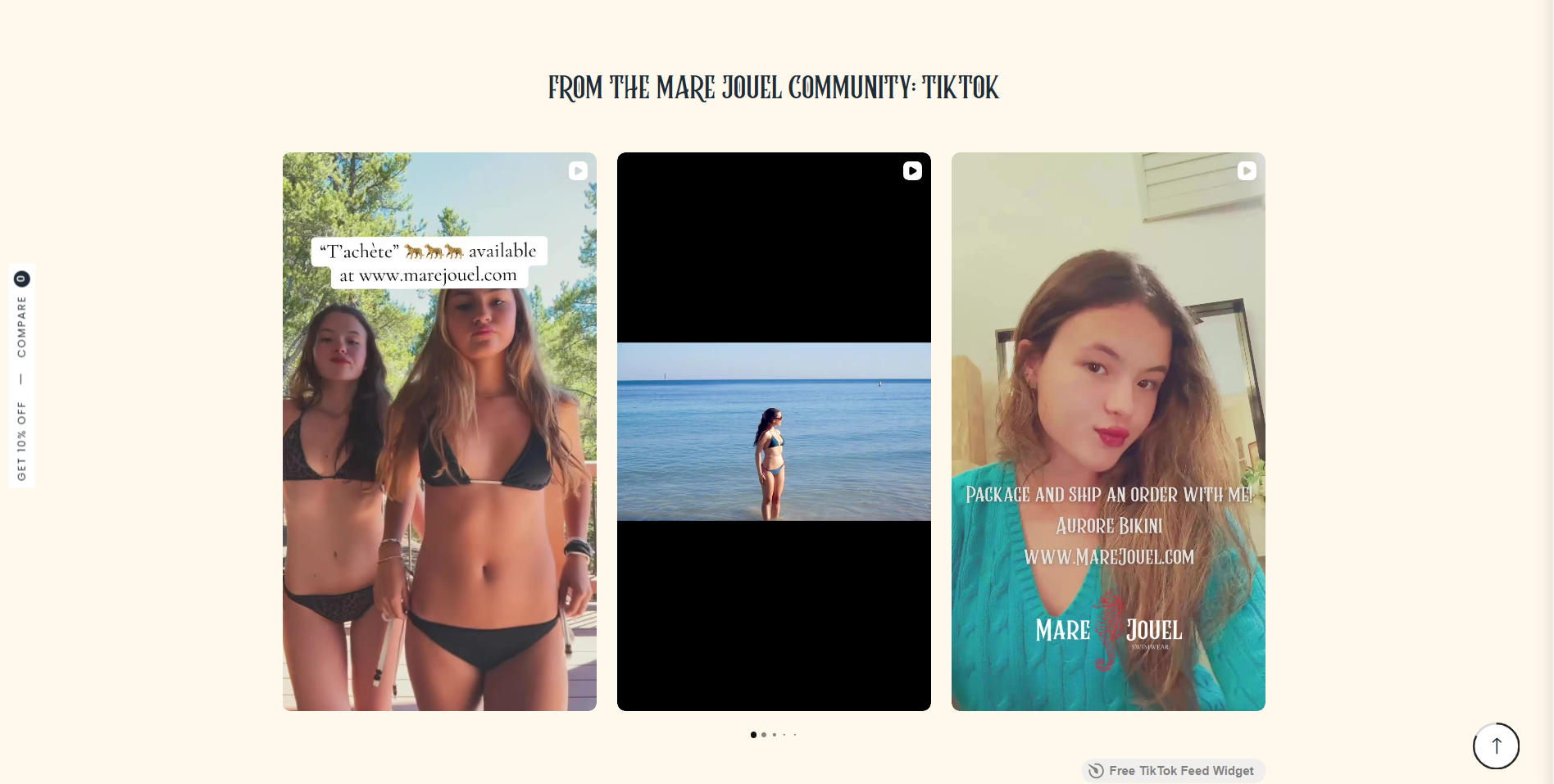
The brand story gets a real page — founder, craft, materials, and the Semilla Brillante donation programme — plus customer testimonials and video content, which is what turns a boutique price point into a considered purchase. Newsletter capture with a first-order incentive runs across the store, and the contact page carries an address, direct emails and a form for sizing and shipping questions.
More on this work: Shopify Development · Web Design · Web Development.
Named collections as entry points
Every collection opens with its own
hero and story.
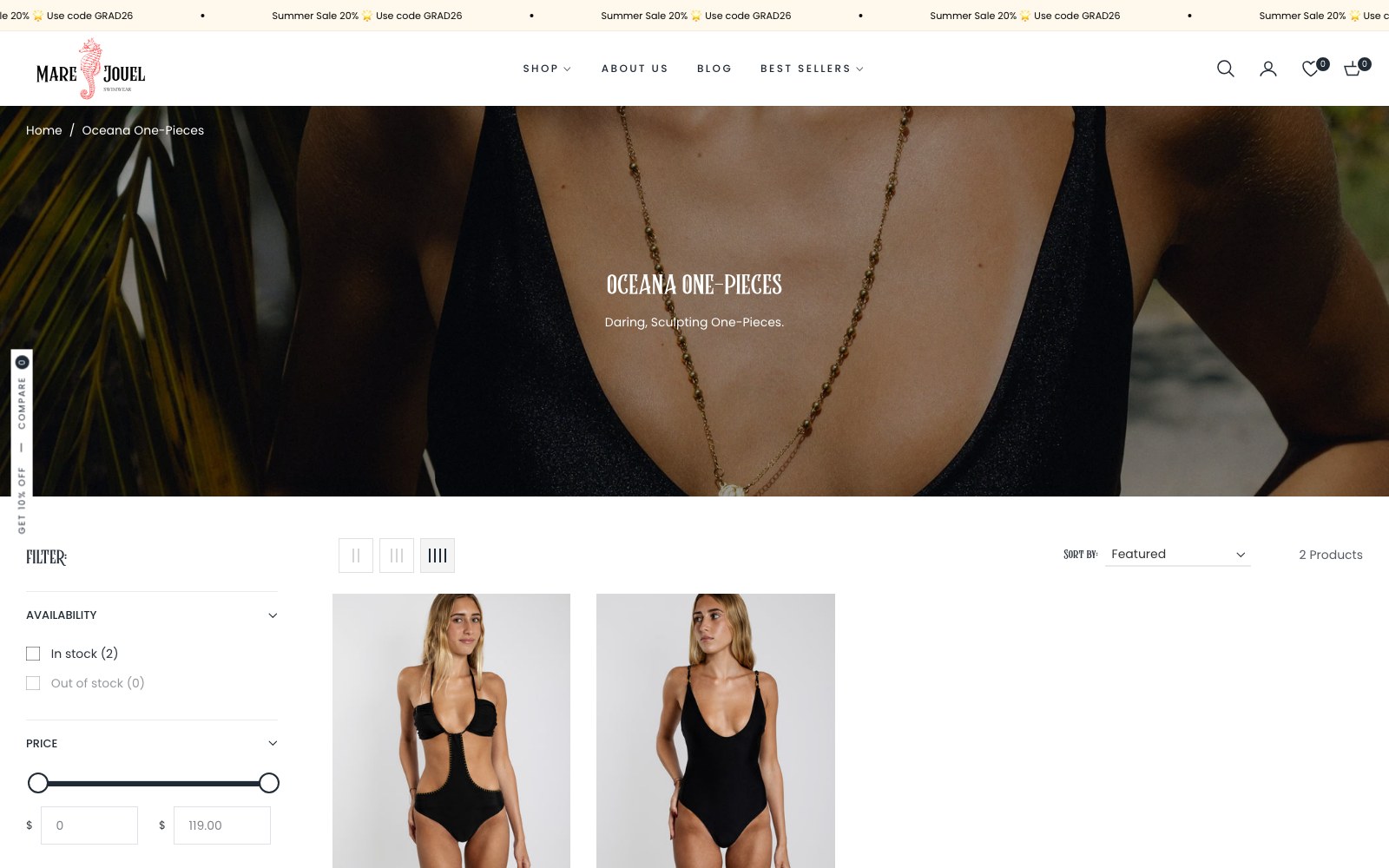
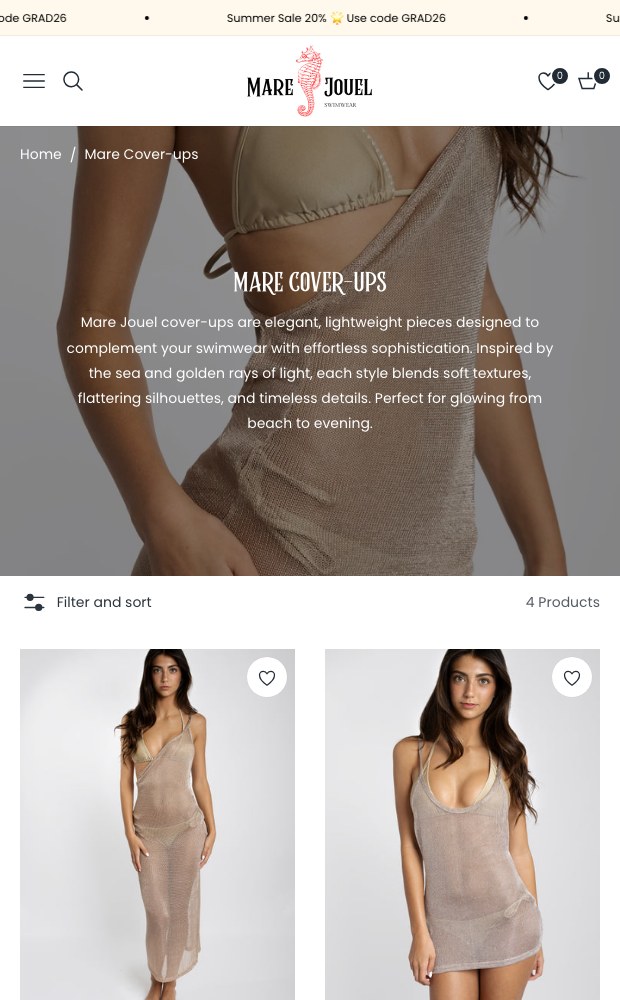
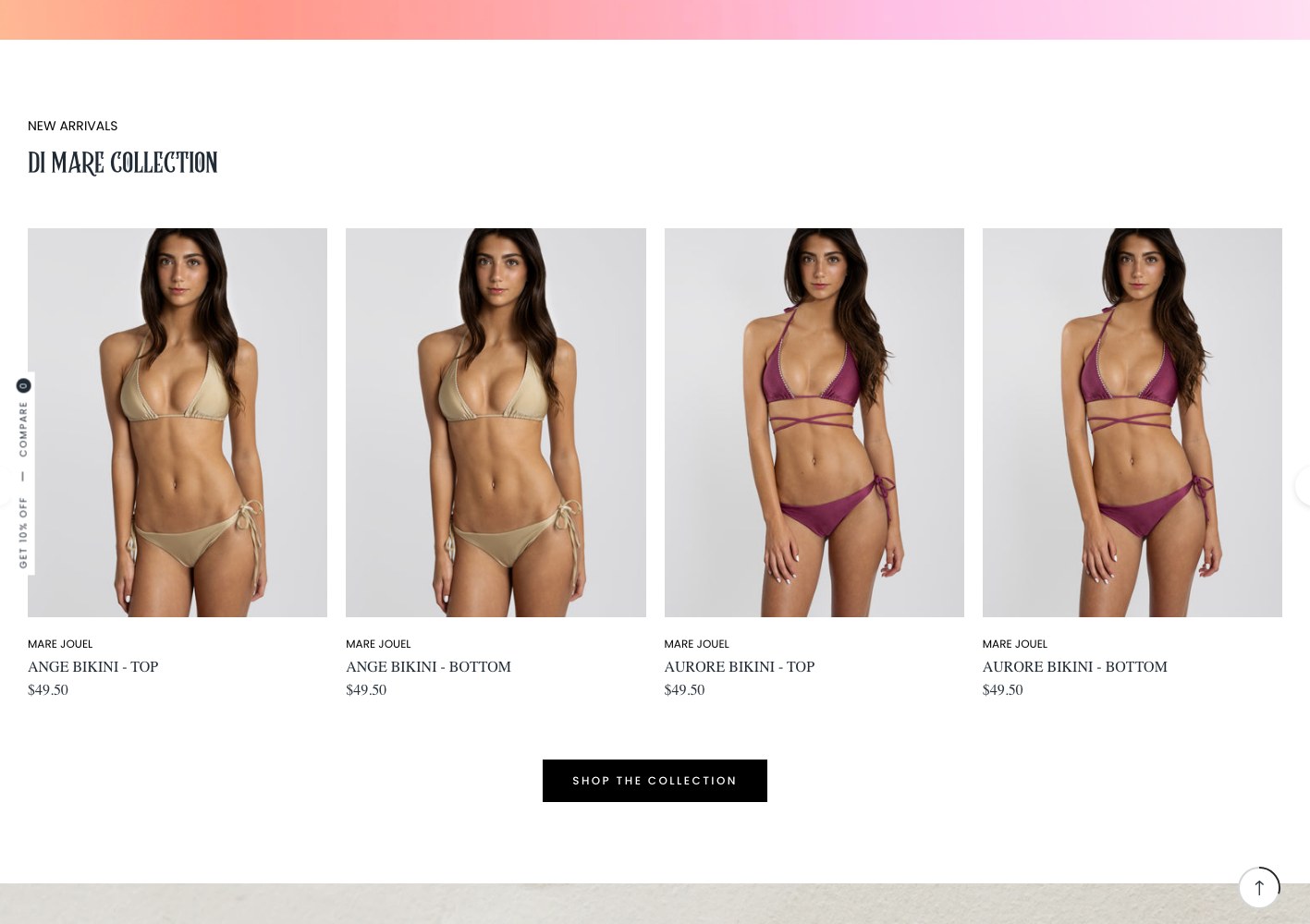
Di Mare, Jewel Bikinis and Oceana each get an editorial hero and copy block before the product grid starts, so browsing feels like stepping into different worlds rather than scrolling a single catch-all catalogue. The homepage runs a campaign hero, a featured-collections row, a shop-by-category strip, then a tabbed best-sellers module where someone can flip between bikinis and one-pieces without leaving the page.
.jpg)



03 — The results
A small catalogue now reads as a designer's edit.
The store ships with merchandised category pages for bikinis, one-pieces, cover-ups, hats and tees, plus dedicated landing treatments for the named collections. Tops and bottoms sell separately, so the listing templates carry availability and price filtering, view-density controls, wishlist and quick-add to make building a set straightforward.
The brand story, founder background, materials, the Semilla Brillante donation programme, customer testimonials and video content all live on a real page now. A size guide, swimwear care guide and FAQ block sit where the objections happen, and newsletter capture with a first-order incentive runs across the store.
CASE STUDIES
Case studies
Website Portfolio
Video Ads
Static Ads



























































.webp)
.webp)