



Table of contents
Key Takeaways
- Graphic design encompasses 12 distinct specializations, each requiring different skills, tools, and strategic approaches that don't transfer automatically between disciplines.
- UI/UX design represents the fastest-growing sector with 7 percent projected growth and median salaries exceeding $98,000, reflecting enterprise demand for digital experience expertise.
- Companies that invest in specialized design capabilities and integrate designers across business functions achieve substantially higher revenue growth and shareholder returns than competitors.
- Matching the right design specialist to your project type—rather than relying on generalists—produces higher-quality outcomes and more efficient project execution.
- Building an effective enterprise design capability requires both specialized talent and organizational systems that enable cross-functional collaboration and consistency across customer touchpoints.
What Is Graphic Design?
Graphic design is the practice of creating visual content to communicate messages and solve problems through the strategic use of typography, imagery, color, and layout design. This discipline spans both print media and digital platforms, covering logos, marketing materials, user interfaces, and animated content. Graphic artists use visual elements like shape, texture, and space to craft communications that inform, persuade, or engage audiences.
According to the U.S. Bureau of Labour Statistics, graphic designers held approximately 265,900 jobs in 2024, with the median annual wage reaching $61,300. Overall employment is projected to grow 2 percent from 2024 to 2034. But digital and user experience design roles are experiencing significantly faster growth at 7 percent, reflecting the industry's shift toward interactive solutions.
For mid-market and enterprise businesses, understanding the different types of graphic design is essential for building effective creative teams. Each specialization requires different graphic design skills, tools, and approaches. Matching the right designer to your project can mean the difference between mediocre results and exceptional visual communication that drives real business outcomes.
Research from McKinsey & Company demonstrates that companies excelling in design achieve 32 percent higher revenue growth and 56 percent higher total returns to shareholders compared to industry peers over a five-year period. Those numbers get attention in boardrooms.
The 12 Primary Graphic Design Specializations
Where does each type of graphic design fit within your organization's needs? Below is a breakdown of the major graphic design fields, along with the specific deliverables and skills each requires.
1. Brand Identity Design
Brand identity designers create the visual foundation that defines how a company presents itself across all touchpoints. This goes far beyond logo design. It encompasses the entire visual system that communicates a brand's personality, values, and positioning.
These specialists typically produce logo systems and variations, brand color palettes and typography standards, visual identity guidelines and brand books, stationery and business collateral systems, and brand architecture frameworks.
Brand identity work requires a deep understanding of market positioning, competitive differentiation, and audience psychology. A skilled brand designer must balance creative vision with strategic business objectives. They often conduct extensive research into target demographics and brand perception before developing visual solutions.
2. UI/UX Design
User interface and user experience design focuses on creating digital products that are both visually appealing and functionally intuitive. This specialization sits at the intersection of web design and technology, requiring designers to understand human behaviour, accessibility standards, and technical constraints.
Common deliverables include website designs and wireframes, mobile application interfaces, software dashboard layouts, interactive prototypes, and design system components.
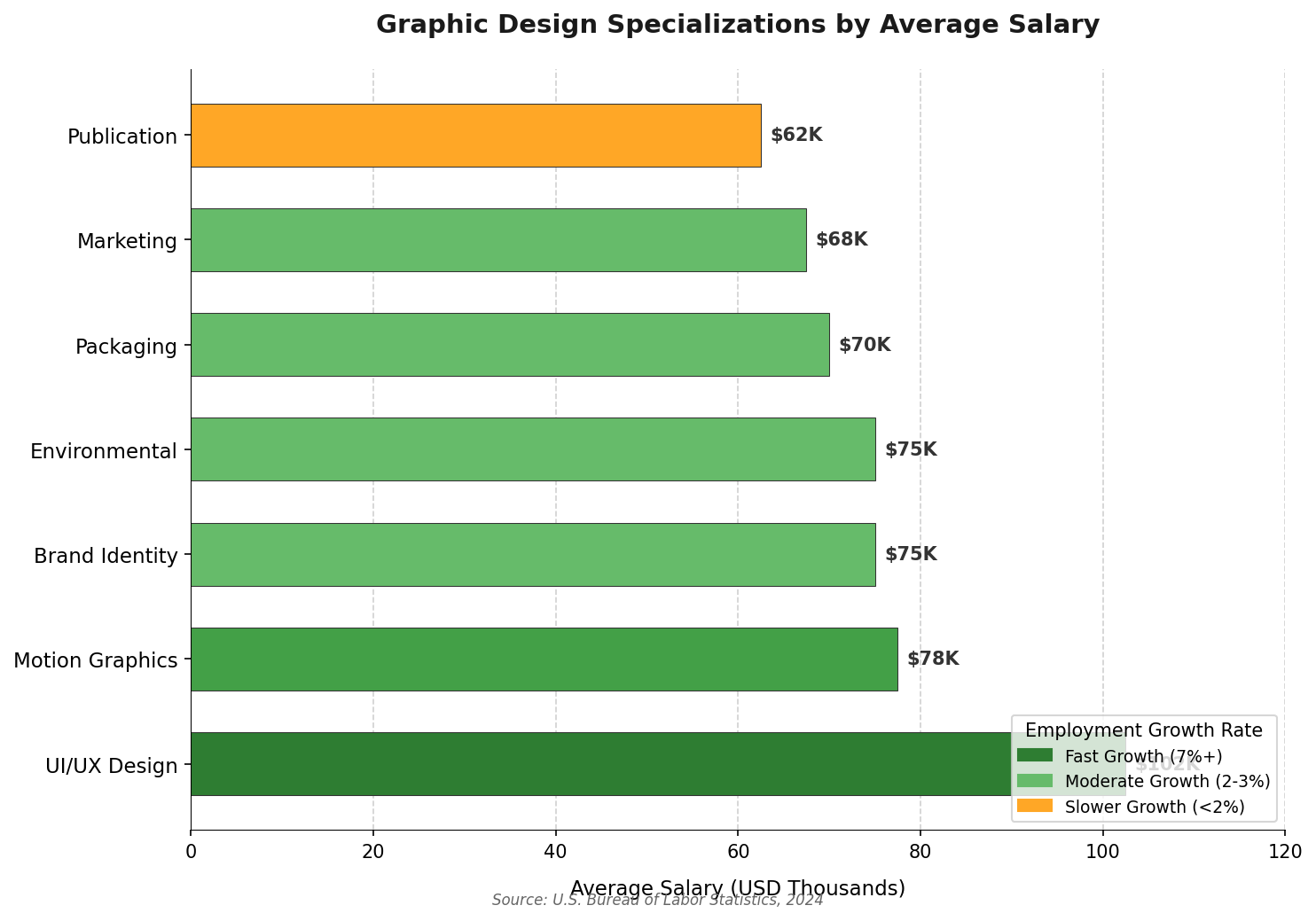
According to the Bureau of Labour Statistics, web and digital interface designers earned a median annual wage of $98,090 in May 2024. That reflects both high demand and the technical skills required. Employment in this field is projected to grow 7 percent from 2024 to 2034, substantially faster than the average for all occupations.
3. Marketing and Advertising Design
Marketing designers create the visual assets that drive customer acquisition, engagement, and conversion. This specialization demands a firm understanding of consumer psychology, brand messaging, and campaign strategy.
Their work spans social media graphics and campaigns, email marketing templates, digital advertisements and banners, landing page designs, and promotional materials.
These designers must understand the principles of visual hierarchy and calls-to-action. Every design element needs to support the campaign's business objectives while using visual cues that maintain brand consistency. Get it wrong and conversion rates suffer.
4. Motion Graphics Design
Motion graphics designers bring static visuals to life through animation. They transform typography, illustrations, and graphic elements into dynamic storytelling tools. This relatively new field combines traditional design principles with video production and animation techniques.
Typical projects include animated logos and brand elements, explainer videos and tutorials, social media video content, title sequences and transitions, and interactive animated infographics.
The motion graphics field offers strong earning potential. Entry-level positions start around $50,000 annually, while senior creative directors earn $120,000 to $150,000 or more. Industry data indicates that approximately 59.5 percent of motion designers work as freelancers, reflecting the project-based nature of much animation work. Success requires both creative skills and technical proficiency with animation software.
5. Packaging Design
Packaging designers create the physical containers and visual presentations for products. They balance aesthetic appeal with functional requirements like manufacturing constraints, regulatory compliance, and consumer convenience. This field overlaps with industrial design when structural packaging solutions are required.
Their output includes product packaging and labels, retail displays and point-of-sale materials, structural packaging design, unboxing experience design, and sustainable packaging solutions.
The packaging design services market is projected to reach USD 30.38 billion by 2034, growing at a CAGR of 3.55 percent. E-commerce expansion and increasing consumer preference for sustainable, visually distinctive packaging are driving this growth.
6. Publication and Editorial Design
Publication designers specialize in the layout and visual organization of long-form content for both print and digital formats. They ensure readability, visual flow, and cohesive presentation across multi-page documents.
These designers work on books and e-books, magazines and periodicals, annual reports and white papers, catalogues and lookbooks, and digital publications. Book covers remain a specialized subset requiring strong conceptual thinking and the ability to communicate a book's essence in a single image. The print medium demands attention to production details that digital work does not.
Editorial designers must master typography, grid systems, and visual hierarchy. Their job is to guide readers through complex content while maintaining engagement. A 200-page annual report that loses readers by page 10 has failed.
7. Environmental and Experiential Design
Environmental graphic designers work at the intersection of graphic design, architecture, and interior design, creating visual communications for physical spaces. The Society for Experiential Graphic Design describes this discipline as encompassing "the broader notion of all communication in the built environment."
Projects range from wayfinding and signage systems to retail and exhibition space design, office branding, museum and gallery installations, and event space design.
8. Illustration and Custom Artwork
Graphic illustrators create original artwork for commercial applications. They develop unique visual styles that enhance brand storytelling and create emotional connections with audiences. Many illustrators have fine art backgrounds that inform their commercial work.
Their work includes editorial illustrations, character design and mascots, product illustration, infographic illustrations, and custom iconography systems.
9. Typography and Lettering Design
Typography specialists focus on the design and arrangement of type, ranging from custom typeface development to hand-lettered designs for specific applications.
They produce custom typefaces, hand-lettered logos and signage, typographic systems for brands, display and headline typography, and font licensing packages.
These designers require a thorough understanding of typographic principles. Kerning, line-height, and legibility factors all affect readability across different contexts and scales. Small details matter enormously here.
10. Print Design
Print designers specialize in creating materials intended for physical production. They need knowledge of print production processes, color management, and material specifications.
Common deliverables include business cards and stationery, brochures and flyers, AI posters and banners, trade show materials, and direct mail pieces.
11. Infographic and Data Visualization Design
Infographic designers translate complex data and information into visual formats that are accessible and engaging. This specialization combines design skills with analytical thinking and storytelling ability.
They create statistical infographics, process flow visualizations, comparison graphics, timeline and historical visualizations, and interactive data dashboards.
12. Game Design and Interactive Media
Game designers create visual assets and interfaces for video games and interactive entertainment. They work with developers to build immersive user experiences.
Their work covers game user interface design, in-game graphics and assets, character and environment art direction, menu and loading screen designs, and interactive promotional materials.
Comparing Design Specializations: Skills, Tools, and Career Paths
| Specialization | Core Skills | Primary Tools | Average Salary Range |
|---|---|---|---|
| Brand Identity | Strategic thinking, visual systems, research | Illustrator, InDesign | $55,000-$95,000 |
| UI/UX Design | User research, prototyping, accessibility | Figma, Adobe XD, Sketch | $75,000-$130,000 |
| Marketing Design | Campaign strategy, conversion optimization | Photoshop, Canva, Illustrator | $50,000-$85,000 |
| Motion Graphics | Animation, timing, video editing | After Effects, Cinema 4D | $55,000-$100,000 |
| Packaging Design | 3D visualization, production knowledge | Illustrator, Esko, CAD | $50,000-$90,000 |
| Publication Design | Typography, grid systems, editorial layout | InDesign, QuarkXPress | $45,000-$80,000 |
| Environmental Design | Spatial thinking, architecture basics | SketchUp, AutoCAD, Adobe CC | $55,000-$95,000 |
Hiring Specialists vs. Generalists
When should you hire a specialist? Specialists bring deeper expertise that leads to higher-quality output in their domain. They execute projects faster due to established workflows. They understand industry-specific requirements. And their graphic design portfolio demonstrates directly relevant experience.
But specialists come with tradeoffs. Projects requiring multiple design disciplines get expensive. Scope changes become harder to accommodate. And you may find yourself managing multiple contractors or team members for a single initiative.
Common Misconceptions
Misconception 1: All Graphic Designers Can Do Everything
Many organizations assume that any graphic designer can handle any visual project. The reality is different. Skills required for brand identity work differ substantially from those needed for motion graphics or UI/UX design. A designer who excels at creating static brand assets may struggle with interaction design or animation principles.
Organizations achieve better results by matching specific project requirements to designers with relevant specialization experience.
Misconception 2: Print Design Is Obsolete
Digital channels dominate marketing budgets. But print design remains a vital discipline. Trade show materials, product packaging, direct mail campaigns, and premium brand collateral continue to require skilled print designers who understand color calibration, paper stocks, and production specifications.
The tactile quality of well-designed print materials creates brand impressions that digital formats cannot replicate. Try handing someone a beautifully printed business card versus sending them a LinkedIn connection request. Different impact entirely.
Misconception 3: UI Design and Graphic Design Are Interchangeable
User interface design requires a fundamentally different skill set than traditional graphic design. UI designers must understand user behaviour, accessibility guidelines, responsive design principles, and technical constraints that rarely factor into print or static digital work.
Visual design principles do overlap. But the systematic thinking and user-centred approach of UI/UX design distinguishes it as a separate discipline requiring specialized training and experience.
Why Specialization Outperforms Generalization in Enterprise Design
The McKinsey Design Index research reveals something important: top-performing companies invest in specialized design capabilities integrated across their organizations. Companies that scored in the top quartile of McKinsey's index achieved revenue growth rates and shareholder returns approximately double their industry peers.
Why such a gap? Specialized designers bring deeper expertise in their domains, allowing them to solve complex problems faster and with more sophisticated solutions. They understand the nuances of their discipline, whether that means the technical requirements of packaging production, the psychological principles underlying effective UI design, or the strategic considerations of brand architecture.
For enterprise organizations managing multiple product lines, marketing channels, and customer touchpoints, this specialization becomes even more critical. A brand identity designer who understands how to create adaptable visual systems can ensure consistency across hundreds of applications. A UI/UX specialist can identify friction points in digital experiences that generalists might overlook.
The investment in specialized talent pays dividends through higher-quality output and more efficient project execution.
The Hidden Value of Cross-Functional Design Integration
Beyond individual specialization, the highest-performing organizations demonstrate what McKinsey's research calls "cross-functional integration." This means breaking down silos between design disciplines and integrating designers across business functions.
Companies that successfully integrated their design teams reported compound annual growth rates significantly higher than competitors who kept designers isolated in separate departments. This integration allows brand considerations to inform product development, user research to shape marketing strategy, and packaging design to reflect digital brand experiences.
What does this mean practically? Building a design capability requires more than hiring skilled specialists. It requires creating systems that allow those specialists to collaborate, share insights, and ensure visual and experiential consistency across customer touchpoints.
Organizations that achieve this integration position design as a strategic function rather than a service department.
Real-World Examples and Case Studies
Nike: Brand Architecture Excellence
Nike exemplifies how effective brand identity design supports business growth across diverse product lines and customer segments. The company's visual identity system, anchored by the iconic Swoosh, provides consistency while allowing distinct sub-brands like Jordan, Nike SB, and Nike Free to develop unique visual languages for their target audiences.
Successful identity design requires creating adaptable systems that maintain brand recognition while addressing varied market needs. Nike does this well. The Jordan brand alone has become one of the world's most valuable brands, proving that thoughtful brand identity design creates tangible business value.
Airbnb: Strategic Rebranding Success
In 2014, Airbnb undertook a comprehensive rebrand that introduced the Bélo symbol, a logo designed to represent belonging by combining representations of people, places, love, and the Airbnb brand. The design agency DesignStudio immersed themselves in the company culture, visiting 13 cities, staying with 18 hosts, and interviewing 120 employees before developing the new identity.
The rebrand succeeded because it aligned the company's visual identity with its evolved mission and values. The Bélo became a community symbol that users could personalize, reinforcing Airbnb's positioning as more than a booking platform.
Brand identity design grounded in strategic research and business objectives can transform market perception.
Frequently Asked Questions
What's the difference between graphic design and visual design?
Graphic design traditionally focused on print and static digital media, while visual design encompasses broader digital experiences including user interfaces, interactions, and motion. These terms increasingly overlap in practice. "Visual designer" often describes roles that bridge traditional graphic design and UI/UX work. The key distinction lies in whether the work is primarily static and informational or interactive and experience-focused.
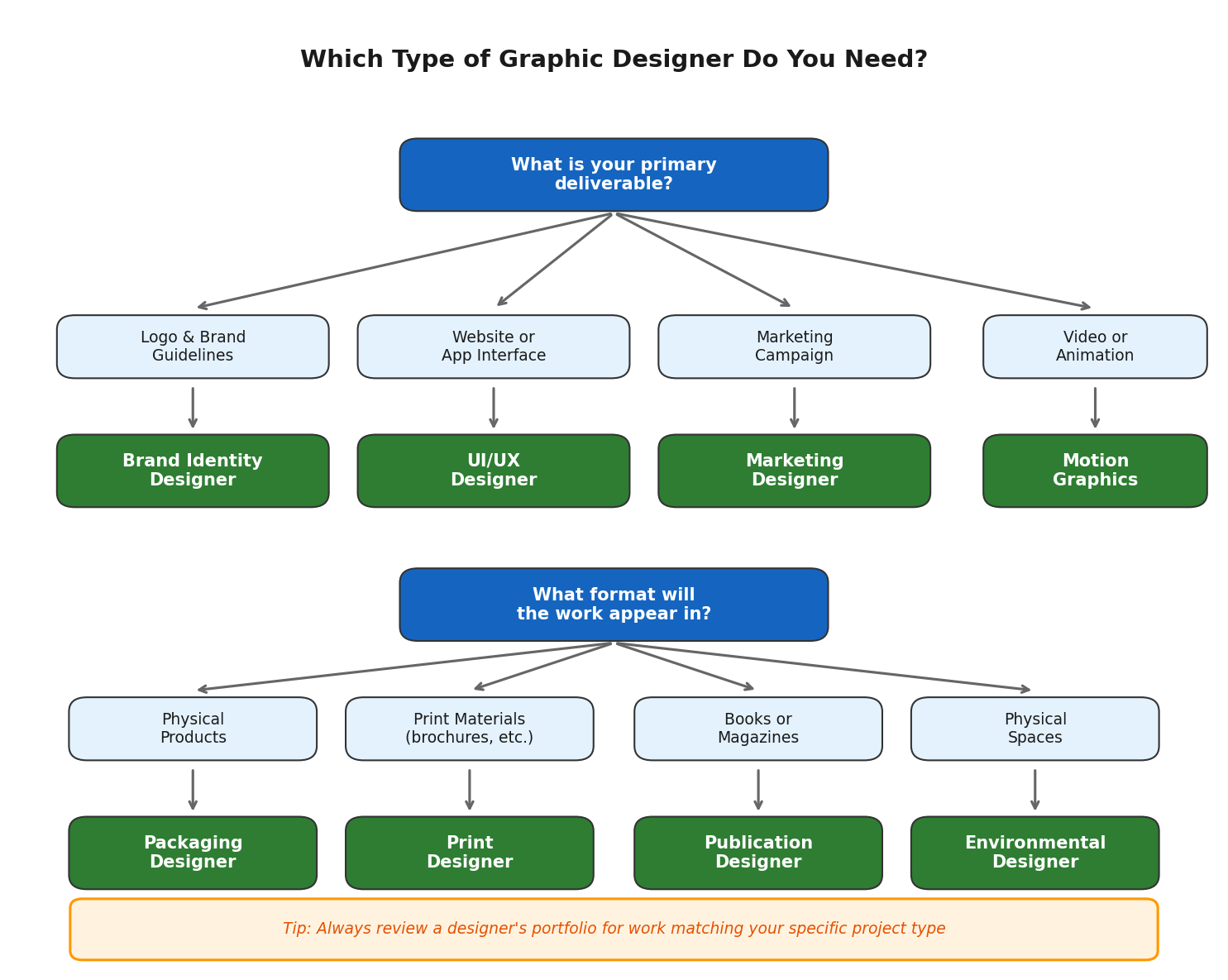
How do I know which type of graphic designer to hire for my project?
Can one designer handle multiple specializations effectively?
Some designers develop expertise across related disciplines, such as brand identity and print design, or UI and motion graphics. But depth of specialization typically correlates with quality of output. For critical projects, organizations generally achieve better results working with specialists. Smaller projects or exploratory work may suit multi-disciplinary designers.
What education is required for graphic design careers?
Most graphic design positions require a bachelor's degree in graphic design, visual communication, or a related field. UI/UX roles increasingly value demonstrated skills and a strong graphic design portfolio over formal credentials. The Bureau of Labour Statistics notes that candidates should have a portfolio demonstrating creativity and originality, which often matters more than specific educational background.
How is AI affecting graphic design specializations?
Automated design tools are changing how designers work, particularly for repetitive tasks and template-based production. Strategic design work, including brand development, complex UI systems, and custom illustration, requires human creativity and judgment that current AI cannot replicate. The Bureau of Labour Statistics notes that AI may reduce demand for freelance graphic designers handling routine work while specialized, strategic design roles remain in demand.


