



Table of contents

Key Takeaways
- Effective creative branding strategies combine distinctive visual identity, compelling storytelling, and consistent customer experience to build sustainable competitive advantage
- Brand consistency delivers measurable revenue impact, with research showing 23 to 33 percent revenue increases for organizations with strong brand presentation consistency
- Emotional branding outperforms feature-based differentiation because consumer decision-making is driven primarily by emotional responses processed faster than rational analysis
- Purpose-driven brand positioning has evolved from aspiration to strategic priority, with high-growth organizations treating purpose as a competitive differentiator
- Brand trust has become equal to price and quality as a purchase consideration, requiring organizations to build trust systematically across functional, ethical, and purpose dimensions
- Mid-market organizations can build powerful brands through disciplined execution of branding fundamentals rather than attempting to match larger competitors' marketing budgets
- Consider partnering with brand strategy specialists to conduct comprehensive audits of current brand positioning and develop systematic approaches to strengthening brand equity
What Is a Creative Branding Strategy?
Creative branding strategy is the deliberate process of developing and implementing brand elements, messaging, and experiences that set an organization apart from competitors while building emotional connections with the people they want to reach. Traditional marketing tends to focus on product features or price points.
Creative branding takes a different path—it builds long-term brand equity through visual identity, storytelling, and customer experience. In today's crowded marketplace, a clear brand message and distinctive brand image are what separate successful branding from forgettable marketing efforts.
According to McKinsey & Company's branding research, companies with strong brands earn up to five percentage points higher total return to shareholders than their industry counterparts. This finding points to the business impact of effective brand building tactics. And it explains why mid-market and enterprise organizations now treat branding as a core strategic function.
What does creative branding actually do for organizations in competitive markets? It establishes recognition and recall. It builds consumer trust. It communicates values. It creates the emotional resonance that keeps customers coming back and transforms them into loyal customers. Consumers today face overwhelming choice across product and service categories, and brands act as beacons of trust—helping reduce perceived purchase risk and simplifying decisions. Effective brand strategy also helps attract new customers while strengthening your loyal customer base.
10 Proven Creative Branding Strategies for Building Memorable Brands
The following branding techniques are research-backed approaches that mid-market and enterprise organizations can use to strengthen their brand and market position.
1. Develop a Visual Identity System That Stands Out
Visual brand identity covers all the visual elements consumers associate with a brand: logos, color palettes, typography, imagery styles, and design systems. A systematic literature review published in the Journal of Business Research (2004-2024) found that visual identification elements affect consumers' perceived brand quality, brand personality, brand satisfaction, loyalty, and purchase intentions.
Building an effective visual identity requires balancing several factors. Simplicity aids recognition and recall. The identity must stand apart from competitors selling similar products. It needs flexibility across applications. And it should align with how the brand wants to be perceived. Companies should create comprehensive brand guidelines that ensure consistent application everywhere the brand appears—whether launching new products or running marketing campaigns across social media platforms.
| Visual Element | Primary Function | Implementation Consideration |
|---|---|---|
| Logo | Immediate brand identification | Must work across sizes and contexts |
| Color palette | Emotional association and recognition | Research color psychology for your audience |
| Typography | Personality expression and readability | Balance uniqueness with accessibility |
| Imagery style | Storytelling and differentiation | Maintain consistency across platforms |
2. Craft Brand Narratives That Resonate
Brand storytelling has become one of the most powerful approaches for creating emotional bonds with consumers. Harvard Business Review found that 64 percent of consumers who had a relationship with a specific brand did so because of shared values. That statistic alone shows how critical narrative-driven brand communication has become.
Effective brand stories follow narrative frameworks that tap into human psychology. They feature relatable characters, authentic conflict, resolution that matters, and clear connections to brand values. Companies should develop origin stories, customer success narratives, and purpose-driven content creation that reinforces how they want to be perceived while creating real emotional engagement. The best content marketing doesn't feel like marketing at all—it feels like a story worth sharing.
3. Build Brand Consistency Everywhere
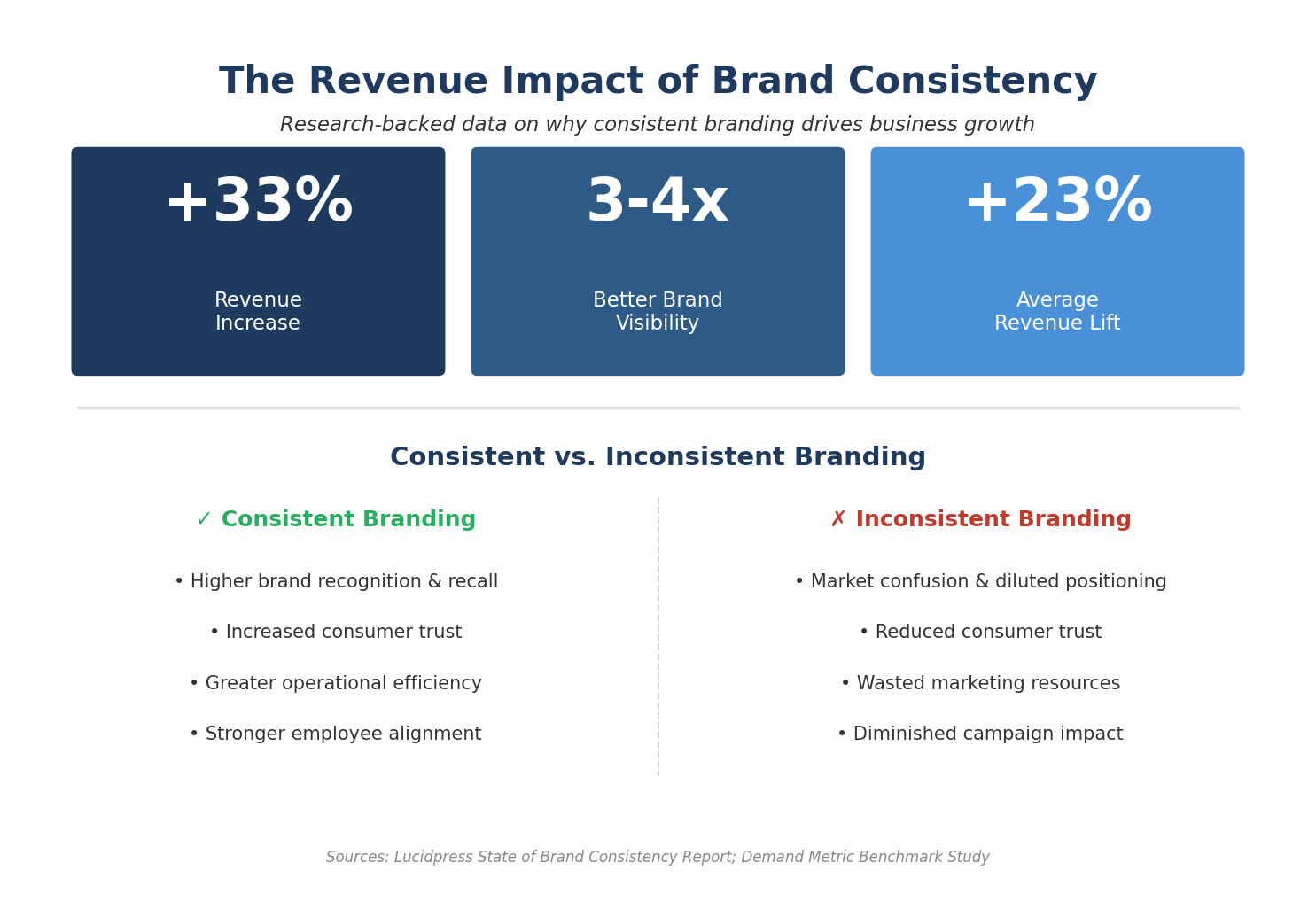
Brand consistency is one of the most trackable brand building tactics available. According to Lucidpress's State of Brand Consistency Report, consistent branding can increase revenue by up to 33 percent. A separate Demand Metric benchmark study found an average 23 percent revenue lift for organizations that moved from inconsistent to consistent brand presentation.
Consistency goes beyond visual elements. It includes messaging tone, customer experience quality, and brand behaviour in every interaction. Companies that achieve brand consistency are three to four times more likely to enjoy excellent brand visibility than those with inconsistent presentation.
Pros of strong brand consistency:
- Increased brand recognition and recall among target audiences
- Higher consumer trust through predictable, reliable experiences
- Greater operational efficiency through standardized brand assets
- Stronger employee alignment around brand values and behaviours
Cons of inconsistent branding:
- Market confusion that dilutes brand positioning
- Reduced consumer trust and perceived reliability
- Wasted resources through redundant creative development
- Diminished impact of marketing investments
4. Establish Purpose-Driven Brand Positioning
Deloitte's Global Marketing Trends research shows that purpose has evolved from aspiration to strategic priority for high-growth brands. High-growth brands (those with 10 percent or more annual growth) translate purpose into action differently than their lower-growth peers. They treat purpose as what sets them apart, not just a communications exercise.
Purpose-driven branding requires identifying authentic connections between what the organization does well, what customers value, and what matters to society. When brands know whom they serve and what those people care about, they can turn their purpose into a real advantage. For companies committed to social causes, this alignment between brand promise and action creates deeper customer engagement that purely transactional relationships can't match.
5. Use Emotional Branding Techniques
Neuroscience research has reshaped how we understand branding's influence on how people buy. According to Harvard's Division of Continuing Education on neuromarketing, brand preferences activate the same brain regions associated with personal relationships and identity. That's why consumers develop deep loyalty to certain brands. When subjects could see a brand (versus blind testing), the part of their brains associated with emotions, memories, and unconscious processing showed enhanced activity.
Effective emotional branding strategies focus on identifying and activating specific emotional triggers that align with how the brand wants to be perceived. These might include feelings of belonging, aspiration, security, joy, or nostalgia—depending on brand strategy and audience characteristics.
6. Create Immersive Brand Experiences
Modern branding techniques put heavy emphasis on experiential elements that create memorable, shareable interactions with brands. Why? Because brand meaning is constructed through accumulated experiences, not just exposure to marketing messages. Immersive experiences—whether physical, digital, or powered by emerging technologies like virtual reality—give potential customers a reason to engage beyond the transaction.
Companies should audit every customer interaction and identify opportunities to create experiences that reinforce brand values and differentiation. This includes physical environments, digital interactions, customer service encounters, and post-purchase engagement. The brands that get this right don't just sell products—they create moments people remember and talk about. Think about how Apple stores feel different from other electronics retailers, or how Trader Joe's turns grocery shopping into something people actually enjoy.
7. Develop a Brand Voice and Tone That Stands Apart
Brand voice is the consistent personality expressed through all written and verbal communication. It covers vocabulary choices, sentence structure, communication style, and the overall character conveyed through brand messaging.
Developing a unique brand voice requires careful analysis of audience preferences, how competitors communicate, and company culture. Market research helps identify what resonates with your audience—including how different generations like Gen Z respond to various communication styles. The resulting voice should feel authentic to the organization while connecting with the people you want to reach and supporting how the brand wants to be perceived.
A good test: if you removed your logo from a piece of content, would people still recognize it as yours? Mailchimp's irreverent humor, Patagonia's activist tone, and Apple's minimalist clarity are instantly recognizable—even without visual branding.
8. Implement Strategic Brand Architecture
For organizations with multiple products, services, or sub-brands, brand architecture decisions have outsized impact on brand development. Clear architectural frameworks help consumers understand relationships between offerings while enabling companies to efficiently apply brand investments across portfolios. This is especially important when launching new products or expanding into new markets where corporate branding needs to support—not confuse—sub-brand positioning.
| Architecture Model | Description | Best Suited For |
|---|---|---|
| Branded house | Single master brand across all offerings | Organizations seeking maximum brand leverage |
| House of brands | Independent brands with minimal connection | Diverse portfolios serving distinct segments |
| Endorsed brands | Sub-brands with visible parent endorsement | Balancing brand leverage with segment targeting |
| Hybrid | Combination approaches | Complex portfolios with varied strategic needs |
9. Build Brand Community and Advocacy
Strong brands now function as platforms for community building, creating spaces where customers connect with each other around shared interests and values. Community-driven branding techniques transform customers from passive consumers into active brand ambassadors who contribute to brand meaning and visibility.
Community building requires ongoing investment in engagement platforms, content that facilitates member interaction, and responsiveness to community feedback. Successful brand communities create real value for participants beyond product or service consumption. Social media and digital marketing channels make it easier than ever to nurture these communities. Influencer marketing can amplify reach, but the most powerful advocacy comes from authentic customer enthusiasm. Harley-Davidson's H.O.G. (Harley Owners Group) and Sephora's Beauty Insider community show what's possible when brands invest in bringing their customers together.
10. Embrace Agile Brand Evolution
Consistency remains a cornerstone of brand building. But successful brands also show capacity for change in response to shifting market conditions, cultural movements, and company development. What matters is distinguishing between core brand elements that should remain stable and flexible elements that can adapt. Staying current with branding trends—from video content strategies to emerging digital world platforms—helps brands remain relevant without losing their identity.
McKinsey's brand strategy research found that companies that are brand innovators grow their top-line four percentage points faster than less-innovative companies. Even the best brands can benefit from innovative branding strategies and new approaches. Creative thinking and willingness to experiment drive business growth.
Common Misconceptions
Misconception 1: Branding Is Primarily About Visual Design
Visual identity matters. But effective brand strategy goes far beyond logos and color palettes—it's more than just getting a new logo. Brand strategy includes how you position yourself, your messaging, customer experience design, company culture alignment, and ongoing relationship building. Companies that focus exclusively on visual elements often fail to develop the deeper brand foundations that drive lasting advantage. A strong positioning statement and clear marketing strategy matter just as much as design.
Misconception 2: Strong Brands Require Massive Marketing Budgets
Data consistently shows that brand strength correlates more strongly with consistency and authenticity than with spending levels. The Edelman Trust Barometer found that 80 percent of people trust brands they use. Product and service quality combined with consistent delivery matters more than advertising volume. Mid-market organizations can build powerful brands through disciplined execution of branding fundamentals.
Misconception 3: Brand Building Delivers Only Long-Term Results
Brand building does create compounding long-term value. But effective brand strategy also generates near-term impacts you can track. Companies with strong brand consistency report revenue increases of 10 to 33 percent. Brand investments can deliver returns within relatively short timeframes when executed well—helping drive growth faster than many organizations expect.
Why Emotional Connection Outweighs Feature-Based Differentiation
The neuroscience of consumer decision-making reveals something that challenges traditional marketing assumptions: emotional factors drive purchasing far more than rational feature comparisons. fMRI technology shows that the human brain processes emotional stimuli faster than rational thought, creating immediate gut reactions that influence every purchasing decision.
The Frontiers in Neuroergonomics systematic review of neuromarketing found that emotions play a primary role in how people buy—influencing perceptions, brand preferences, and purchasing decisions. This highlights the profound impact of emotions on shaping consumer perceptions. Companies should treat emotional resonance as equal to functional differentiation.
For enterprise organizations, this has real strategic implications. Product features can be replicated by competitors. But emotional brand connections create switching costs that sustain advantage over time. Brands that successfully evoke positive emotions build stronger connections that go beyond transactional relationships. The limbic system, which governs emotions, influences consumer choices far more than the rational cortex. Brands succeeding at emotional engagement outperform those relying solely on rational value propositions. This is why thought leadership that addresses customer needs often outperforms purely promotional messaging.
The Trust Imperative in Modern Brand Strategy
Consumer trust is now perhaps the most critical success factor in brand strategy. According to the 2024 Edelman Trust Barometer Special Report, consumers who fully trust a brand are far more likely to purchase that brand, stay loyal to it, and advocate for it. Trust is now equal to price and quality as a purchase consideration. That's a meaningful change in how consumers evaluate brands.
Building brand trust requires demonstrated competence, consistent behaviour, transparency, and alignment between stated values and company actions. Companies should audit trust drivers specific to their industries and the people they serve, then develop approaches to building and maintaining trust at every interaction.
Trust building operates through multiple dimensions: functional trust (competence and reliability), ethical trust (honesty and integrity), and purpose trust (positive societal impact). High-performing brands typically excel across all dimensions—not just one. Brands earning trust see accelerated buying (53 percent versus 25 percent for untrusted brands) and more than twice the loyalty when competitors launch alternatives.

Real-World Examples and Case Studies
Nike: Building Brand Through Storytelling and Innovation
Nike shows how creative branding strategy can transform product marketing into cultural movement building. The company's approach weaves together sports performance, cultural relevance, and personal aspiration through consistent storytelling that positions athletes and everyday consumers as heroes overcoming challenges.
Nike's brand success comes from its ability to connect emotional messaging with product innovation. The company's marketing taps into consumers' emotions and aspirations—not just product features. This approach, combined with strategic athlete partnerships and cultural alignment, has established Nike as a leader in the athletic apparel industry with trailing twelve-month revenues of approximately $49 billion as of late 2024.
The company's collaboration with Apple for the Nike+ ecosystem showed what innovative branding partnership looks like. It combined Nike's athletic credibility with Apple's technology expertise to create integrated consumer experiences that reinforced both brands. This kind of creative thinking—finding unexpected ways to meet unique needs—sets the best brands apart.
Patagonia: Purpose-Driven Brand Differentiation
Patagonia has built exceptional brand loyalty through authentic commitment to environmental sustainability. The outdoor retailer's approach shows how purpose-driven work, when executed authentically, creates powerful differentiation that competitors can't easily replicate.
The company's willingness to make bold statements that might discourage short-term sales—such as campaigns encouraging consumers to think twice before purchasing—actually strengthens brand loyalty among its audience. It works because it authentically reflects company values, not calculated marketing. Patagonia's commitment to environmental causes has made it a case study in how brands can champion societal issues while building commercial success.
Frequently Asked Questions
What is the difference between branding and marketing?
Branding defines who an organization is, what it stands for, and how it wants to be perceived. Marketing promotes that identity. Branding establishes the foundation of organizational identity and values. Marketing communicates those elements through specific campaigns and tactics. Effective marketing requires strong branding foundations, but branding extends far beyond marketing activities.
How long does it take to build a strong brand?
Brand building is an ongoing process, not a finite project with a defined endpoint. Companies typically begin seeing improvements within 12 to 24 months of implementing consistent brand strategies. But creating truly iconic brands requires sustained investment over many years. What matters is maintaining consistency while continuously adapting to market changes and company evolution. Working with an experienced branding agency can accelerate the process.
How can mid-market companies compete with larger brands?
Mid-market organizations can build powerful brands by focusing on consistency, authenticity, and strategic differentiation—not by trying to match larger competitors' marketing spending. Data shows that brand strength correlates more strongly with consistency and relevance than with budget size. Mid-market companies often have advantages in agility, customer intimacy, and authentic identity that larger competitors can't easily replicate.
What are the most important metrics for measuring brand strength?
Brand strength measurement should cover multiple dimensions: brand awareness (aided and unaided recall), brand consideration (likelihood of being considered for purchase), brand preference (selection among alternatives), and brand advocacy (likelihood of recommendation). Companies should also track brand consistency metrics, customer loyalty indicators, and financial measures such as price premium capacity and customer lifetime value.
How often should a brand be refreshed or updated?
Brand evolution should be driven by strategic necessity, not arbitrary timelines. Core brand elements such as mission, values, and how you position yourself should remain stable over extended periods. Tactical elements like visual design and messaging may evolve more frequently in response to market changes. Major brand refreshes typically occur every five to ten years for established brands, with ongoing minor adaptations throughout. What matters is distinguishing between core elements that provide consistency and flexible elements that enable relevance.
Web Tonic works across SEO, paid search and paid social, and you can book a consultation to talk through your own plan.


