



Table of contents
Key Takeaways
- Viral campaigns succeed through participation mechanics that transform passive viewers into active contributors—the most successful social campaign examples invite audience involvement rather than broadcasting finished content
- Platform-native execution matters more than production value; content formatted for social sharing, like Spotify Wrapped's 9:16 vertical slides, eliminates friction that prevents amplification
- Earned-first creativity requires accepting reduced control in exchange for authenticity—brands like CeraVe, Duolingo, and Nutter Butter achieved breakthrough results by allowing communities to drive conversation
- Purpose-driven messaging resonates when connected to authentic brand commitments, as demonstrated by Nike's "So Win" and Ben & Jerry's climate campaigns
- Strategic measurement connecting social metrics to business outcomes enables continued investment—with social advertising averaging 4.2x ROAS, brands that demonstrate value capture larger budgets for future campaigns
- Working with specialists who understand social platform culture from the inside rather than observing it from traditional advertising perspectives can help brands develop campaigns that achieve both viral reach and meaningful business impact
What Are Viral Social Media Campaigns?
A viral social media campaign is a marketing initiative that achieves exponential reach through organic sharing across social media platforms. Unlike traditional marketing that relies on paid distribution, viral campaigns spread person-to-person. Audiences find the content compelling enough to share with their networks. The term "viral" borrows from epidemiology: content spreads through social networks much like a contagion moves through a population.
Research published in the International Journal of Management Reviews analyzed 169 peer-reviewed studies and found that successful social media marketing leads to brand awareness and purchase intent. Customer engagement follows. These outcomes translate into measurable financial results.
Sprout Social's 2025 Impact of Social Media Report found that TikTok, Instagram, and YouTube now collectively account for over 60% of product discovery. More than Google. For business owners and enterprise companies, viral campaigns do more than generate reach metrics. They demonstrate cultural relevance, create earned media value worth millions, and build emotional connections that drive long-term customer loyalty. The most successful social media campaign examples combine strategic thinking with creative risk-taking. Increasingly, real beauty in marketing efforts comes from being genuine rather than polished.
Elements of successful social media campaigns
What separates campaigns that break through from those that disappear into the feed? Five characteristics show up consistently across the biggest wins of 2025 and 2026. Understanding these best practices is the first step toward building your next social media campaign.
The viral campaign framework
| Element | Description | Example |
|---|---|---|
| Participation mechanics | Content designed for audience involvement through duets, remixes, or challenges | Duolingo's "Duo is Dead" resurrection through user XP completion |
| Cultural timing | Alignment with pop culture, trends, or collective moments | CeraVe's conspiracy campaign climaxing at Super Bowl |
| Platform-native format | Social media content that feels organic to each platform's culture | Spotify Wrapped's shareable Instagram Stories format |
| Emotional resonance | Triggers feelings worth sharing: humor, nostalgia, surprise, belonging | Nike's "So Win" celebrating athletic achievement |
| Brand-aligned genuineness | Weirdness or boldness that still connects to brand identity | Liquid Death's Ozzy Osbourne DNA stunt |
The tradeoffs of pursuing viral campaigns
Viral campaigns offer significant upside. Earned media value can exceed paid media costs by orders of magnitude, with top campaigns generating billions of impressions without advertising spend. Successful campaigns create cultural moments that build long-term brand equity. User-generated content provides genuine endorsement that traditional marketing simply can't replicate.
But the risks are real. Viral success isn't guaranteed. Campaigns that come across as inauthentic face swift backlash. Planning and execution demand cross-functional coordination between creative, social, and PR teams. Measurement remains difficult: connecting viral metrics to business outcomes requires sophisticated social media analytics.
Common misconceptions
Misconception 1: Viral campaigns require massive budgets
Many assume breakthrough social campaigns require Super Bowl-level investment. Reality tells a different story.
Research from GOAT Agency found that micro-influencers (10,000-100,000 followers) achieve engagement rates around 3.86%. Nearly three times higher than the 1.2% average for macro-influencers with over one million followers. Several campaigns that achieved viral status in 2025-2026 originated from organic observations or creator-led initiatives requiring minimal paid media support. The skincare brand CeraVe's Michael Cera campaign famously originated from a Reddit post that brand teams discovered through social listening.
Misconception 2: Going viral is the goal itself
Chasing virality without a specific goal creates campaigns that generate attention but fail to drive business outcomes. Effective social media campaigns maintain clear connections between creative expression and commercial objectives.
HubSpot's 2026 State of Marketing Report found that 43% of marketers rank Facebook among the highest ROI-driving platforms. But only when campaigns align viral mechanics with conversion pathways. Virality serves business goals. It doesn't replace them. Campaign performance should tie back to website traffic, conversion rates, and new customers acquired.
Misconception 3: AI makes viral content easier to create
AI tools have democratized content creation. They haven't cracked the code on cultural resonance.
Sprout Social's Q3 2025 Pulse Survey found that 52% of social media users express concern about brands posting AI-generated content without disclosure. The campaigns that achieved breakthrough success in 2025-2026 emphasized human creativity and real storytelling. AI can support these elements. It can't replace them. Hootsuite's 2026 Social Trends Report notes that winning brands are intentionally moving away from overly polished content, avoiding anything that might trigger concerns about deepfake technology. Imperfections and natural pacing signal credibility, even when AI operates behind the scenes.
The hidden power of "controlled chaos"
One counterintuitive finding from analyzing 2025-2026's most successful campaigns: strategic messiness beat strategic precision. A great example of this played out repeatedly across different social media channels.
Brands that loosened control over their narratives did better than those maintaining tight creative control. They let communities, creators, and comment sections drive conversation. The campaign's success depended on community building rather than broadcast messaging.
Duolingo's "Duo is Dead" campaign deliberately sparked conspiracy theories, memorial posts, and brand-to-brand condolences before revealing the orchestrated stunt. CeraVe spent weeks letting influencers and news outlets speculate about Michael Cera's involvement before clarifying the joke. Nutter Butter built an entire TikTok universe through cryptic posts where narrative coherence was optional but participation was essential.
Ogilvy's analysis of the CeraVe campaign put it directly: earned-first creativity requires accepting reduced control in exchange for participation. When brands create experiences meant to be co-owned, audiences shift from passive viewers to active contributors. They become brand advocates who drive positive sentiment without prompting.
Why platform-native execution matters more than production value
Content that could have been posted by a skilled creator beats content that announces itself as branded advertising. Production quality still matters. But production choices should serve platform expectations rather than broadcast television conventions.
Spotify's design team built Wrapped slides in 9:16 vertical format specifically for Instagram Stories and TikTok. No cropping required. No reformatting. The result: over 500 million shares within 24 hours of the 2025 launch, a 41% year-over-year increase. User experience drove the design decisions, not production budgets.
Metricool's analysis found that campaigns going viral in 2025 felt native to platform culture. They blended with memes, trends, and casual content. For enterprise brands, this requires creative teams who understand social culture from the inside rather than observing it from traditional advertising perspectives. The right marketing strategy meets audiences where they already are.
20 best social media campaigns that went viral
These case studies span different social media platforms and industries, but they share common threads: cultural timing, participation mechanics, and genuine connection with their target audience.
1. Spotify Wrapped 2025
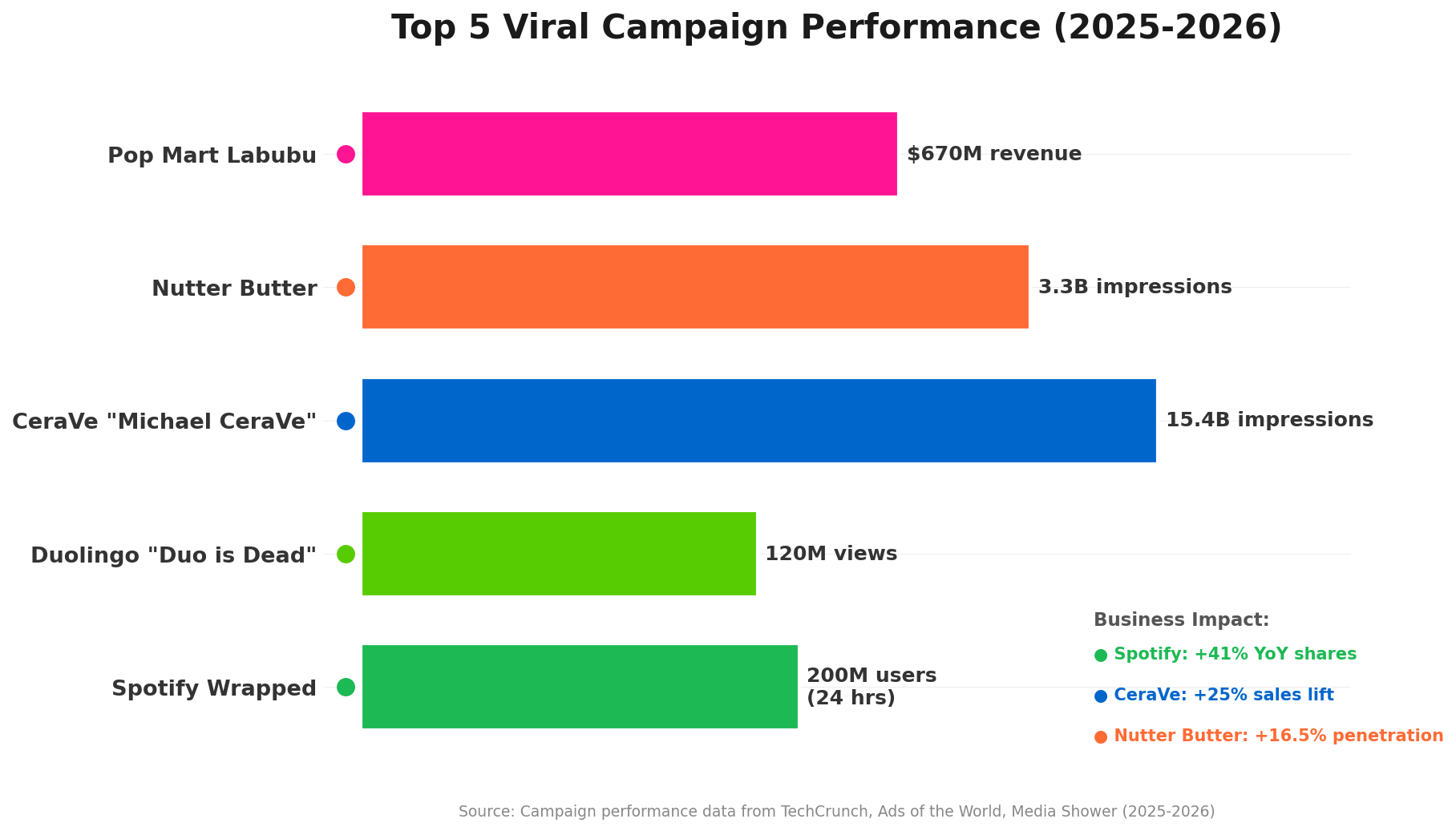
Spotify turned annual listener data into a global phenomenon. The 2025 campaign reached over 200 million engaged users within 24 hours, a 19% increase year-over-year. Users generated over 500 million shares across social platforms, up 41% from the previous year.
The campaign featured 50 physical "fan destinations" worldwide: a giant paw installation on Rio's Copacabana Beach celebrating Lady Gaga, an 800-foot red hair cascade in New York's Union Square honouring Chappell Roan. The new "Listening Age" feature, which estimates the era a user's musical taste aligns with, generated sustained conversation and meme activity. Personalized data formatted for sharing turns users into brand advocates.
2. Duolingo's "Duo is Dead" campaign
In February 2025, Duolingo announced that its mascot Duo the owl had died after being struck by a Tesla Cybertruck. The TikTok announcement generated over 120 million video views. Memorial posts flooded social feeds. Fake investigations. Conspiracy theories. Brand-to-brand condolences.
Then Duolingo gamified the crisis, encouraging users to complete lessons and earn XP to "bring Duo back." After the collective goal was reached, the owl returned. The whole thing had been orchestrated. Routine app engagement became a shared cultural event with genuine emotional stakes. Customer feedback was overwhelmingly positive.
3. CeraVe's "Michael CeraVe" campaign
CeraVe's first Super Bowl campaign rewrote the playbook for earned-first creativity. The skincare brand CeraVe orchestrated a three-phase conspiracy suggesting actor Michael Cera had secretly founded the company. It began when influencer Haylee Baylee "spotted" Cera signing CeraVe bottles. Leaked paparazzi photos hit the front page of Reddit and Daily Mail.
The campaign generated 15.4 billion earned impressions before the Super Bowl commercial aired. Over 450 influencers participated organically. The in-game spot revealed the conspiracy as a joke debunked by dermatologists, won the Super Clio award, and was named Campaign of the Year at the 2025 Ad Age Creativity Awards. Sales increased 25%. The image source for weeks of speculation? Deliberately planted paparazzi shots.
4. NikeSKIMS launch
Nike and Kim Kardashian's shapewear brand SKIMS launched their joint activewear line with a social media marketing campaign engineered for cultural impact. The "Bodies at Work" film featured over 50 athletes: Serena Williams, Sha'Carri Richardson, Jordan Chiles. Calvin Klein comparisons were inevitable, but this felt different.
Following the partnership announcement, Nike's share price rose 6.2%, adding $6.7 billion to the brand's market value. The New York City launch on the steps of the New York Public Library with coordinated family appearances was built as a cultural spectacle for social amplification. The campaign reached a wider audience than traditional athletic advertising.
Strategic celebrity partnerships create value when they expand brand positioning into new audience segments.
5. Nutter Butter's "Nutterverse"
Nutter Butter committed fully to surrealism as strategy. The brand created a loosely connected TikTok universe through visual fragments, cryptic posts, and relentless comment replies. The campaign achieved a 16.5% increase in household penetration among Gen Z and Millennial consumers and garnered over 3.3 billion impressions through 177 media placements including The New York Times, CNN, and Forbes. Media coverage extended far beyond typical marketing trade publications.
Narrative coherence was optional. Participation wasn't. Viewers returned to decode meaning or join the chaos, turning comment threads into entertainment destinations. Positive experiences in the comments drove repeat visits.
6. Nike "So Win" Super Bowl campaign
Nike returned to the Super Bowl for the first time in 27 years. The campaign won the 2025 Super Clio Award for best Super Bowl commercial. Analysts noted it restored "brand heat" through emotional clarity over scale-heavy theatrics. Real athletic storytelling instead of celebrity spectacle. The broader 2025 trend toward purpose-driven messaging playing out in real time.
7. Pop Mart's Labubu phenomenon
Pop Mart's Labubu collectible plush toys became a social commerce phenomenon. Creator-led unboxing videos drove massive demand. Labubu dolls generated over $670 million in revenue in the first half of 2025 alone, positioning the IP to become a billion-dollar sub-brand by year-end.
Each unboxing carried real suspense due to rarity and outcome visibility. Individual reveals felt consequential rather than repetitive. A self-sustaining loop of anticipation without traditional advertising investment. The personal connection between collectors drove social media presence organically.
8. Gap's "Get Loose" choreography campaign
Gap revitalized its heritage brand through "Get Loose," pairing classic denim with Kelis's "Milkshake" and choreography by Robbie Blue. The campaign sparked recreations across different social media platforms. User involvement rather than passive consumption. Gap extended into Spotify with curated playlists, meeting modern consumers across multiple cultural touchpoints simultaneously. Digital marketing that feels like entertainment.
9. Canva's Waterloo Station takeover
Canva transformed London's Waterloo Station into live commentary on design struggles. Fourteen billboards turned industry frustrations into feature promotions. One showed the Canva logo blown out of frame with "When make the logo bigger goes a bit too far": showcasing Brand Kit while speaking directly to designers' pain points.
Commuters photographed and posted the witty copy. Static outdoor advertising became viral social content without additional digital media investment. Self-aware humor that acknowledges audience frustrations creates real connections. The minimalist design of the billboards made them instantly shareable.
10. Revolve Festival at Coachella 2025
Revolve generated more social buzz than any brand at Coachella 2025. The event featured Cardi B and Lil Wayne with real-time influencer marketing coverage. Exclusive experiences with strategic influencer partnerships topped traditional advertising.
11. Heinz "Looks Familiar" campaign
Heinz leveraged brand recognition through "Looks Familiar." The ads used shape and color associations (the iconic red hue and bottle silhouette) often without showing the logo. Market leaders using challenger-style humor to reinforce category dominance. The campaign didn't need a referral program or direct response mechanics. Pure brand building.
12. Apple "Shot on iPhone" concerts
Apple made the device invisible and the creator visible. Real fans capturing concerts generated more credibility than professional content. User-generated content programs succeed when they celebrate creators. Social media presence built through customer feedback rather than top-down campaigns.
13. Liquid Death's Ozzy Osbourne DNA stunt
Liquid Death put Ozzy Osbourne's actual DNA into iced tea cans. The stunt blurred lines between product and spectacle while matching the brand's rebellious identity. Bold stunts succeed when they genuinely express brand values. Cannes Lions judges would later recognize the campaign's audacity.
14. e.l.f. Cosmetics Power Grip Primer
e.l.f.'s Joey King collaboration showed platform-native power. Behind-the-scenes content generated 5.9 million Reels views versus 2.3 million for the original ad. The unpolished stuff won. A great example of how raw content beats overproduced advertising.
15. Doritos "Triangle Tracker" AR campaign
Doritos used an AR filter and TikTok challenge to find "Dorito triangles" in the real world. Creative interpretations from pizza slices to traffic signs generated millions of video views. AR and gamification transform passive viewers into active participants.
16. Ben & Jerry's "Climate Justice Now"
Ben & Jerry's used Instagram Reels and creator storytelling for environmental advocacy. The campaign achieved millions of engagements by highlighting specific actions rather than generic messaging. Purpose-driven content works when it's connected to real brand commitments. Community building around shared values.
17. Tinder "It Starts With a Swipe"
Tinder featured real connection stories. Evan Mock and Lana Condor brought actual Tinder conversations to life. Real user stories provide foundation for genuine celebrity campaigns. Positive experiences shared publicly drove new customers to download the app.
18. Airbnb "Icons" properties
Airbnb's "Icons" program offered stays in culturally significant properties. Locations included Disney Pixar's "Up" house, generating earned media without traditional advertising. Product innovation that creates shareable experiences eliminates the need for campaign structures entirely.
19. GoPro x Susi Vidal creator partnership
GoPro partnered with TikToker Susi Vidal for everyday content. The partnership eclipsed previous branded content by shifting to relatable lifestyle moments. Creator partnerships work through real usage rather than manufactured scenarios.
20. Carl's Jr. Super Bowl revival
Carl's Jr. featured TikTok star Alix Earle in their Super Bowl revival. The campaign combined nostalgia with contemporary influencer credibility. Heritage revivals bridge nostalgic appeal with contemporary relevance.
Frequently asked questions
What makes a social media campaign go viral in 2026?
The most successful viral campaigns combine cultural timing, platform-native formats, and participation mechanics. Campaigns inviting audience contribution through duets or challenges do better than passive content. Being genuine matters more than production value. Content that feels native to social platforms resonates more than repurposed broadcast advertising. The target audience wants to participate, not just watch.
How much should companies budget for viral social media campaigns?
Viral success doesn't require massive budgets. Spotify Wrapped involves significant physical installations. But the CeraVe Michael Cera conspiracy relied primarily on earned media amplification. Key investments: strategic planning, cultural intelligence, creative talent who understand social dynamics. Micro-influencers with engaged followings achieve nearly three times higher engagement rates than macro-influencers at lower cost.
Which platforms deliver the highest customer engagement for social campaigns?
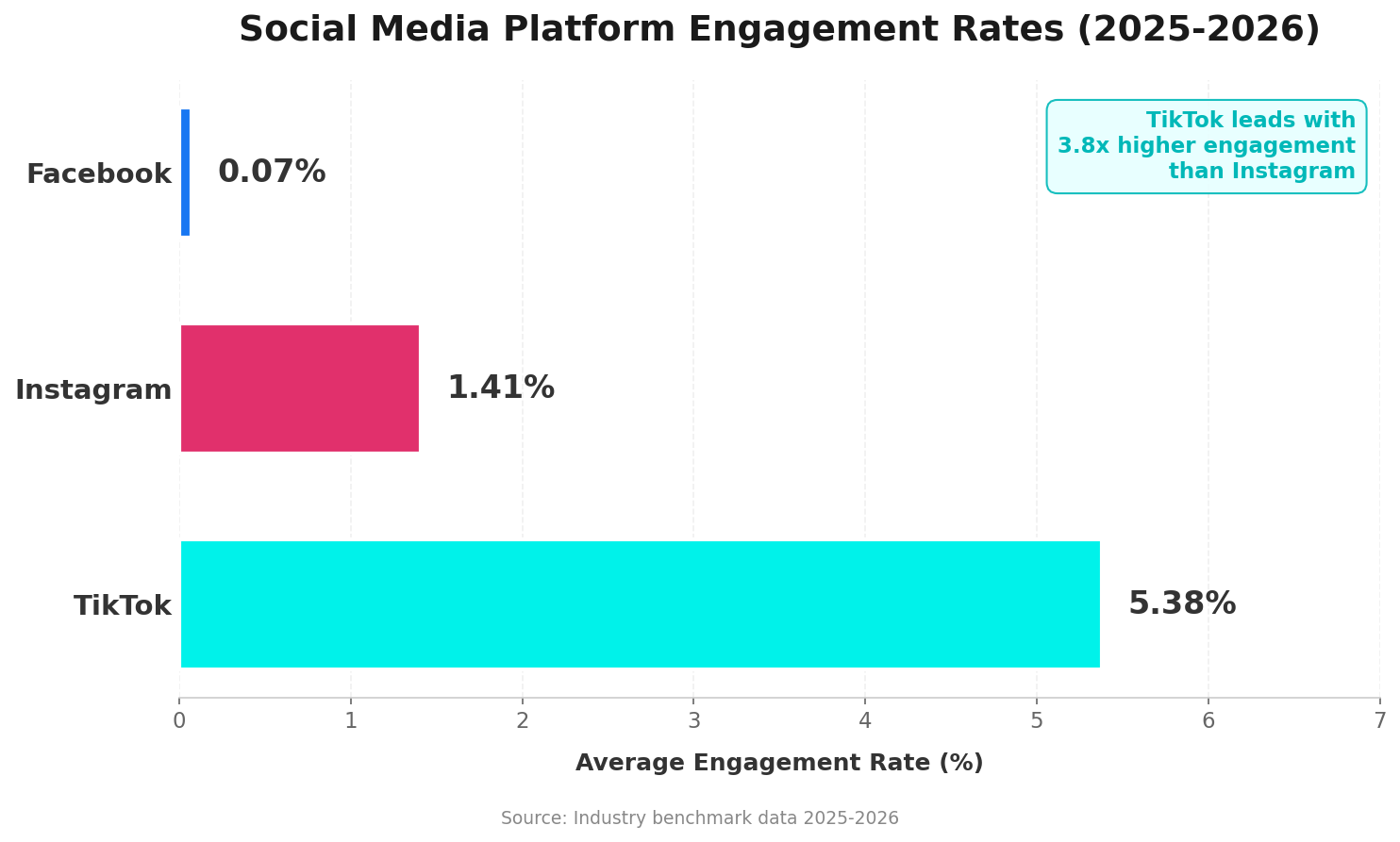
TikTok leads with around 5.38% average engagement, ahead of Instagram at 1.41% and Facebook at 0.07%. Platform selection should align with audience demographics. LinkedIn delivers 229% average ROI for B2B lead generation. YouTube drives the most overall business impact according to marketing leaders. Different social media platforms serve different purposes in a complete marketing strategy.
How do you measure the ROI of viral social media campaigns?
Marketing teams focus on engagement (68%), conversions (65%), and revenue impact (57%) when tracking ROI. Social advertising campaigns average 4.2x return on ad spend, and 80% of marketers plan budget increases based on demonstrated campaign performance. Attribution modelling should account for both direct conversions and brand equity value. Social media analytics tools help connect activity to outcomes.
What role does AI play in creating viral content?
AI supports content creation and optimization but hasn't replaced human creativity for cultural resonance. Around 55% of marketers use AI tools for ideation, drafting, and scheduling. But consumers express concern about undisclosed AI content, and the most successful 2025-2026 campaigns emphasized human storytelling. AI can help with the process. It can't manufacture the cultural insight that makes something spread.


